
Mandatory Credit: Mary Holt-USA TODAY Sports
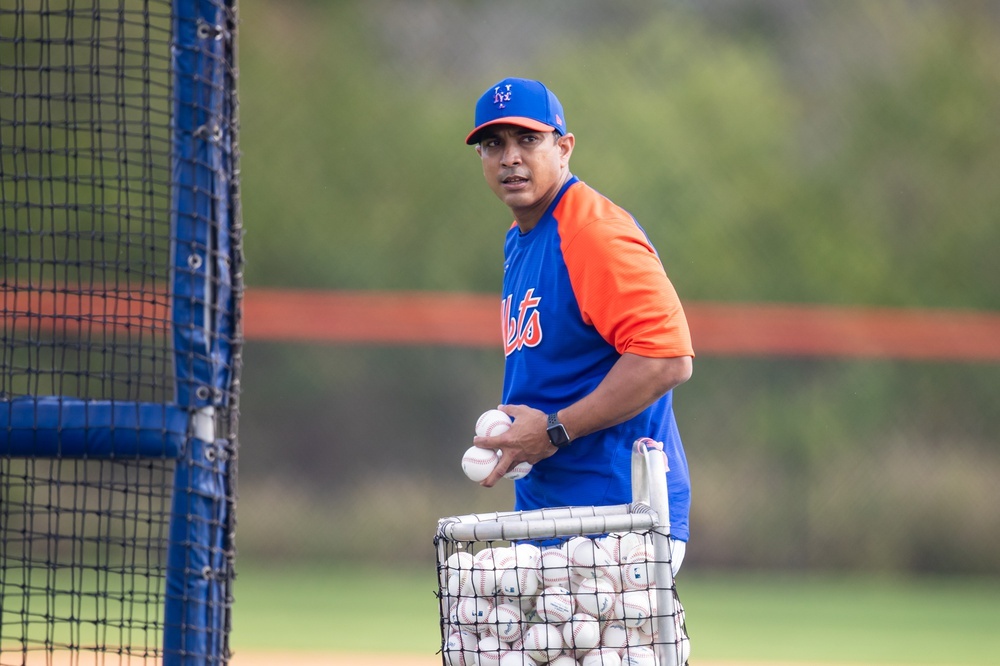
Metsmerized continued its midseason report cards with the Mets’ coaching staff, starting with the manager and working our way down.
Manager
Luis Rojas began his second season–and first full one–as Mets manager with slight turbulence, having to wade through the waters of sexual harassment claims within the organization from years when he wasn’t leading the team (Rojas was the one answering questions most often during press conferences) to injuries to multiple levels of his pitching staff to trying to keep a team engaged in their first month that featured six postponements and five scheduled off days.
Then team injuries piled up, with at one point the Mets have 17 players, including a bulk of their Opening Day lineup, on the injured list at the same time in June.
The manager’s calm demeanor was talked about highly from everyone above and below Rojas’s ranking in the organization, and it proved to be his most useful asset during the stretch from the beginning of May to mid-June when the team started to get healthy. During that time (May 1 to June 18) with all those vital players injured, the team went 26-15 and locked in first place since May 8 all the way until the All-Star break. They’re still 3.5 games up on other teams in the division at the break.
The players (largely the pitching staff and the ReplaceMets, who range from Kevin Pillar and Jonathan Villar to Patrick Mazeika and Johneshwy Fargas) are the primary reason the Mets’ season didn’t crumble before it ever really began, but Rojas deserves credit, too, with his “we’re worried about this game and this game only” mindset. There’s been no looking a week into the future to when he might get players back and trying dictate moves today for tomorrow. (There’s evidence by the team’s performance in doubleheaders, too, where they’ve won eight of 10 Game 1’s when Rojas has decided to lock down games with his best pitchers when you don’t know what’s going to happen in Game 2.)
Rojas has made questionable moves in-game, like leaving a reliever in a little too long (like, beyond 30 or 40 pitches) or), but as many have pointed out, Rojas typically has a well-reasoned and informed explanation for why he made a certain move. He’s certainly made plenty of savvy moves, too, like making a double switch in extra innings, which has allowed a better player to start extras on base.
Pitching Coaches
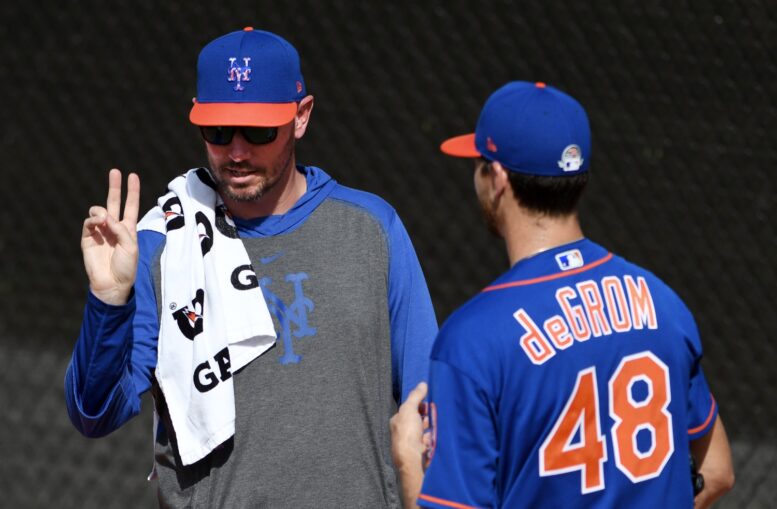
This team of Jeremy Hefner and Jeremy Accardo might be the highlight of the team’s coaching staff so far. Under the pair’s tutelage, the Mets have multiple players performing as good or better than they have.
As a whole, he pitching staff is fourth in the majors with a 3.43 ERA. They’re also top five in the three primary counting offensive categories (average, slugging and on-base percentage) and strikeout percentage.
Individually, starters like Taijuan Walker and Marcus Stroman have had the best stretches of their careers, and there have been notable changes in both of their pitching arsenal selections. For example, Walker is throwing a lot more sinkers and less four-seam fastballs, and both pitches have shown greater effectiveness at their current usage rates. Similarly, Stroman’s sinker rate (44.8 percent from 36.3 percent) has jumped while the rates of other pitches like his cutter and slider have dipped. All three of those pitches have similar or better effectiveness from Stroman’s 2019’s numbers. Relievers Aaron Loup, Jeurys Familia and Edwin Diaz are all having their best seasons in three or four years this year, too.
Then there’s Jacob deGrom, who basically just throws three pitches now after abandoning his curveball this season. There are some games he sits out there dominating for 90 pitches with just two pitches. He sit the ones he’s feeling, and he rides them. This wasn’t really a strategy deGrom held before the the last season or two.
There’s clearly an organizational philosophy stemming from Hefner and Accardo regarding pitch selections and locations. There’s the technology end of it, too, where the organization’s top guys (Cohen, Alderson) have given Hefner, Accardo and the minor-league pitching coordinators like Ricky Meinhold and Carter Capps the technologies dozens of other teams have been using for years to help with their information gathering.
It’s on the players to buy-in to the philosophy and execute, though, and most of them have.
Hitting Coaches
Here’s where the Mets’ overall grade will get dinged a bit.
The Mets started the season with Chili Davis as hitting coach. He’d been in the position since 2019, when the Mets had around a top 10 offense thanks in part to the additions of rookies Pete Alonso and Jeff McNeil. In 2020, the team lead the league in wRC+ through the 60-game season, but Davis was working remotely during that time.
There were conversations in the offseason about whether Davis and his more “old-school” offensive strategy of situational hitting was best for the team moving forward, especially with a new front office regime that was more insistent on information gathering and implementation.
After the offense sputtered out of the gate, the team fired Davis on May 3 and made the switch to Hugh Quattlebaum and Kevin Howard. General manager Zack Scott said at the time the decision was less results-based and more organizational-philosophy-based, and that the organization was looking to promote people who would “make an impact on player development.”
Since the change, the offense has still struggled, but the flips have switched on guys like James McCann and Francisco Lindor. Michael Conforto has struggled all year with both sets of hitting coaches, but on the flip side, someone like Brandon Nimmo has thrived under both, albeit both players were injured for significant portions of May and June.
This category might be best analyzed at the end of the season as implementing a whole new hitting strategy takes time, especially mid-season, but there’s no denying that the team’s offense has struggled under both hitting coach regimes. Part of that may be buy-in to a philosophy, or the communication of what’s going wrong, but at some point, the players take on a bulk of the blame for the offensive woes. (Also, don’t look now, but the Mets are seventh in the league in wRC+ in July.)
I’d be remiss if I finished this section without mentioning Pete Alonso’s the team’s hitting approach coach, Donnie Stevenson.
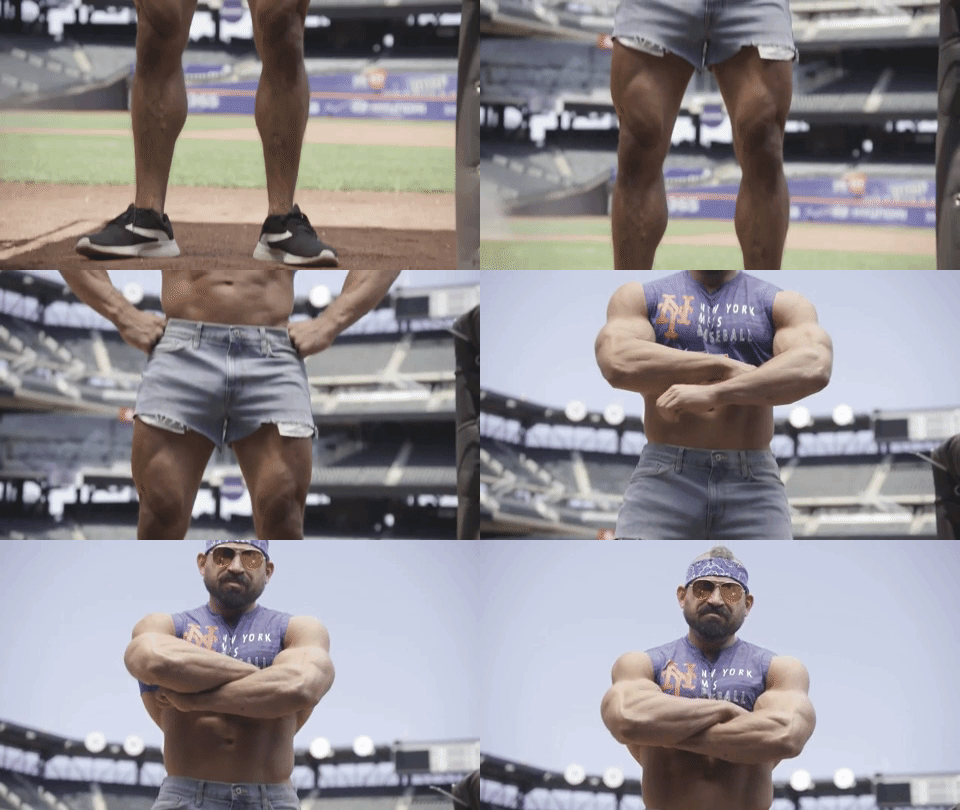
The imaginary-figure-turned-paid-actor that Pete Alonso started when the team was in an offensive rut became a fun storyline for about a week, then it died down, then he started showing up at games and All-Star ballot promos. But that’s probably all I need to say about that.
Miscellaneous Coaches
This group includes the likes of Dave Jauss, Tony Tarasco, Gary DiSarcina and others.
Dave Jauss has clearly had in impact on Rojas’s decision-to-decision managerial experience from the bench coach position. He was brought in to mentor Rojas on those types of moves after the team felt Hensley Mullens wasn’t the right fit for Rojas.
Tarasco and DiSarcina, in addition to coaching first and third base, respectively, coach the team’s outfield and infield defense as well as base running. The Mets have shown massive improvement in outfield and infield defense, so these two coaches deserve some level of credit, too, though the front office and Ben Zauzmer probably deserve at least an equal part of credit in improving the defense’s positioning.
Plus, Jauss boosts the coaching staff’s grade based on his Home Run Derby performance alone.
This is absolutely insane from Dave Jauss. pic.twitter.com/9YssrgVX37
— David Fucillo (@davidfucillo) July 13, 2021
Overall Grade: A-
Outside of the pitching staff, the front office and coaching staff have been the real highlights of the team so far.
With Rojas leading the way, the Mets exceeded expectations for about two months of the first half while the team was beat down with injuries. Now while fully healthy, that’s a different story, but when the team really could’ve folded for a couple months, the team came to the park and tried every day. Rojas’ leadership definitely had something to do with that.
Then working your way down the staff, the pluses far outweigh the negatives. Outside of the team offense, which the front office addressed and seems to be improving as we make our way through July, all other areas of the team performed at pretty consistently high levels in the first half. The players are the ones who ultimately make the impact and produce the results, but the staff has seemingly done their best to keep them prepared and set them up for success.