
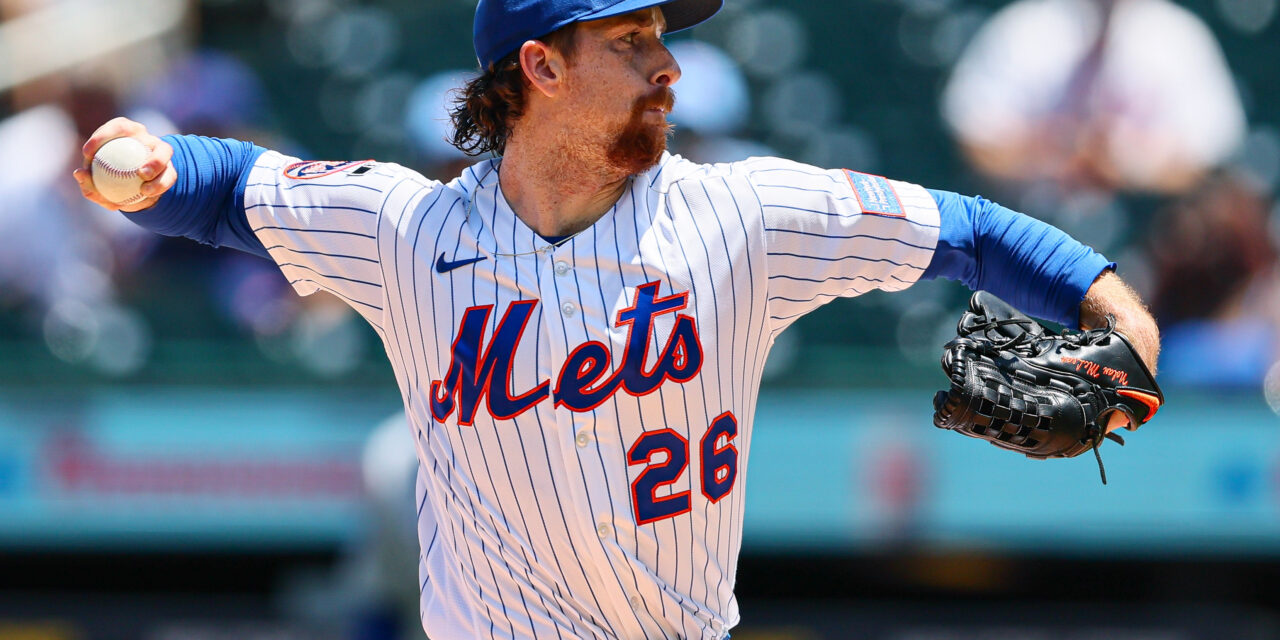
Even the great northern power of Norwegian cheers couldn’t save the Mets from the atrocities that unfolded during Wednesday’s doubleheader. The Vikings stationed in the outfield watched in despair as Nolan McLean, the ace of the Mets’ staff, surrendered six earned runs across six innings.
At first, it looked like smooth sailing. McLean cruised through four scoreless innings, keeping Chicago quiet and appearing firmly in control. But the waters got choppy in the fifth.
After recording two quick outs, McLean couldn’t put the inning away. He allowed three consecutive hits of increasing consequence, culminating in a two-run homer from Michael Busch that tied the game at three.
The sixth inning followed a similar script. Once again, McLean found himself one out away from escaping trouble with only a runner on base. And once again, he couldn’t finish the frame. A bloop hit extended the inning before another long ball broke the game open, giving the Cubs a three-run lead. The Mets never got it back.
Early in the game, McLean looked every bit the frontline starter the Mets expected. His fastball had life, his sweeper was effective, and he was generating weak contact. Then, seemingly out of nowhere, he lost his footing.
When hitters weren’t making outs, they were barreling baseballs. McLean repeatedly left pitches over the heart of the plate, and the Cubs made him pay.
“Nobody likes losing,” McLean said postgame. “Any time I go out there and put my team in a bad position to win, that’s very frustrating. My job is to go out there and limit the score and I haven’t been doing that this year.”
To be fair, McLean has done exactly that for much of the season. But the ace-like status he proudly carried at the end of last year has started to flicker a bit. His ERA has climbed back above 4.00, ballooned by starts like this one, while his WHIP sits at 1.12.
The culprit appears to be his breaking ball. Its run value ranks in the bottom quarter of the league, a stark contrast to his fastball, which remains among baseball’s elite. His chase rate has also dropped significantly from last season’s sample, suggesting hitters simply aren’t being fooled by his off-speed pitches when they leave the strike zone.
The encouraging part? That’s fixable. The velocity hasn’t disappeared and the spin rate hasn’t vanished. His fastball remains a premium. The issue is command, particularly with the breaking stuff.
Add it to the growing list of things that have gone sideways for the Mets this season. If there was ever a year to work through mechanical issues without the weight of expectations crushing every outing, this is quickly becoming that year.
At least the Norwegian fans got the full Mets experience. And judging by the smiles in the stands, they seemed to enjoy it anyway.