Greg Lovett-USA TODAY NETWORK
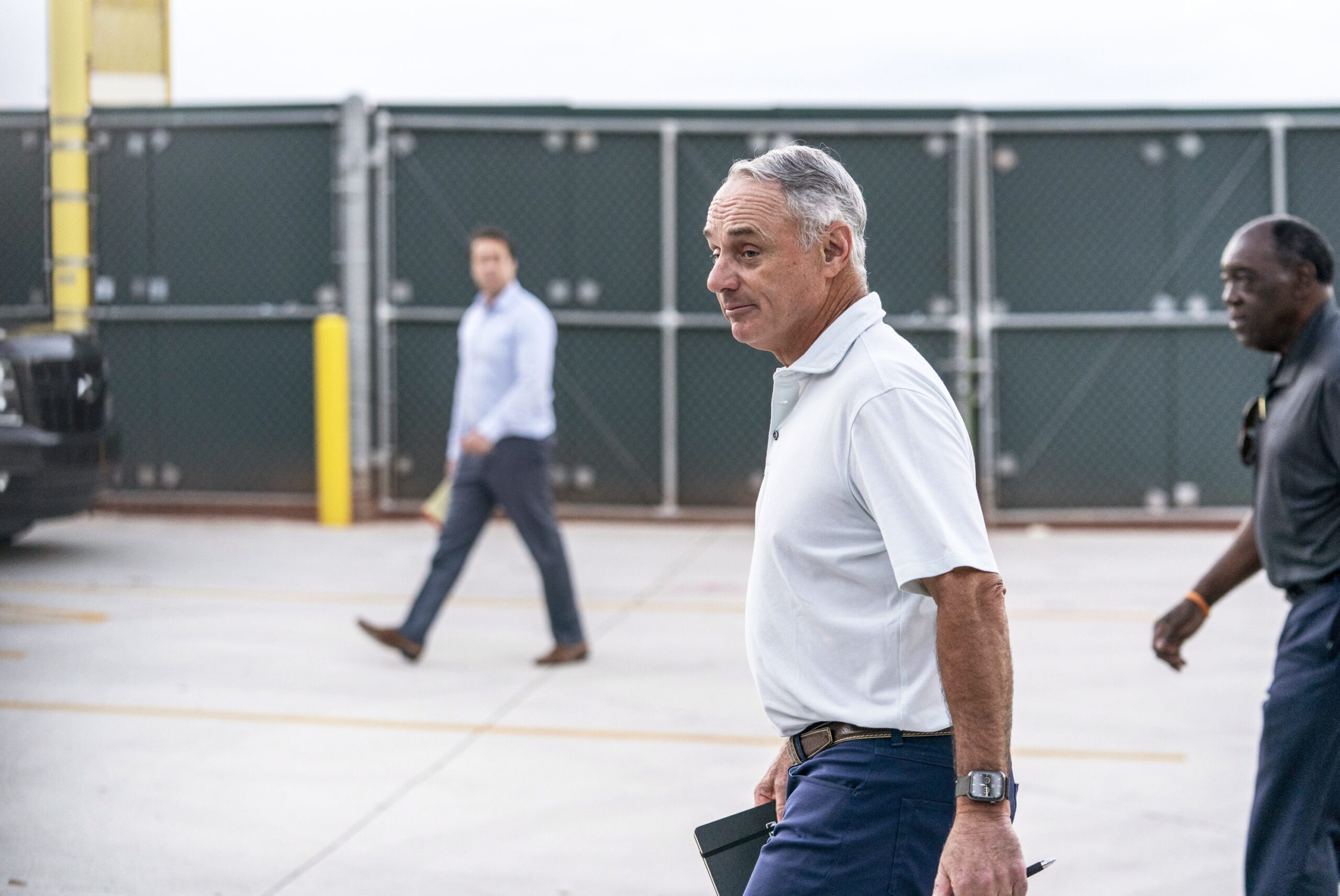
On Tuesday, March 1 just before 5 pm, Major League Baseball made a “last and best” offer to the Major League Baseball Players’ Association in an effort to end the MLB-imposed lockout after nine days of negotiations in Jupiter, Florida. The MLBPA rejected the offer, and thus the lockout persists.
No one knows how long the lockout, which has now wiped away the first two regular season series of 2022, will last. We do know that at the moment, there are no further negotiation sessions planned, though that could change quickly. A good guess would be that for every additional week of the lockout, two more regular season series will be sacrificed and not made up.
How did we get to the first regular season work stoppage since the 1994-1995 seasons? There are several reasons.
History
MLB and the MLBPA have a long history of labor disputes, dating back to 1972, when the players went on strike over funding of their pension plan. From that point through the most recent work stoppage in 1994, the players had generally come out on top in Collective Bargaining Agreements. However, recently the tide has turned in the owners’ favor. Players’ salaries have stagnated and even regressed on an average salary basis, while the game’s revenues have soared, passing the $10 billion mark. Many baseball analysts felt that the the 2022 CBA negotiations would be contentious, as the players attempted to recoup some of the ground they had lost, while the owners sought to maintain their increased share of the revenue pie.
Economics
MLB and the MLBPA have disagreed on many points over the years. From the Designated Hitter rule to Service Time Manipulation, the two sides have not seen eye-to-eye all the time, but these issues were never deal breakers. The game’s economics are another story. The “core economic issues” became the focal points of the current round of CBA negotiations, and the inability to find common ground on them is the main reason that the lockout continues, and Opening Day has been canceled.
The first of the core economic issues is the compensation of pre-arbitration eligible players. This one has two parts, the MLB minimum salary and the pre-arbitration bonus pool, a new compensation mechanism (replacing arbitration) for a select group of players with more than two but fewer than three years of service time, known as “Super Two” players.
In its last offer, MLB proposed a minimum salary of $700,000 that would escalate by $10,000 each year of the new CBA, up from $570,500 in 2021. The union sought a minimum salary of $740,000 that would go up by $20,000 each year. On the bonus pool, the union was willing to accept 22% of eligible players to be compensated by the pool, no change from the percentage of Super Two players currently eligible for arbitration. MLB offered $30 million to be in the pool, versus the $85 million the players have requested.
The inability to align on pre-arbitration compensation is disappointing, as it seems like the framework for a deal is in place. MLB did tie this economic issue to playoff expansion, which is 14-team format, will net $100 million more in revenue, and in a 12-team format will net $85 million more in revenue. It feels as if the owners could have given more to the pool from the additional income, especially since the players backed their eligibility request from 100% to status quo at 22% of Super Two players. This issue remains unresolved, and will be on the table when the two sides decide to start talking again.
The next core economic issue is Revenue Sharing. Currently, the clubs share 48% of local revenue. The players do not think that this money is universally spent on salaries, and are seeking a lower percentage of local income to be shared. A salary floor seems to be a reasonable answer. Teams will be required to spend a set amount (perhaps $100 million, since 14 teams spent less than that on payroll in 2021). This concept was floated early in the negotiations, but the entire topic of revenue sharing seemed to be put on the back burner thereafter. This one may come back in future bargaining sessions.
The final core economic issue is the biggest one of all, the Competitive Balance Tax. The threshold and tax rates are on the table, and the sides remain far apart. From John Heyman of MLB Network:
Players union requested luxury tax figures of 238M, 244, 250, 256 and 263. MLB had offered 220M, 220, 220, 224 and 230. That is a massive difference.
— Jon Heyman (@JonHeyman) March 1, 2022
Initially, the owners proposed higher tax rates, starting at 80% for a “first offense”, going to 100% for future incidents of exceeding the threshold. MLB later agreed to keep the tax rates as they are in the current CBA, but the small increases in the threshold have not been reviewed well by the union. The current threshold is $210 million. The CBT restrains spending by the wealthiest teams, and players see essentially stagnant thresholds in the face of increasing revenues as a way for the clubs to retain the game’s income by having a deterrent to spending on players.
Rule Changes
MLB has asked for the ability to implement rule changes unilaterally with 45 days’ notice. The players have pushed back, and this matter is now a topic of debate. It could be that the owners are willing to negotiate this one away in return for concessions elsewhere. The question is, how important is this to the players, and what would they be willing to give in return?
Leverage
The players say that the lockout is nothing more than the owners using their biggest hammer, missed paychecks, to force the players into concessions. The players are aware that as time goes on, the owners have to sacrifice television revenues, and the more lucrative summer games when attendance is higher. Which leverage point is more effective? Time will tell, when we see which party makes the next significant offer.
What happens next? According the Bob Nightengale of USA Today, the owners are going to re-evaluate what to do.
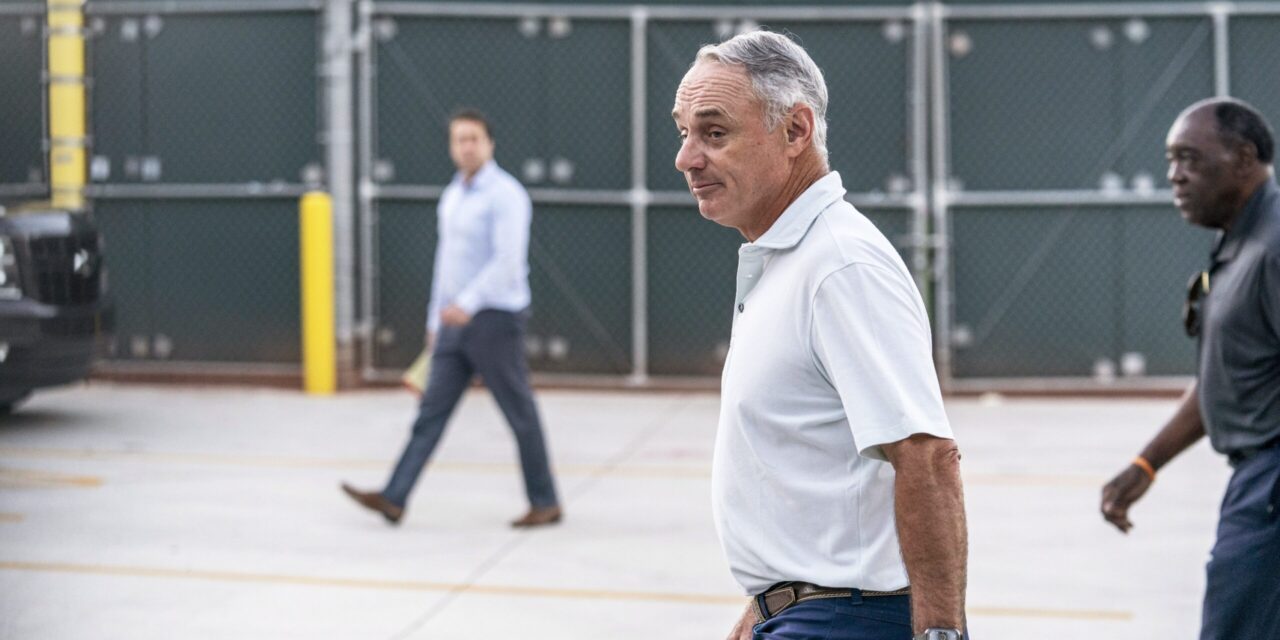
Rob Manfred says MLB plans to regroup and determine next course of action
— Bob Nightengale (@BNightengale) March 1, 2022
Chelsea Janes of The Washington Post tweeted MLBPA Executive Tony Clark’s response on how the players see it.
Tony Clark “we’re willing to stay here and have the conversation tomorrow.” Implication is that any further delay is not one they dictate.
— Chelsea Janes (@chelsea_janes) March 1, 2022
Bottom line–the rhetoric machine is starting to crank up again, on both sides. Rhetoric will not get the game on the field, and fans in the stands. Negotiation, and a mutual willingness to feel some pain to do what is right for the game, may be able to salvage a reasonable length of a season. It’s advisable for them to start talking very soon, as the longer the lockout goes on, the more the animosity will set in (if there can be more), and it will be that much harder to come to a deal.
Opening Day 2022 will not happen. For many it’s a holiday that did not take place normally in 2020, and took place with limited numbers of fans in 2021. This will be three years in a row that baseball fans have been denied one of the game’s most treasured traditions, the beginning of a new season with spring in the air.
I thought they would have deal and spring training would start later this week. I thought I’d be going to Opening Day as planned, with my large group. I did not think that MLB would willfully shut down a $10 billion industry, but here we are. We don’t know how long we’ll have to wait, but for many, patience will grow thin.
Will baseball lose fans, as it did after 1994-1995? It’s very likely that some fans will walk away. They may stay away this time. The excitement of Sammy Sosa and Mark McGwire is not here to bring them back as was the case 27 years ago.