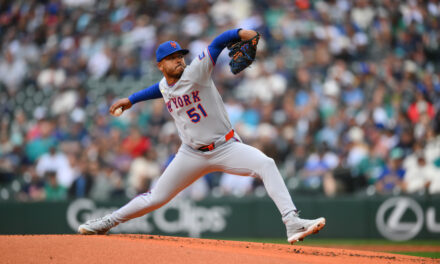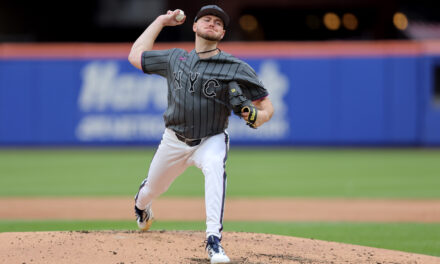
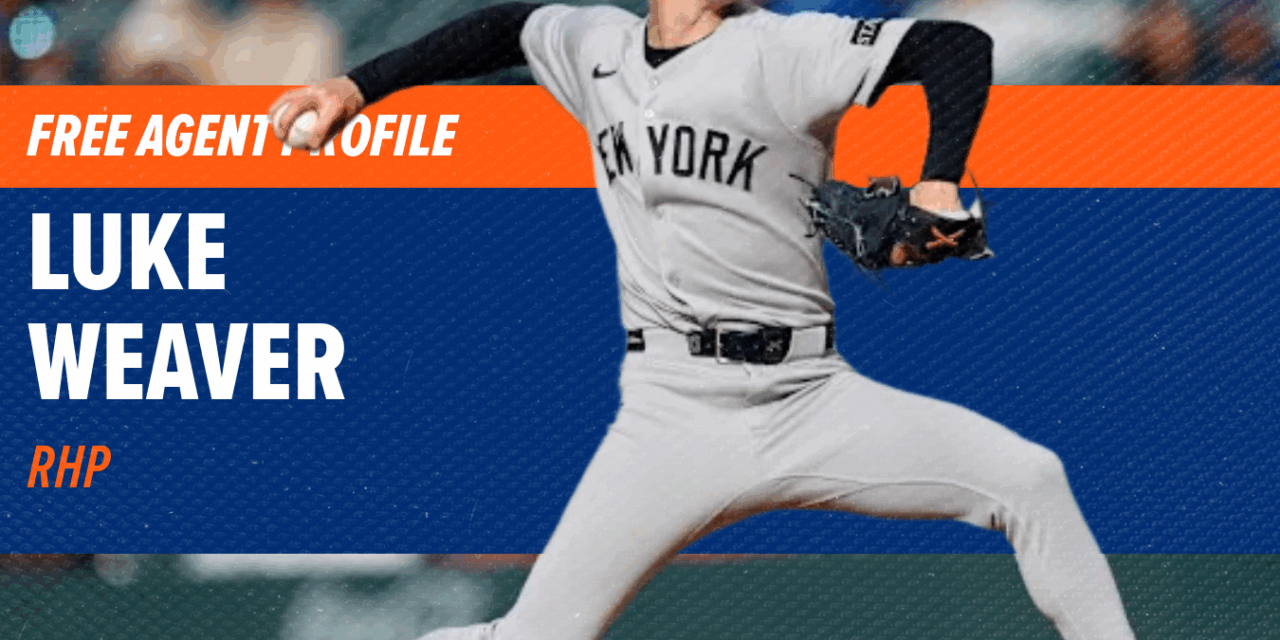
LUKE WEAVER, RP
Position: RP B/T: R/R
Age: 32 (08/21/1993)
2025 Traditional Stats: 64 G, 17 GF, 21 HLD, 8 SV, 4 BS, 64.2 IP, 4-4, 3.62 ERA, 1.02 WHIP, 72 SO, 20 BB
2025 Advanced Stats: 113 ERA+, 27.5% SO%, 7.6% BB%, 2.96 xERA, 3.89 FIP, 4.12 xFIP, -0.8 bWAR, 0.5 fWAR

RUNDOWN
After his remarkable 2024 campaign where he emerged as one of baseball’s most dominant closers, Weaver found himself in more of a setup role after the Yankees traded for closer Devin Williams. The Yankees expected Williams and Weaver to be a dynamic one-two punch at the back of their bullpen, but by the end of the season, both players had earned and lost the closer job.
Weaver’s season started strong. Through the end of May, he posted a 1.05 ERA, 0.70 WHIP, 3.10 FIP, and 98.6% LOB%. This helped him accumulate eight saves, six holds and only one blown save. Then, on June 1, he strained his hamstring. The rest of the year, he posted a 5.31 ERA, 1.23 WHIP, 4.42 FIP and 63.5% LOB%. He still accumulated 15 holds with only three blown saves in those 39 innings pitched.
Before the injury, Weaver’s fastball sat at 94.4 mph with 19.3 inches of IVB and 7.0 inches of HB. His changeup, at 87.1 mph, featured 14.1 inches of HB and -7.1 VAA, creating strong separation. Post-injury, the fastball velocity ticked up to 95.5 mph. However, its IVB dropped to 18.8 inches and HB fell to 6.7 inches. His zone rate on the fastball dropped from 58% to 53.4%. His whiff rate fell from 26.3% to 23.1%. His changeup lost bite at 88.6 mph with less effective -6.9 VAA and a worse spin profile. His zone rate dropped from 41.7% to 37.6%. His cutter effectiveness did improve in the second half, though, and he began leaning on it more down the stretch. It hovered between 11-12% usage compared to 8.7% before the injury. He also pretty much completely dropped his slider after his injury. This drop in command and effectiveness overall led to a surge in home runs. His HR/9 jumped from 0.70 to 1.85.
Weaver may have been rushed back from injury before he was ready, which could explain his struggles in the second half. That said, there’s still plenty to like in Weaver’s profile. His first-half performance demonstrated legitimate closer ability. Many of his underlying skills were present, even when he was compromised. With a full healthy offseason to rebuild lower-body strength and restore his mechanics, the first-half version of Weaver isn’t out of reach.
CONTRACT
MLB Trade Rumors predicts a two-year deal totaling $18 million for Weaver. As a former starter before joining the Yankees, Weaver lacks the track record of more established relievers, but his progress over the last two years should make teams optimistic that he can be a strong back-end arm for the next few years.
RECOMMENDATION: CHECK IN WITH
For the Mets, Weaver represents a buy-low opportunity as a right-handed setup complement to AJ Minter. His first-half performance demonstrated closer-quality stuff. Pairing him with Minter in the seventh and eighth innings creates a formidable late-inning setup duo.
Weaver also would provide insurance if Edwin Díaz were to sign elsewhere. The Mets shouldn’t count on him as their primary closer given second-half struggles. However, his 2024 track record shows he can handle ninth-inning duties if needed. A healthy offseason to address the hamstring could unlock the dominant version of Luke Weaver.