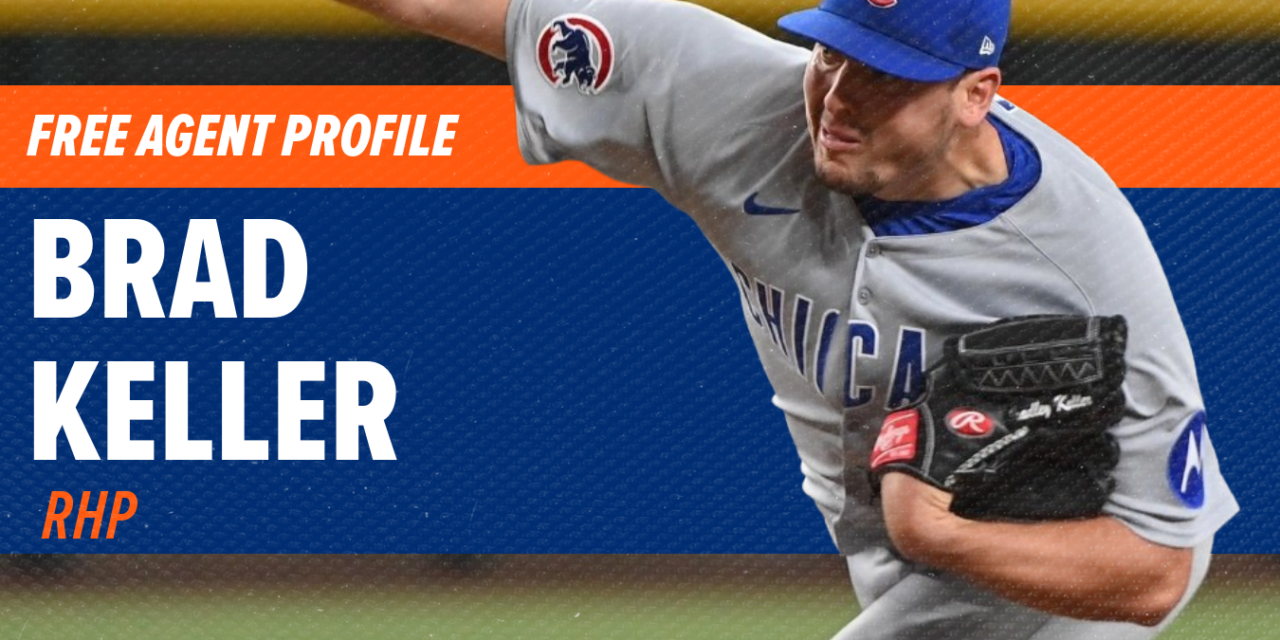
Brad Keller, RHP
Position: RHP B/T: R/R
Player Data: Age: 30 (09/27/1995)
2025 Traditional Stats: 68 G (1 start), 69 2/3 IP, 2.07 ERA, 0.962 WHIP, 4-2, 75 K, 22 BB
2025 Advanced Stats: 187 ERA+, 27 K%, 8% BB%, 2.77 xERA, 2.93 FIP, 3.32 xFIP, 1.3 fWAR, 1.4 bWAR
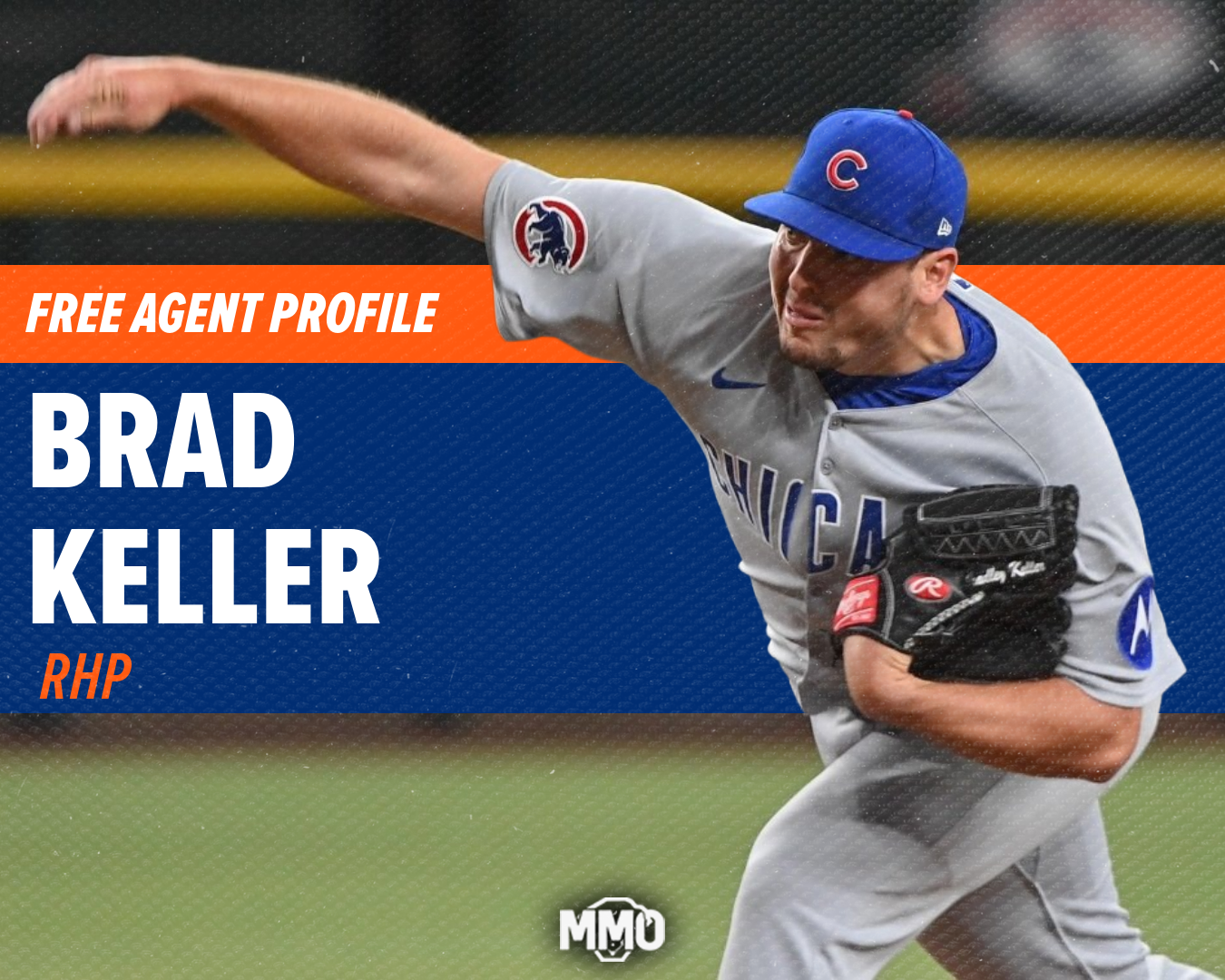
Rundown
Brad Keller debuted as a 22-year-old with the Royals after being poached from the Diamondbacks in the 2017 Rule 5 Draft and had a few solid seasons as a starting pitcher to begin his career. However, he endured a couple of rocky seasons in 2021 and 2022 before missing most of 2023 due to a shoulder injury. He underwent thoracic outlet syndrome surgery after that season and signed a minor league contract with the White Sox but was designated for assignment early in the season. He then struggled in a limited sample size after signing with the Red Sox.
Shortly before spring training in 2025, Keller inked a minor league deal with the Cubs and did enough to crack the Opening Day roster as a reliever. In his first full season pitching out of the bullpen, Keller flourished, entering Craig Counsell‘s circle of trust and serving as the primary setup man for closer Daniel Palencia. Overall, Keller appeared in 68 games and posted a 2.07 ERA in 69 2/3 innings, and his strikeout rate increased to a career-high 27.2%. Additionally, Keller’s hard-hit rate dropped to a career-low 30.6% and his opponents’ average exit velocity of 86.5 mph was also the lowest mark of his career. Keller allowed just four home runs, and his ground-ball rate increased to 55.5%, the highest he’s had over a full season. From 2021 to 2024, Keller’s opponents owned an .804 OPS, but in 2025, he limited them to a weak .512 mark.
Keller was particularly dominant over the final two months of the season, allowing just one earned run and striking out 30 batters over 22 2/3 innings. When Palencia got hurt in September, Keller inherited the closer’s role and kept it in the postseason, during which he converted both of his save opportunities while allowing one earned run and striking out five in 5 2/3 innings. Keller’s 2.77 xERA, 2.93 FIP, and 3.32 xFIP show that his season wasn’t much of a fluke either.
Keller was never a fireballer during his days as a starter, but his average fastball velocity skyrocketed from 93.8 mph to 97.2 mph in 2025. His four-seamer’s run value increased from negative-4 to plus-9, and opponents hit just .208 with a .292 SLG against it. Keller effectively mixed in his sinker as well, which didn’t surrender a single extra-base hit and registered a .179 xSLG as well as a plus-4 run value. Keller’s sinker had a run value per 100 pitches of 2.9, which is one of the highest marks in baseball. While Keller’s slider was hit hard, he increased the usage of his sweeper, against which opponents went just 3-for-41. Keller’s sweeper recorded a 46.4% whiff rate in addition to a .086 xBA and .154 xSLG. Keller’s change-up was also rather effective, posting a 39.7% whiff rate and a .237 xSLG.
Contract
Keller should expect a healthy raise from the $1.5 million he made in 2025. He likely will receive a multi-year deal to serve as a high-leverage reliever. Drew Pomeranz was able to sign a four-year, $34 million contract after the 2019 season despite having a much smaller sample size of success as a reliever. MLB Trade Rumors predicts Keller will ink a three-year deal worth $36 million.
Recommendation: Try to Sign
Whether or not the Mets re-sign Edwin Díaz, it wouldn’t hurt to bring in an arm like Keller to shore up the back end of the bullpen. The team struggled mightily to build a bridge to Díaz in 2025, and Keller proved he can be very effective as a reliever. Even if Keller regresses somewhat, he’d still be a lot better than what the Mets had this year. He also didn’t waver in the playoffs, which is important for a team trying to return to October.