Photo: AP
Jimmy Piersall only spent one season in a Mets uniform, but what he did in his short time in blue and orange is forever ingrained in the fabric of history.
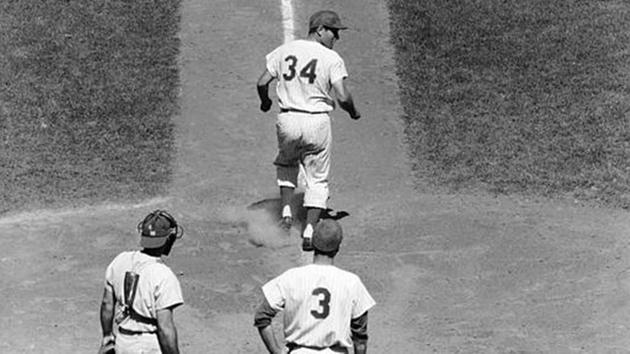
When Piersall clubbed career home run No. 100, he trotted the bases backwards, another notch in the outfielder’s colorful career.
What a lot of people don’t know is the reason behind why Piersall did this.
In 1963, Piersall’s lone season with the Mets, his teammate Duke Snider was set to club career home run No. 400.
Snider, who was finishing up his career after being a star for the Brooklyn/Los Angeles Dodgers, was told by Piersall that “he would get more publicity for his 100th career home run than Snider would for his 400th.”
The rest is history.
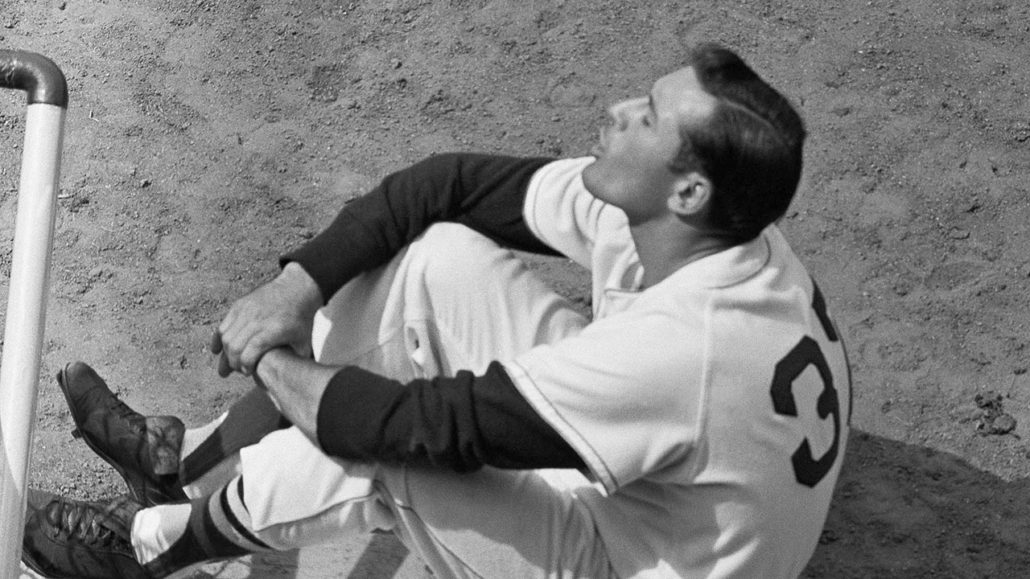
Photo: AP
But before all this, Piersall made a name for himself in his time with the Boston Red Sox.
Apart from being a two-time all-star and two-time gold glove winner, Piersall is perhaps best known for his battle with bipolar disorder that led to him suffering a mental breakdown in 1952.
Piersall spent seven weeks at Westborough State Hospital in Massachusetts with “nervous exhaustion,” after a demotion to the minor leagues sparked by several incidents, including a bout with then-Yankees infielder Billy Martin before a game.
This prompted Piersall to write an autobiography called Fear Strikes Out, which was adapted into a film that was released in 1957 and starred Anthony Perkins.
In his second book The Truth Hurts, Piersall said “Probably the best thing that ever happened to me was going nuts. Who ever heard of Jimmy Piersall, until that happened?”
After his on-field career, in which he finished with a .272/.332/.386 slash line, 104 home runs and 591 RBI and a career 28.6 WAR, Piersall spent time as a broadcaster for the Chicago White Sox and Texas Rangers, as well as an outfield instructor in the Chicago Cubs organization.
On Saturday, Piersall died at age 87 in the presence of his wife of 35 years in Wheaton, Ill.
We here at MetsMerized send our condolences to Piersall’s friends and family and celebrate the career of Piersall, who to say the least, made things interesting.
From your distant relative, Rest in Peace, Jim.