At the end of April, things looked bleak for the back of the Mets’ bullpen. Devin Williams had an 8.00 ERA and blew a save in the middle of the Mets’ 12 game losing streak, while Luke Weaver had two blown saves of his own to go along with his 6.00 ERA. The No. 5 and No. 14 highest-paid relief pitchers in baseball looked like, in that small sample size, that they did not belong in their roles. The only way things could have been worse would be if their velocity had fallen off a cliff or they went on the injured list.
Then things completely changed. In the month of May, Williams and Weaver have combined for 17 scoreless innings. They are running extremely high strikeout rates with acceptable walk rates. They have also combined for five saves and four holds.
So, what changed?
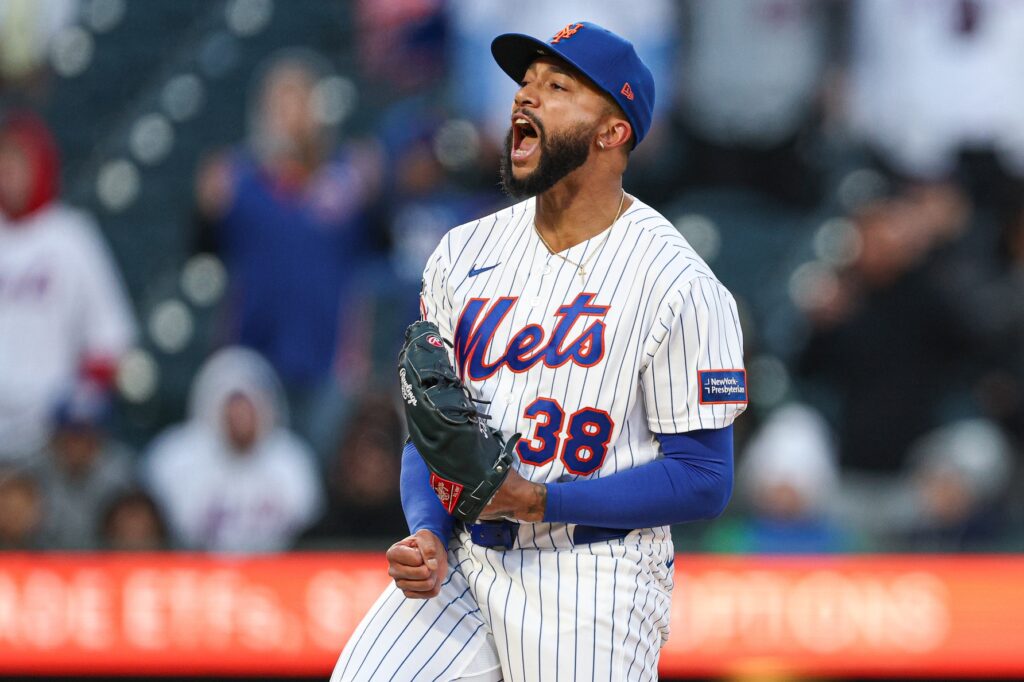
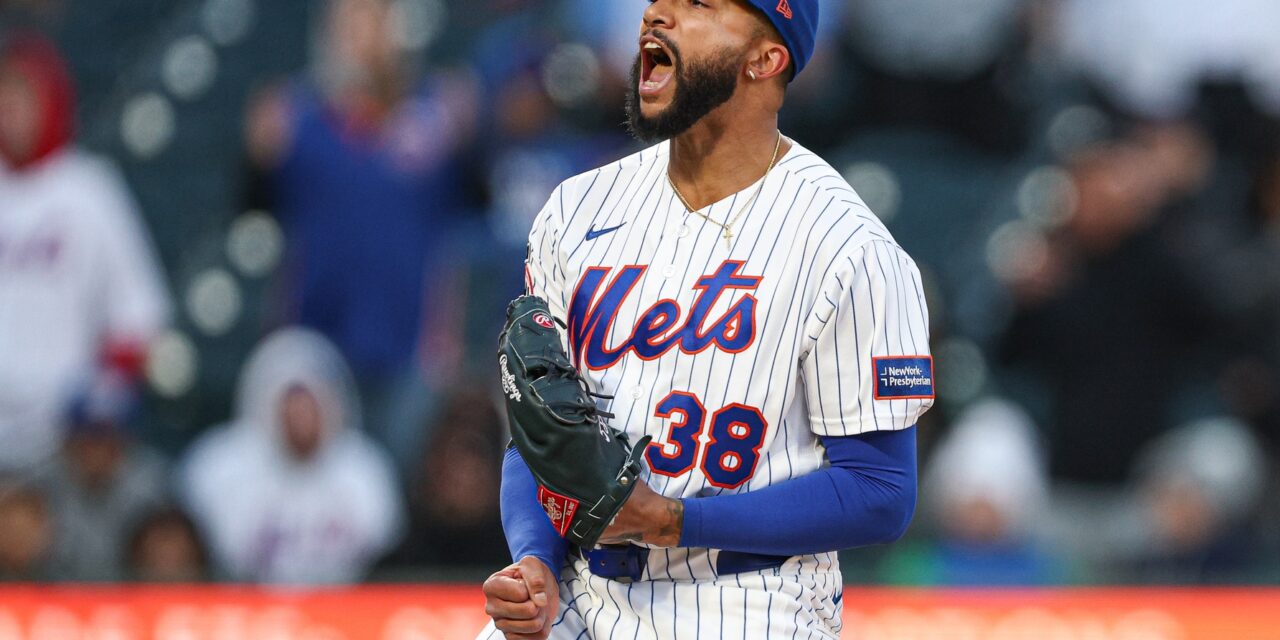
Photo Credit: Vincent Carchietta-Imagn Images
Devin Williams
For Williams, the change came when he sat down with the Mets’ coaching staff on April 23 and analyzed everything he had done so far this season. Per Will Sammon of The Athletic, Williams changed his delivery with the New York Yankees to try to prevent tipping, but that change impacted his mechanics negatively. He adjusted his set-up to closer mirror what he did as a Milwaukee Brewer when he threw 235 2/3 innings to a 1.83 ERA and 1.02 WHIP.
Outside of just the ERA change, everything under the hood looks better too. First, Williams’ air-bender is back to bending air. His induced vertical break went from 0.1 to -1.3 inches. Part of that number is also skewed by the effects Coors Field has on changeups – his most recent two appearances, he has averaged -2.5 inches. That is in line with where he was in Milwaukee. He has also increased his spin rate on the pitch from 2504 rotations per minute to 2638. This has led his whiff rate on that pitch to jump from 35.7% to 51.4%. His improved changeup also makes his four-seam fastball play up. Since that previously mentioned meeting, he is running a 40.7% whiff rate compared to where it sat at 34.2% before.
Overall, Williams looks like a new pitcher. His Statcast percentiles since his turnaround are off the charts:
- 24.6% swinging strike rate (100th percentile)
- 0% barrel rate (100th percentile)
- 46% whiff rate (99th percentile)
- 66.7% zone-contact rate (99th percentile)
- 38.7% strikeout rate (98th percentile)
- 42.9% chase rate (97th percentile)
- 17.6% hard-hit rate (97th percentile)
- 52.9% ground ball rate (85th percentile)
- 86.5 miles per hour average exit velocity (76th percentile)
- 6.5% walk rate (78th percentile)
Luke Weaver
As far as I am aware, Weaver did not have a meeting that turned his season around after his blown save on April 30. What did change, though, was his cutter consistency. In April, his cutter bled into his four-seam fastball too much, mirroring its movement profile too closely. His cutter in May is diving more than it was in April, jumping from a 14.3% whiff rate to a 54.5% whiff rate. He is throwing his four-seam fastball in the zone as more of a contact suppression pitch, and is also using it to set up his changeup, which in May has a 58.3% chase rate and 35.1% whiff rate. Weaver is also tunneling his pitches better, getting more separation at the plate between his cutter and his other two pitches.
While not as elite as Williams, Weaver’s Statcast percentiles in May are still incredibly strong:
- 0% barrel rate (100th percentile)
- 15.8% hard-hit rate (98th percentile)
- 36.8% strikeout rate (97th percentile)
- 85.3 miles per hour exit velocity (87th percentile)
- 52.6% ground ball rate (85th percentile)
- 14.7% swinging strike rate (83rd percentile)
- 31.9% chase rate (66th percentile)
- 82.3% zone-contact rate (64th percentile)
- 27.1% whiff rate (63rd percentile)
Conclusion
This does not look like just a lucky stretch for these two pitchers. They have both made legitimate adjustments that have led to their success the last few weeks. Williams has a long track record as one of the best closers in the game, and he looks to be back on form. Weaver’s cutter looks to be in a stronger place, and it helps his arsenal as a whole play up. Time will tell if they are able to maintain these improvements under the hood, and they both will likely give up some runs at some point, but right now the future for their Mets tenures looks bright.