After Kodai Senga‘s start on Sunday lasted only 2 2/3 innings, I said to myself, “I don’t think the Mets starters can get worse than this”.
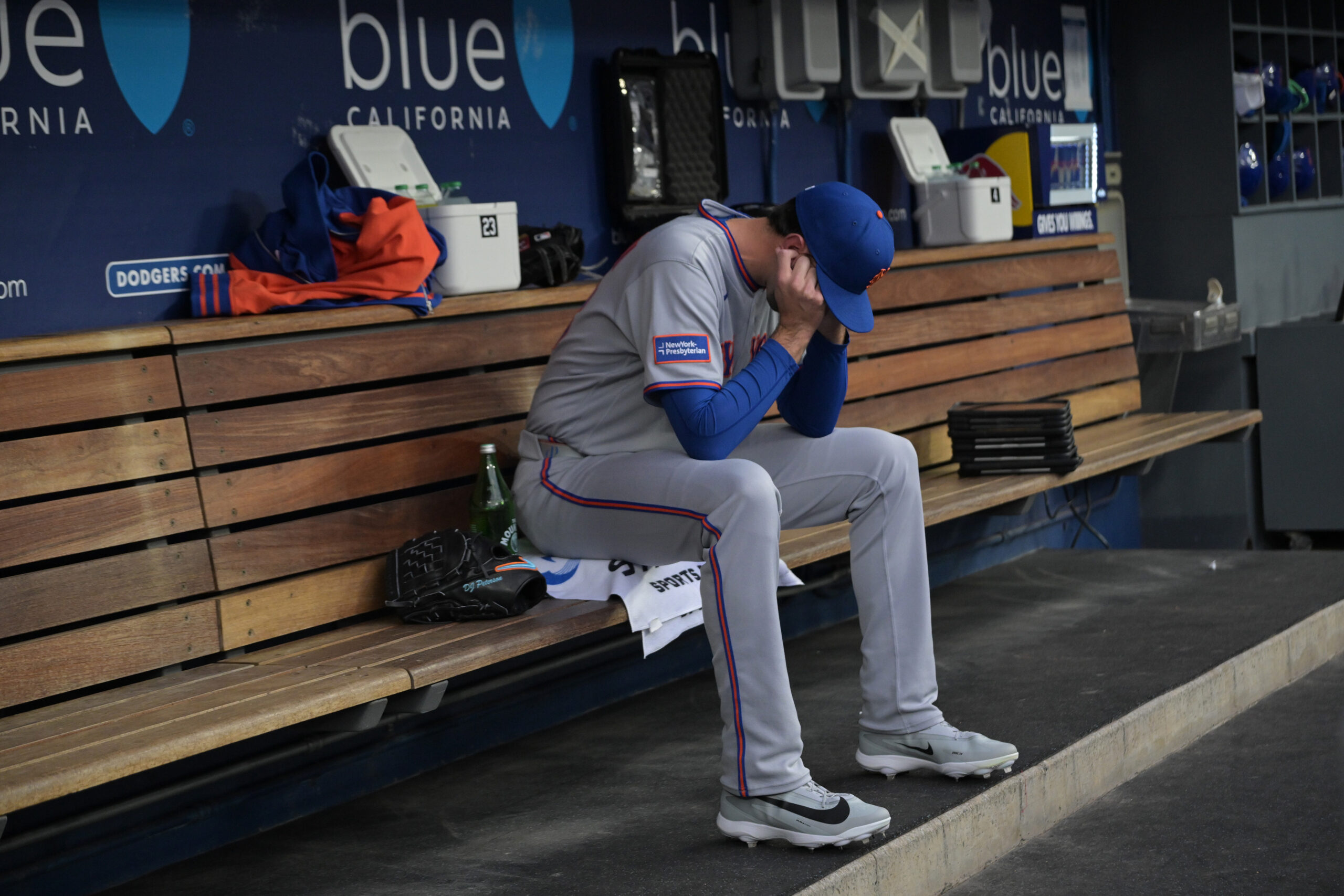
And then David Peterson took the mound on Wednesday.
Peterson lasted only 3 2/3 innings, giving up seven earned runs on five hits and three walks. Peterson exited to a flurry of boos from the crowd, leaving the bases loaded for Sean Manaea, who promptly gave up a grand slam to close Peterson’s ledger.
Wednesday’s start brought Peterson’s ERA to a career high of 6.53 and a staggering 8.10 in five games as a starter.
Mandatory Credit: Jayne Kamin-Oncea-Imagn Images
“He’s just gotta be able to compete in the strike zone,” Carlos Mendoza said to reporters after the game. “It’s just the feel for his pitches, not able to get in the zone consistently, and it cost him.”
The lack of trust in his pitches has really shown this year. Peterson is throwing sinkers at a career high this year, up almost six percent compared to 2025. The rate at which he throws each of his other four pitches has dropped by at least one percent. The problem with this: Peterson’s sinker is among the worst sinkers in the league this year.
Hitters, when facing Peterson’s sinker this season, are hitting .417 while slugging .583. The sinker has a staggering 63.9% hard-hit rate and a negative four-run value (third-worst of any qualified sinker). If he is going to turn this season around, it has to start with improvement of the sinker.
Sinker ball pitchers normally have higher hard hit rates. There is a trade-off between giving up hard contact and limiting damage because most of your hard contact is on the ground.
Peterson, however, takes this to the extreme. Outside his rookie year, Peterson has been in the 20th percentile or worse in hard-hit rates while remaining in the 77th percentile or better in ground ball rates. However, this year, his sinker is being hit on the ground around 5% less than in the previous two years, and it is being pulled in the air more than double that of each of the previous two years.
Unfortunately, looking under the hood, Peterson’s metrics are no better than his results. When he was at his best in 2024, he severely outperformed his “luck” metrics. His 2.90 ERA, .299 wOBA, and .349 SLG were much better than the 4.58 xERA, .333 xwOBA, and .407 xSLG. In 2025, he had the ninth-largest difference between his wOBA and xwOBA of any qualified starter. Throughout his career, Peterson’s xERA has been 4.39 or higher in six of his seven career years. This year, his xwOBA and xERA are only slightly worse than his career averages.
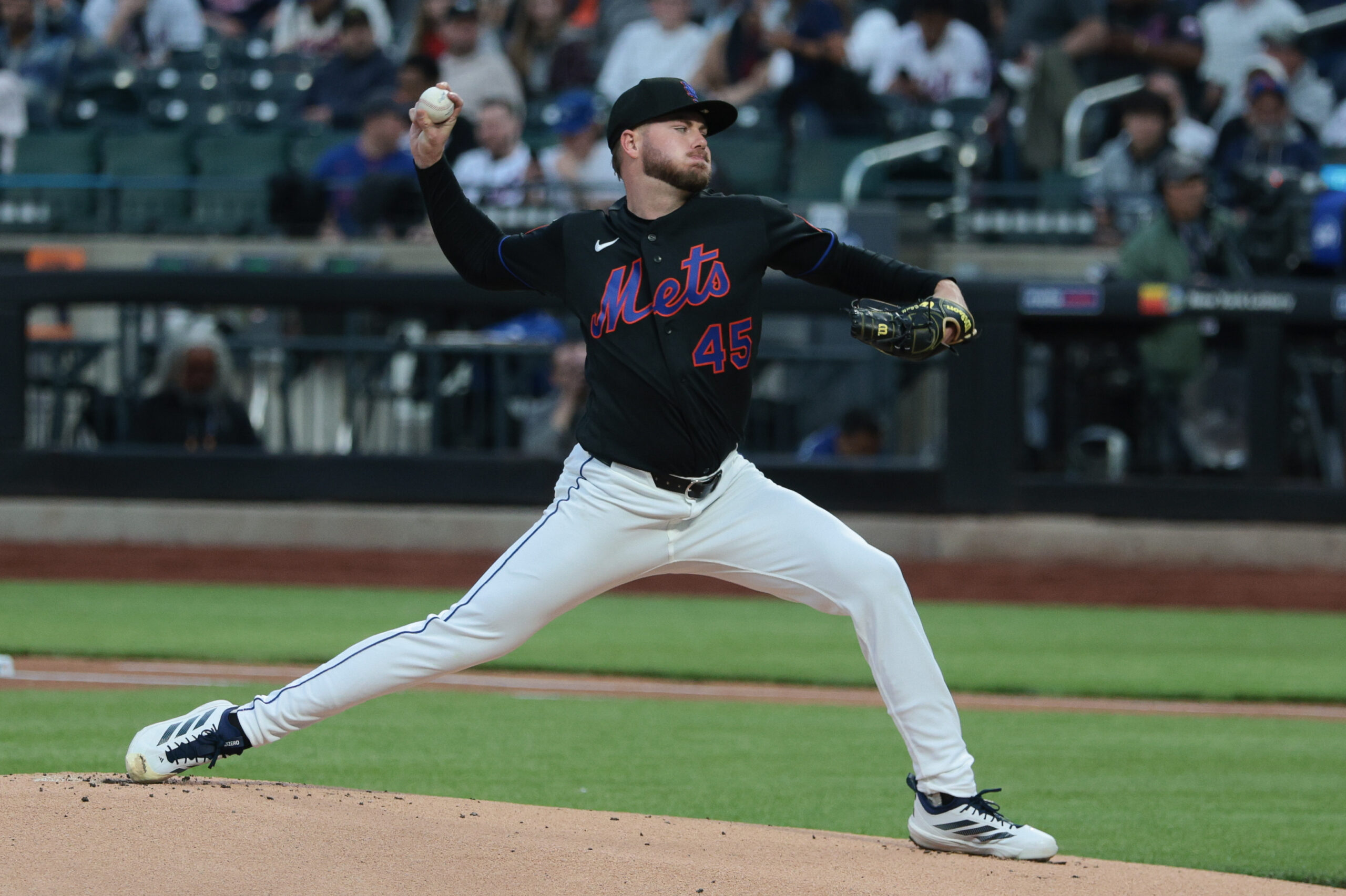
Christian Scott. Vincent Carchietta-Imagn Images
So, where do the Mets possibly go from here?” There simply are not enough answers for the rotation problems that this team currently has.
Clay Holmes and Nolan McLean have had fantastic starts to the year. Freddy Peralta has been solid, and you trust him to get even better. That makes three out of five spots. What do you do with the other two spots?
Kodai Senga was just placed on the injured list with lumbar spine inflammation. There is no telling how long Senga is out, but even when healthy, he should not be given a spot in the rotation. David Peterson cannot be trusted to start another game in the major leagues.
With Christian Scott coming back up to replace Senga, the Mets are hoping that one of their rotation issues can be fixed. The other spot is likely filled with a Tobias Myers opener into a long relief option. With Jonah Tong still finding his footing in Triple-A, it seems unlikely that he is an immediate solution.
But any solution right now feels like you are trying to put a Band-Aid on a David Peterson-sized hole.
However, if the Mets are trying to win as much as Stearns and Mendoza have communicated, Peterson cannot be a rotation option moving forward.