

Credit: Kyle Ross-USA TODAY Sports
With the New York Mets lacking reliable options within the starting rotation last season, they were forced to call upon one of their top young pitchers, David Peterson, and needed him to help carry the load, providing him an opportunity to shine during his major league debut.
Even though Peterson didn’t earn much consideration for the NL Rookie of the Year award, the 25-year-old was still very successful as a rookie and provided some much-needed stability to a pitching staff that was struggling mightily to keep runs off the scoreboard. As a result of his stellar performance, the youngster finished tied for the ninth-highest fWAR (0.5), the 15th-best ERA (3.74) and produced the 16th-best ERA- (88) among all qualified rookie starters, according to FanGraphs.com.
Preparing for his second season in the majors, the 6′ 6″ hurler was determined to build off his impressive rookie campaign and was looking to become an important piece of the Mets’ starting rotation once again. While the return of Marcus Stroman and the addition of Taijuan Walker have bumped him down a few spots on the depth chart, the injury to Carlos Carrasco was a major blow before Opening Day and the former top prospect has been counted on to step up in his absence ever since.
Despite a rough start to the season, which saw him allow six runs and seven hits over just 4.0 innings, Peterson has recovered nicely over his last four outings, resulting in a 3.10 ERA, 81 ERA- 3.55 FIP, 2.50 xFIP, .205 AVG, .261 BABIP, 30.4% strikeout rate, 7.6% walk rate and a 57.1% GB rate during that span.

Credit: Bill Streicher-USA TODAY Sports
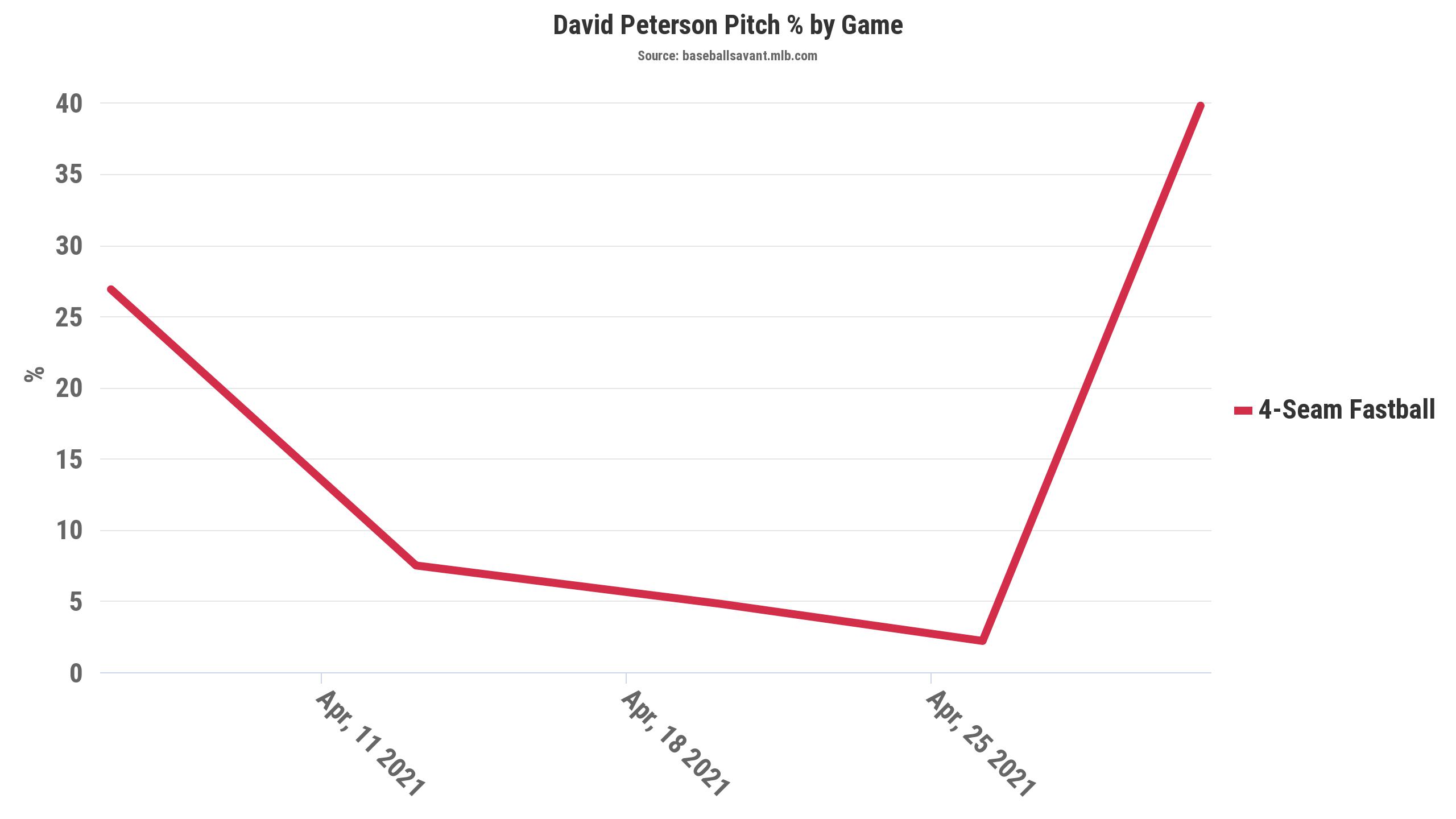
Without question, the Mets are extremely pleased with the left-hander’s recent performance, especially since he struggled with his control out of the gate. Having said that, the way he’s rebounded off his poor start to the campaign has been very interesting, as he’s barely utilized his low-90s four-seamer – his primary pitch – since Apr. 7.
After leaning heavily on his fastball in 2020, throwing it 37.4% of the time, Peterson was planning to replicate that same usage this season, or at least he was before the Philadelphia Phillies’ lineup created plenty of damage against it during his opening start. Utilizing his four-seamer just 27%, he allowed one double, two home runs, an average exit velocity of 103.0 mph and only created two whiffs with his primary weapon.
Following this disappointing appearance, the former first-round pick started relying on his low-90s sinker significantly more over his next three starts, as its usage climbed above 50% in each of those contests. Seemingly losing confidence in his four-seamer, the soft-throwing lefty essentially eliminated it from his repertoire and only utilized it 11 times from Apr. 14-27.
Changing things up during his latest start, which also came against the Phillies, Peterson reverted back to his fastball and used it as his primary offering, throwing it 39.8% of the time. Faring much better this time around, the encouraging young hurler wasn’t forced away from it as he performed much more effectively during his third meeting of the season against this NL East division rival.
Source: BaseballSavant.com
Digging into his remarkable showing, the Oregon standout generated eight swings and misses, five strikeouts, only allowed one hit and a 94.1 mph average exit velocity against his four-seamer. In total, the former Duck surrendered just one run, two walks, four hits and struck out eight batters over 5.0 innings, although the lack of offensive support ultimately earned him a no-decision.
Granted, it’s only one start but it was still very encouraging to watch Peterson regain a ton of confidence with his four-seamer. More importantly, he accomplished this feat against the same offense that didn’t seem to have any issues with one of his most reliable pitches at the start of April, which makes this recent performance even more notable.
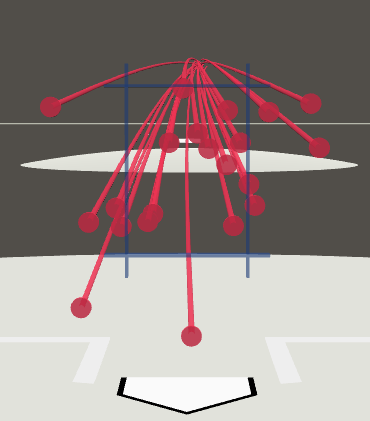
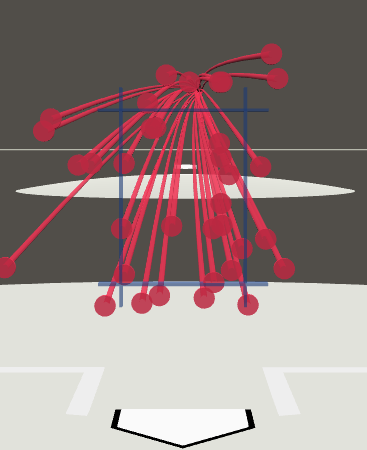
As for how the towering starter was able to enjoy much more success against the Phillies, one of the biggest reasons his fastball didn’t become a liability once again was because he kept it away from hitter-friendly areas in the strike zone.
Here’s where Peterson’s four-seamer was located on Apr. 7:
Source: BaseballSavant.com
And here’s where it was located on May 2:
Source: BaseballSavant.com
Unlike his first start of the season, Peterson largely located his four-seamer away from the heart of the plate his last time out, primarily placing it at the bottom and outer sections of the zone. Thanks to his improved command, he didn’t surrender nearly as much hard contact and was able to force opposing hitters to chase after pitches that would’ve been called balls.
Considering the California native relied on five pitches last season, which were his four-seamer, sinker, slider, changeup and curveball, there’s no question he’ll have a much higher ceiling in 2021 if he continues enjoying plenty of success with his fastball moving forward. Though it’s not considered an elite pitch, it’s still one that helps set up the rest of his offerings, particularly his low-80s breaking ball.
If Peterson can continue attacking the zone with each of his fastballs, there’s a very good chance he’ll be able to induce lots of swings and misses with his slider during two-strike counts, which has produced a 58.8% strikeout rate, 65.0% chase rate and a 21.4% whiff rate in those situations this season.
With pitchers Noah Syndergaard and Carrasco set to return in the near future, the Mets may ultimately be forced to send Peterson to the bullpen during the second half of the schedule if the current rotation stays healthy. If that transpires, he could become a multi-inning reliever down the stretch, allowing him to continue using his five-pitch mix.
But since Syndergaard and Stroman are slated to hit the open market this winter, a strong 2021 campaign would likely increase Peterson’s odds of becoming a major piece of the club’s pitching staff in future seasons.