With the New York Mets planning to shop extensively through the free-agent market over the next couple of months, there’s no question they’ll need to acquire a reliable catcher, but it also seems they could have one of the top backups in the majors who was able to take a huge step forward at the plate this past season.
While the 2020 campaign featured plenty of surprises, some positive and a few unfortunate ones, very few experts predicted catcher Tomas Nido would breakout offensively during his fourth season in the major leagues. Taking this a step further, almost no one would’ve guessed he’d steal some playing time away from teammate Wilson Ramos, although, that’s exactly what happened during this shortened campaign.
Despite being known as a defense-first player throughout his entire career, Nido found a way to change that narrative about himself and it paid off in a massive way. As a result of his hard work over the offseason, the 26-year-old looked like a completely different hitter, which allowed him to generate career highs in several different categories.
Over his 26 plate appearances, the right-hander produced the best ISO (.292), BABIP (.313), OBP (.346), SLG (.583), OPS (.929), wOBA (.383), walk rate (7.7%), barrel rate (11.1%), wRC+ (150), and fWAR rating (0.3) of his entire career. Additionally, the Mets’ backup catcher also created one double, two home runs, six RBIs, .292 AVG, 44.4% hard-hit rate, along with an 88.8 mph average exit velocity.
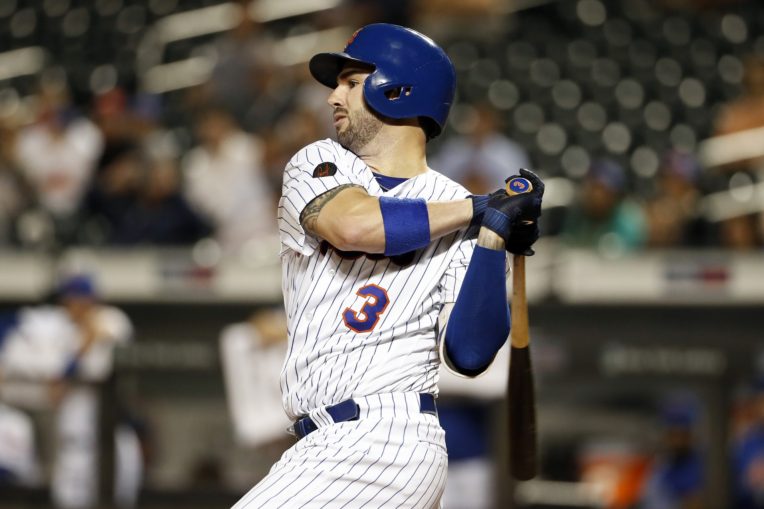
Unfortunately for Nido, his promising performance ended prematurely, as he sustained an undisclosed injury before the end of August and couldn’t draw back into the lineup before the regular season concluded. Since his results were created over a small sample size, everyone is now left wondering whether this was just a hot streak or if the six-foot backstop actually turned the corner offensively.
So what adjustments did the former eighth-round selection make in the batter’s box this past season? Well, after working with hitting instructor Lorenzo Gardmendia last offseason, the native of Puerto Rico realized he wasn’t using his lower half properly and was just swinging with his arms instead of his whole body.
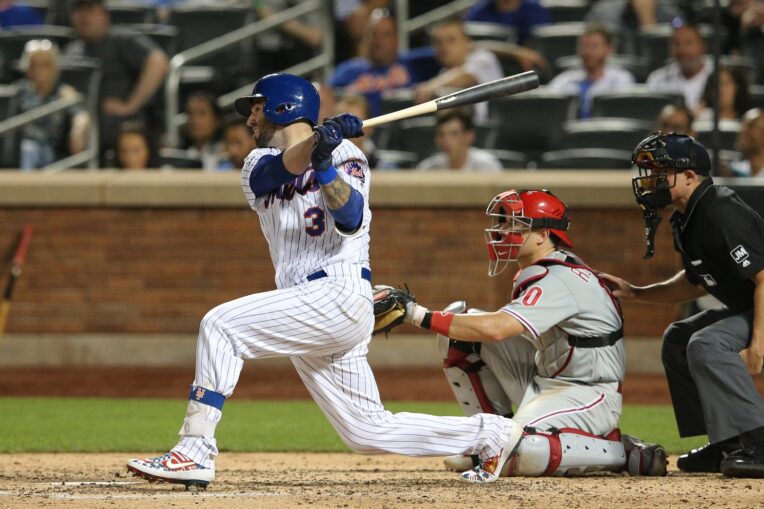
Here’s an example of Nido’s batting stance in 2019:
Here’s an example of how Nido incorporated his lower half into his new batting stance in 2020:
As seen in the clips above, Nido’s improved stance at the plate helped him explode with his hips more effectively, allowing him to induce a ton of hard contact compared to previous seasons. In particular, this adjustment improved his ability to barrel up breaking balls and offspeed pitches, which is something he previously struggled to accomplish in the majors.
In 2020, the former top prospect recorded a 12.5% barrel rate, 37.5% hard-hit rate, 37.5% LD rate, and a 91.3 mph average exit velocity against curveballs and sliders. As for his metrics against changeups and splitters, he generated a 33.3% barrel rate, 33.3% hard-hit rate, 33.3% LD rate, along with an 88.3 mph average exit velocity against them.
In comparison, the suddenly dual-threat catcher produced a 3.1% barrel rate, 25.0% hard-hit rate, 15.6% LD rate, and an 84.4 mph average exit velocity against breaking balls in 2019. Additionally, he created an 8.3% barrel rate, 16.7% hard-hit rate, 8.3% LD rate, along with an 85.8 mph average exit velocity against offspeed pitches during that same campaign.
Along with inducing more hard contact, Nido also improved his mentality in the batter’s box, as he reduced his aggressiveness and didn’t expand the strike zone nearly as much compared to his 2019 performance. Adding to this, he also didn’t swing at the first pitch as often and increased his ability to create consistent contact, which are key aspects he hadn’t been able to improve on prior to this past season.
Over his limited playing time, the Orangewood Christian HS product produced a 25.6% chase rate (13.5% decrease from 2019), 32.7% whiff rate (3.8% decrease), 45.5% chase whiff rate (9.3% decrease), and a 34.6% first-pitch swing rate (14.0% decrease).
Taking into account these two critical adjustments Nido made to his game, the soon-to-be 27-year-old should have a very good chance of maintaining these impressive hard-contact and plate discipline results over a full 162-game season. While he’ll likely experience some high and low peaks, especially if he returns to his backup duties, his overall production by the conclusion of the 2021 campaign might not look much different from his current metrics.
Despite making considerable progress at the dish in 2020, some of his batted-ball and launch angle metrics are two factors that could potentially prevent him from turning the corner next season, as they each stood out negatively. Though he only endured these issues against fastballs and offspeed pitches, it’s still a concerning sign that’ll need to be corrected over the offseason.
Through his seven batted ball events against heaters, Nido recorded a troubling 85.7 GB rate (29.1% increase from 2019), 14.3% FB rate (4.6% increase), -12 degree average launch angle (20 degrees lower), and he failed to generate any line drives against them.
As for offspeed pitches, the right-handed catcher produced a 66.7% GB rate (16.7% increase), -13 degree average launch angle (28 degrees lower), and he failed to induce any fly balls against changeups and splitters through his three batted ball events.
If Nido can prove he’s capable of maintaining these results over a larger sample size, and there’s a strong chance he could accomplish that feat, then it might be possible for him to compete for regular playing time next season. That being said, if the Mets sign superstar catcher J.T. Realmuto in free agency, the two-time All-Star will undoubtedly occupy the majority of the duties behind the plate moving forward.
But if the Mets don’t land Realmuto this offseason and are forced to sign a second-tier backstop, that could open the door for Nido to potentially split time in a starting role in 2021. While that might seem a little far-fetched at this point, he’s proven to be one of the top defenders in the majors – finishing tied for the eighth-highest CSAA (.015), the 16th-highest CSAA Runs (5.3), and tied for the 17th-highest FRAA (5.1) among all catchers in 2019 – and it appears the offensive part of his craft might not be far away from reaching a high status as well.
With that in mind, it’ll be crucial for Nido to pick up right where he left off in 2020 when spring training opens next season, as his potential opportunity to earn regular playing time could be taken away very quickly if he fails to perform effectively at the plate through the first few weeks of camp. But since he won’t become eligible for free agency until after the 2024 campaign, the talented catcher should remain a valuable member of this team over the next several seasons.