It’s the middle of May.
It’s deep enough into the season now that it’s fair to say Bo Bichette has been a disappointment.
While a few other Mets have finally started to get going — Brett Baty, Carson Benge and Marcus Semien, to name a few — Bichette has remained in a slump. Despite this, the Mets have kept him in the top third of the order. It’s partly due to necessity, especially with the Mets’ offensive struggles and all of the injuries that have befallen them.
But Bichette’s OPS, now down to .539 after an 0-for-4 performance on Friday, is starting to stick out a little extra.
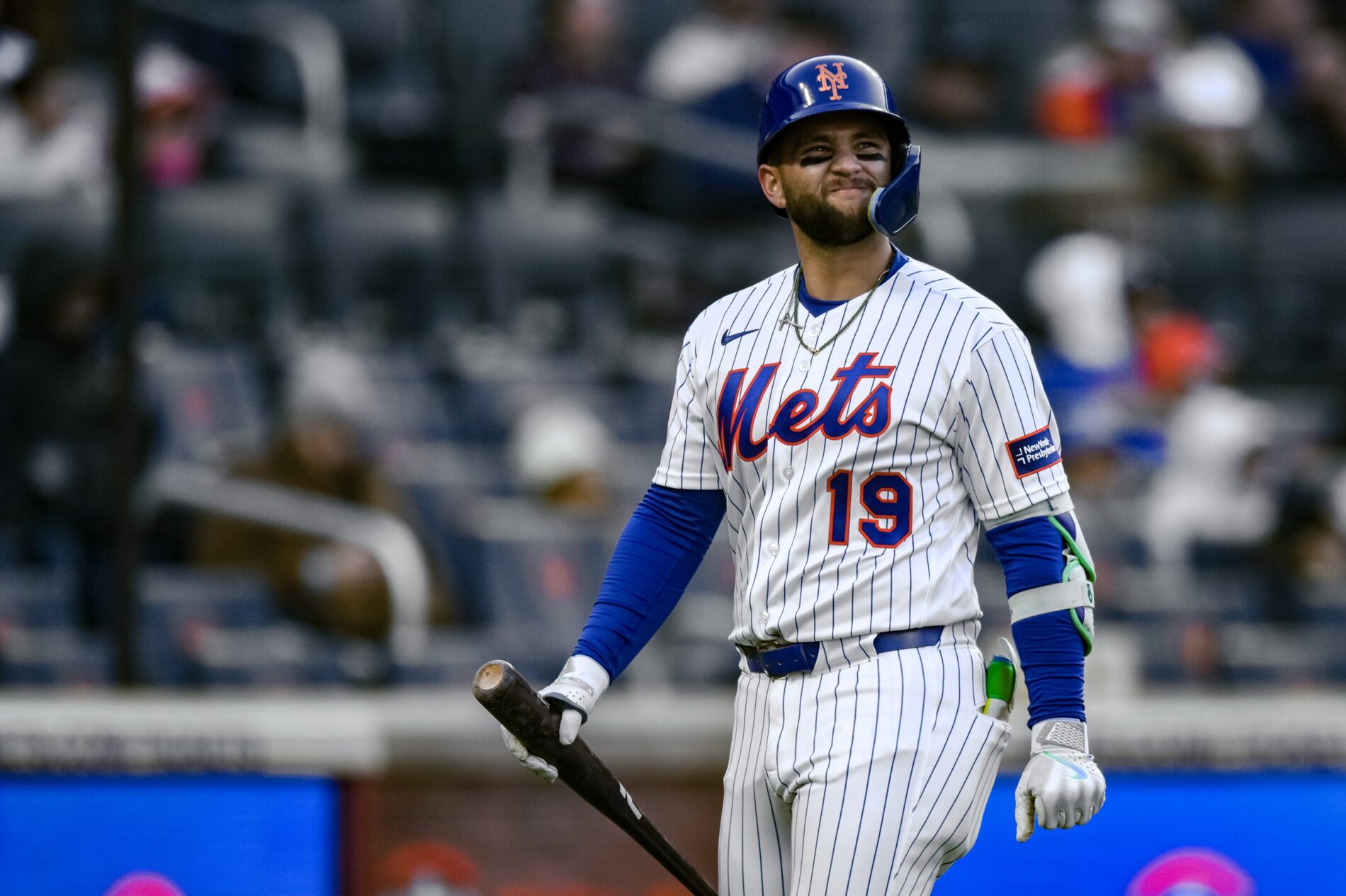
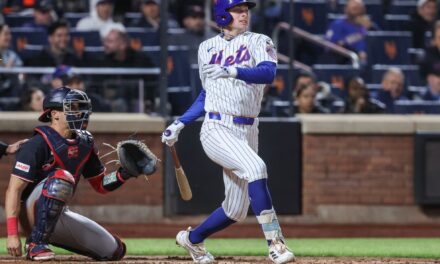
Photo Credit: John Jones-Imagn Images
When the Mets signed Bichette, they were banking on Bichette’s down year in 2024 being exactly that: an aberration. But, at least through 44 games, Bichette’s numbers have actually been a little worse than in that career-worst year. His batting line is .213/.264/.275, compared to .225/.277/.322 two years ago.
In five of his six MLB seasons, Bichette had posted a 120 wRC+ or better. His current wRC+ isn’t even half of that.
The 28-year-old should still be in his prime. But he’s not getting it done, and it’s becoming more amplified as the Mets are getting deeper into their season.
Bichette’s 0-for-4 in Friday’s 5-2 loss to the Yankees included a strikeout in the eighth inning. He swung and missed three times, once at a 93 mph fastball over the heart of the plate and then twice at two splitters around 80 mph low in the zone.
His struggles against fastballs have been a season-long theme. He came into Friday hitting just .215 against them, compared to .306 last year.
Struggling against fastballs was also a problem in his 2024 down year. He hit only .230 against fastballs that season; his average against fastballs has been above .300 in all of the good seasons in his career.
To make matters worse, he’s also struggling against breaking balls. He’s hitting .214 and slugging .286 against secondary offerings. He hit .310 against them last year.
Some of the numbers on Bichette’s batted ball profile aren’t great: His ground ball rate is more than 6% higher than his career norm, his line drive rate is 3.5% lower and he’s pulling the ball less often.
But it’s not all doom and gloom. There are some justifiers for cautious optimism — the main one being that he’s still hitting the ball decently hard. His 90.3 average exit velocity is more or less in line with his career average (90.8). His expected batting average is .281. His expected slugging percentage is .396, which is still underwhelming but a whole lot better than his current SLG of .275.
His strikeout and walk rates are similar to his career averages. His BABIP entered Friday at .255, compared to his career mark of .334. Those are all moderately encouraging signs.
Looking specifically at his performance against fastballs, his xBA in that category entered Friday at .285.
In 2024, the other season where he struggled, his xBA on fastballs was .275. That might seem worrying, since it indicates that his actual BA never caught up to his xBA that year. And that is true — however, Bichette was limited to 81 games. He didn’t play a full season. Even in the games he did play, he was hampered by injuries. His season was halted and resumed multiple times for various IL stints.
In some ways, though, that makes Bichette’s struggles this year all the more head-scratching. Bichette hasn’t been dealing with any reported injuries. There might be a little bit of bad luck involved, but there’s no obvious “excuse” to throw around for his poor play. He was signed to be an .800-plus OPS bat in the thick of the order, and he simply has not lived up to that threshold.
Bichette will enter the second half of May with just two home runs in 193 plate appearances this season. His isolated power is .062. His numbers right now are a shell of what he was expected to be, and what he has been for most of his career.
In summary, Bichette might be due for a little bit of positive regression — but he’s struggling against fastballs, he’s struggling against breaking balls and he’s hardly hitting for any power. At first, it could be chocked up to an early-season slump, which isn’t particularly unusual for any hitter, but it’s getting to a point where it’s hard to ignore.
One has to wonder about what it will take for Bichette to get dropped in the order. When the whole team was struggling offensively, it didn’t make much sense to move him down. But now that some of the other Mets are starting to hit a little, there might be some pressure on Bichette to get it going in the two-hole.
As his struggles continue, they will only continue to become more magnified.