Times, there a changin’. Ron Burgundy may have never heard that song, but New York Mets general manager Brodie Van Wagenen sure has.
After turning over a significant portion of the big-league roster last winter in an effort to make the playoffs in 2019, the “Come and get us” Mets are only watching the postseason after finishing with an 86-76 record. But after remembering that this club had a 38-47 record at the end of June, this past year was a lot more fun than we thought it’d be. BVW will likely find a way to be active again this winter from an acquisition standpoint and will also need to find a new manager after firing Mickey Callaway.
Despite missing the playoffs for the third consecutive year, there appears to be a solid nucleus of players forming in Queens. And as a generally positive person, I like to think there’s almost always something good that can be taken from statistics for players with a large enough sample size. It may be harder to find for some than others, but it’s still possible. We try to figure that out for most of the Mets’ 2019 roster, based on a few qualifications.
In order to be included below, players had to finish the year on New York’s roster (whether they were active or on the injured list). Hitters needed to accumulate 100-plus plate appearances, starting pitchers needed 90-plus innings, and relief pitchers needed at least 30 frames under their respective belts.
Position Players
If we start with Pete Alonso, then it all goes downhill from here, right? It’s hard to find an encouraging stat about the (probable) National League Rookie of the Year that hasn’t already been mentioned, but that doesn’t mean we can’t still try. The league average when looking at homers-per-fly-ball rate during the regular season was 15.3%. Alonso doubled that number at 30.6% and never encountered a month where his HR/FB rate was lower than 26.7% (that happened in August).
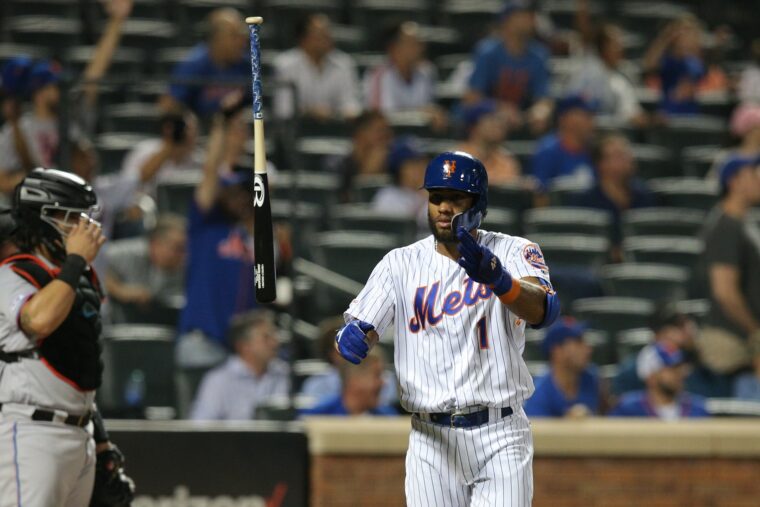
Amed Rosario‘s rise in offensive production continued in 2019 by increasing his season-long wRC+ for the second straight year and finishing with an even 100. He’s also improved his hard-hit rate from 24.1% in 2017 to 27.7% in 2018 before finishing with a 33.4% mark this past year.
Michael Conforto secured the first of what we hope will be multiple seasons of 30-plus home runs. His chase rate has stayed somewhat consistent around the 26-27% mark throughout his young career, but his swing rate on strikes has been more of a roller coster. Since debuting in 2015, check out how that percentage has changed, first getting worse before getting better: 68.0%, 66.2%, 63.7%, 65.1%, 72.4%.
The most impressive part of Jeff McNeil‘s season was his power surge. After hitting three dingers in 63 games as a rookie in 2018, he collected 23 homers in just 133 games in 2019. Most of that damage came after the All-Star break, too. At the conclusion of the first half, McNeil had slugged seven homers through 318 plate appearances. Despite stepping to the plate 69 fewer times (nice) in the second half, he more than doubled his power production with 16 dingers.
Among qualified hitters, nobody produced a higher ground-ball rate than Wilson Ramos‘ 62.4%. That’s not exactly a good thing, but it could’ve been a lot worse. Through his first month as a Met (99 plate appearances) he collected just three extra-base hits and owned a .056 ISO. From May 1st through the end of the season (425 plate appearances), he collected 30 extra-base hits and improved his ISO to a much more palatable .146.
Todd Frazier saw four-seam fastballs more than any other pitch in 2019, and he took advantage of them. His 170 wRC+ against that specific offering is a new single-season career-high mark, while his .323 ISO in that situation was the third-best of his career.
There’s a lot to be excited about when it comes to J.D. Davis after seeing him get significant big-league action for the first time. Citi Field is typically a place that suppresses a player’s offensive statistics, but not Davis. In 230 plate appearances at home, he slashed .354/.413/.665 with 16 home runs and 33 RBI, good for a 145 wRC+. That balanced out his performance on the road, which sussed out to a .260/.323/.387 line with six homers, 24 RBI, and an 86 wRC+ in 223 plate appearances.
Robinson Cano‘s year was one to forget in his return to the Big Apple. Even though his time was limited due to multiple trips to the injured list, he looked a lot more like himself in the second half. The veteran second baseman posted a 126 wRC+ with nine homers and an .880 OPS through 165 plate appearances. Those numbers settled in at 72, four, and .646, respectively, in 258 plate appearances in the first half.
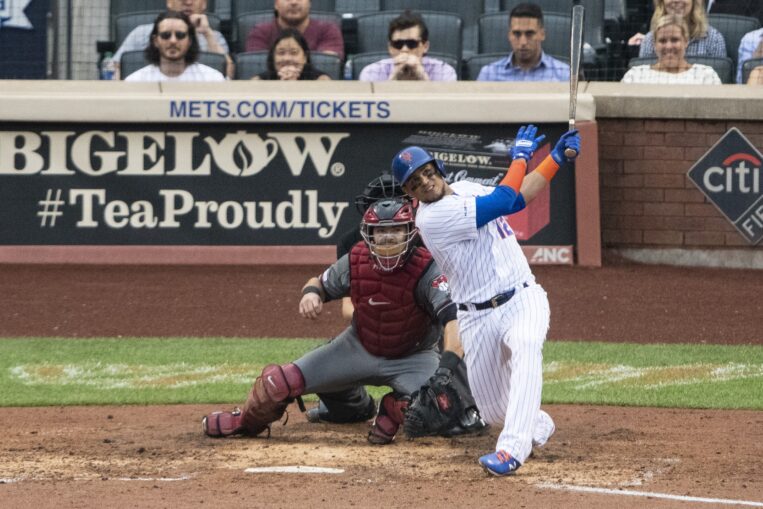
Juan Lagares‘ year at the plate was dreadful when looking at the whole picture, but it would’ve been a lot worse had he not picked it up in the second half (32 wRC+ before All-Star break, 95 wRC+ after). He did watch his soft-hit rate dip down to 18.3%, which is the first time it settled in below 20.0% since 2015. His infield-fly rate also ended up at 9.5%, the first time it’s been below 11.0% since 2014.
Brandon Nimmo‘s bid at building on his breakout 2018 season was thwarted thanks to a long stint on the IL, but he still proved to be valuable when active. In the three seasons he’s amassed at least 200 plate appearances (each year since 2017), the outfielder has never finished with a walk rate below 15.0% or an on-base percentage worse than .375.
Dominic Smith spent parts of his first two big-league seasons digging a hole for himself, but he spent 2019 working his way out of it. Through his first 332 plate appearances in the majors, he hit 14 homers while producing -1.1 fWAR. Through the 197 plate appearances he accumulated this past year, he hit 11 homers while producing 0.8 fWAR.
Tomas Nido is not known for his offense, but there were some bright spots at the plate (even if they were few and far between). In 2018, he slashed .192/.276/.192 against four-seam fastballs, which resulted in a 46 wRC+. Those numbers improved to .281/.361/.500 and 128, respectively, in very similar sample sizes.
A change of scenery was a good thing for Joe Panik. His OPS improved more than 100 points by switching out his San Francisco Giants uniform for the orange and blue (.627 to .738). It also took him 388 plate appearances to hit three homers for the Giants, but just 103 trips to the plate to blast two as a Met.
Starting Pitchers
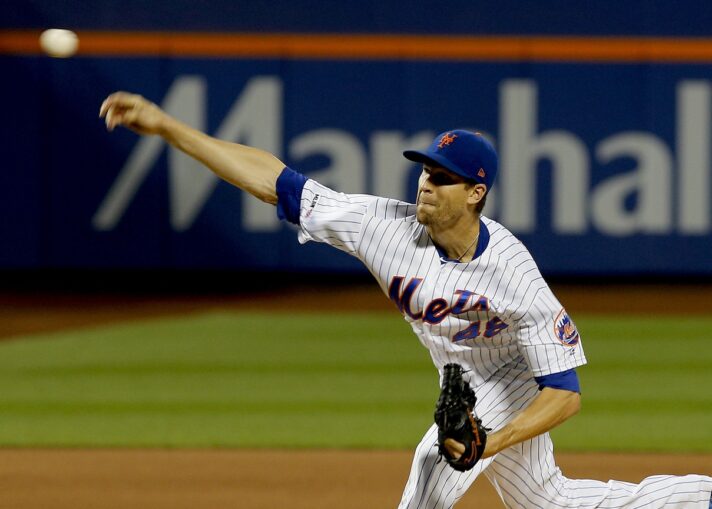
There are so many awesome things to point out about Jacob deGrom‘s season. My favorite, though, is how he bounced back after posting a 4.85 ERA through his first 26 innings. Over his final 178 frames, he was the same old deGrominant pitcher we’ve come to know and love, posting a 2.07 ERA, which included a second consecutive strong finish to the year.
It was a bit of a bumpy ride for Noah Syndergaard in 2019, but he did see a resurgence in the effectiveness of his curveball. Opposing hitters produced a 41 wRC+ against it, which was the lowest of all Thor’s pitches. That offering also produced a 42.9% strikeout rate, the highest it’s been since 2016.
Zack Wheeler heads toward free agency with another strong year and some firsts under his belt. The righty’s 4.7 fWAR is a new single-season career high, and his 195.1 innings pitched are also a new high-water mark, while his 6.0% walk rate was the lowest it’s ever been over a full year’s worth of innings.
I just spent some time talking about Steven Matz‘s year earlier this week, which included some positives and negatives. The biggest positive in my eyes, though, was seeing his homers allowed per nine innings rate drop from 2.00 in the first half to 1.02 in the second half.
Relief Pitchers
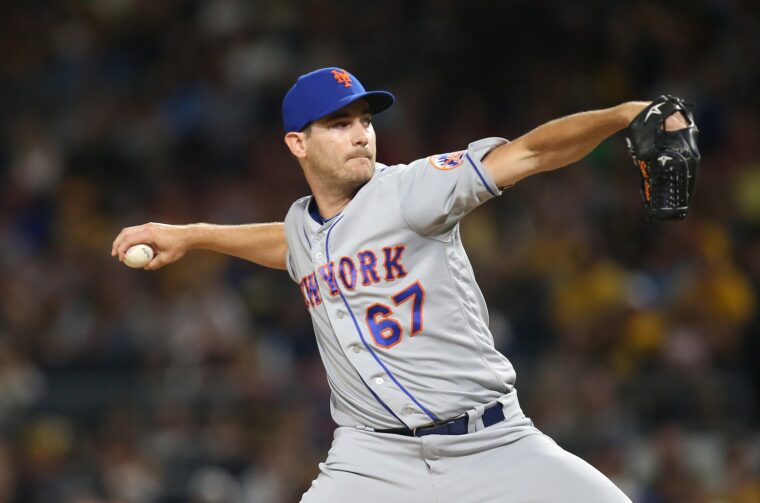
Similar to Alonso and deGrom, there are plenty of encouraging stats to point out when summing up Seth Lugo‘s 2019. The one that jumps out the most is his 2.2 fWAR, which ranked fourth among all qualified relievers and was more than the rest of the Mets’ bullpen combined.
Even though Robert Gsellman increased his slider usage by about 10 percentage points, his 18.3% swinging-strike rate still out-did 2018’s 18.0% mark. Although the 58 opponent wRC+ on that pitch is a big increase from the 1 wRC+ produced the year prior, this was still the right-hander’s most effective pitch of the season.
This is where is where it starts getting hard, you guys. It took a lot longer to get here than it did last year, at least. Jeurys Familia‘s year was dreadful in pretty much every way. But if we’re looking at it purely from a run prevention standpoint, then he improved greatly as the year went on. Entering the All-Star break, his 7.50 ERA was on track to be one of the worst in Mets history, but he turned it around by posting a 3.90 ERA in the second half.
What I just said about Familia’s year can also certainly be said about Edwin Diaz‘s. He went from being one of baseball’s best relievers with a 3.5 fWAR in 2018 to posting a 0.0 fWAR in 2019. But when hitters didn’t make contact, Diaz was OK — his 39.0% strikeout rate ranked fifth-best among qualified relievers.
Justin Wilson‘s cutter usage jumped 24 percentage points to 39.0% in 2019. Opposing hitters saw their wRC+ against this offering go from 147 with a .116 ISO to a 53 wRC+ with a .050 ISO.
Luis Avilan was a huge part of the Mets’ second-half surge back into playoff contention. Between July and August, he allowed just one run over 16.2 innings pitched, which resulted in a 0.54 ERA. He also produced a 31.7% soft-hit rate and 24.4% hard-hit rate during that time.