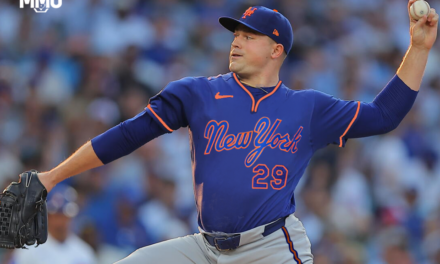
The current free agent class is not the strongest, even when it comes to starting pitching outside of one player.
As of November 24, the Mets have signed said player to a nine-year, $450 million contract to lead their rotation. Tarik Skubal is a true ace. He is a workhorse who has averaged 6.2 innings per start over the last three seasons. He dramatically raises both the floor and ceiling of this Mets roster, takes pressure off the young starters, and allows the Mets to get creative with the remainder of their rotation.
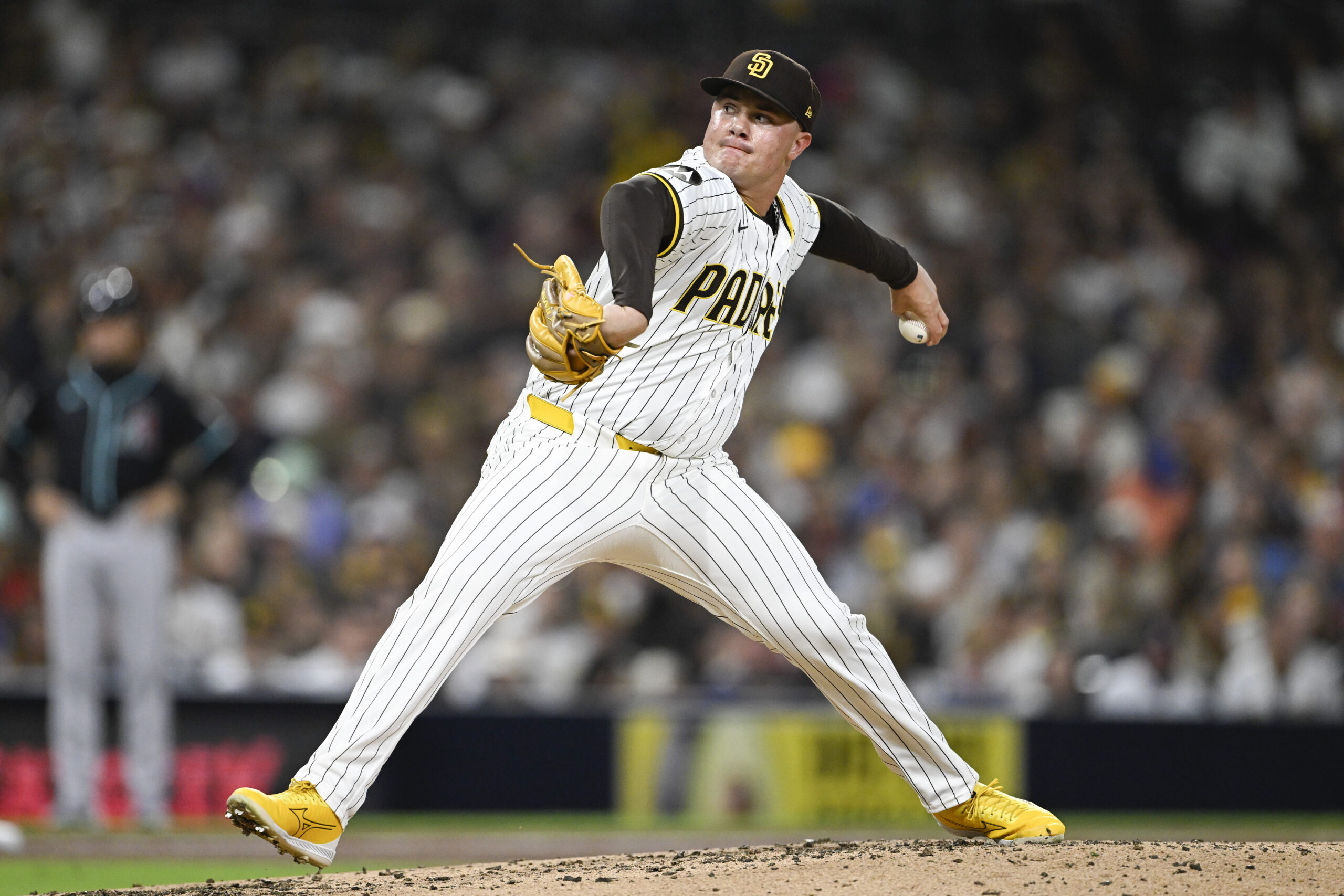
Adrian Morejón. Denis Poroy-Imagn Images
Why Can They Be More Creative Now?
Tarik Skubal will be taking the ball every fifth day. The Mets can have as much confidence as possible that in each of those starts, they will have a chance to win. Over the previous three seasons, Skubal has made 88 starts, and his team won 59 of them (67%). That includes 16 starts on a Tigers team that struggled in 2026, leading to them trading Skubal.
Across a 31-start season, that is winning roughly 21 games. Compare that to Nolan McLean, a very good first or second starter, but one that is not an ace on Skubal’s level. In 2026, the Mets won fifteen of his 31 starts (48%). Pairing those two together, you can comfortably project 35 or more wins to come when those two are on the mound with 100 more games to cover. This gives the Mets a good starting point to get creative from while also working to not have “uncapped downside scenarios.”
What Are Some “Creative” Rotation Moves?
Go For a Reliever Conversion
The clear candidate for a reliever-to-starter conversion is Adrian Morejon. In our free agent profile, MMO broke down why he is a perfect candidate to become a starting pitcher. That said, on November 10, The Athletic reported that “Free-agent left-hander Adrian Morejon is drawing interest as a starter, but his preference is to remain a reliever.” It would not make sense to give up the qualifying offer penalties for Morejon if he is not going to start.
Sean Newcomb is another player who fits this mold well. He is coming off a 2026 season where he threw 90.1 innings to a 3.09 ERA and 1.18 WHIP, which comes after a 2025 season where he threw 92.1 innings to a 2.73 ERA and 1.35 WHIP. He has made 71 starts in his career, with 11 coming over the previous two seasons. That is in addition to 91 relief appearances. His velocity is a bit lower than you typically want from a reliever-to-starter conversion, but he has a deep pitch mix with very high spin breakers and a good ground ball rate.
If the Mets were to make a trade, Grant Taylor is the clear candidate—so clear that Matt Getz recently said on MLB.com that they are converting Taylor to a starter and that the White Sox think he can be a “top-of-the-rotation-type arm.” This likely means he is either not available via trade or would cost more than the Mets would consider. A name Jarrett Siedler of Baseball Prospectus named recently that could be a potential reliever-to-starter conversion is Jonathan Bowlan.
Mason Miller of the Padres is another obvious candidate for a reliever-to-starter conversion with his velocity and pitch mix, but the cost would likely be astronomical. The same could be said of Louis Varland of the Toronto Blue Jays. Juan Morillo from the Diamondbacks has the velocity and pitch mix and could cost less than the previous two names.
The Mets have had success converting relievers into starters with Clay Holmes, Nolan McLean and Christian Scott, so this is one path they could go down for upside.
Kaima Taira
Target Unique Traits to Optimize
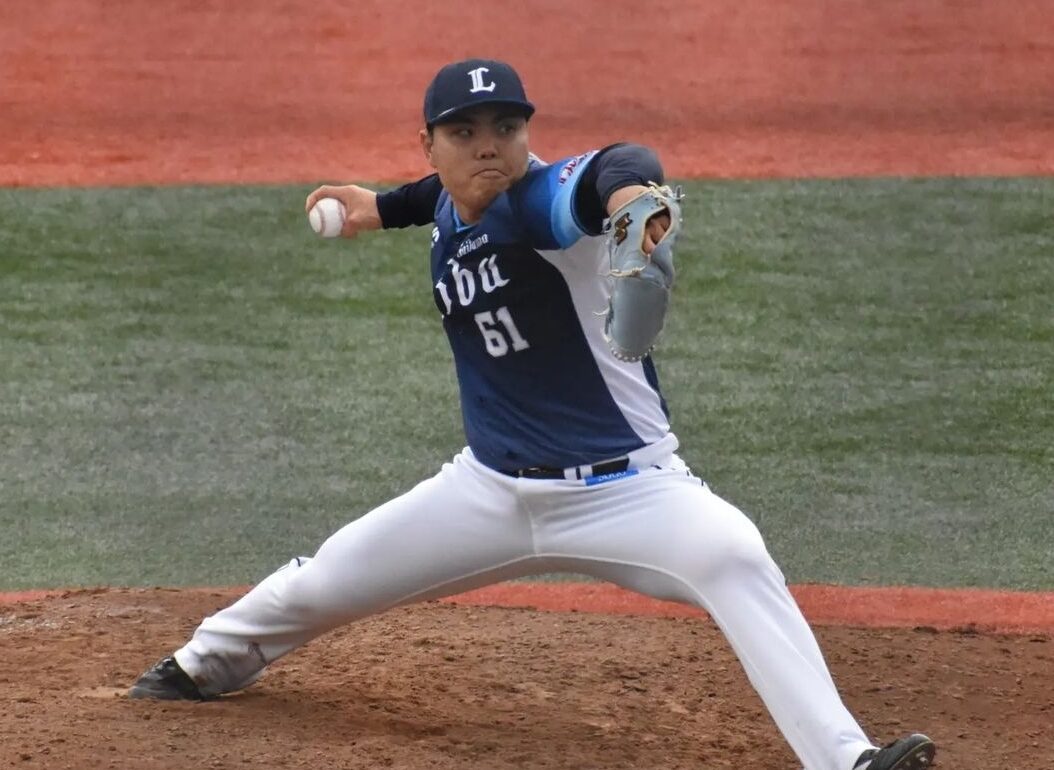
A pitcher like Kaima Taira is unique not just because of his size, but because of his unique release traits. Per Lance Brozdowski, “he has a below-average arm angle (~25°) with 6.8’ extension that pulls his release point down to 4.9’—lower than 97% of MLB righties. He also releases the ball further toward third base than 90% of MLB righties.” Taira recently converted from a reliever to a starter and may not be fully optimized as a starter. He could be a perfect target to take on and build off of those elite fastball traits.
Shota Imanaga has always had an interesting splitter with a very low spin rate, and in 2026 it generated a 46% chase rate and a 41.4% whiff rate. His issues have typically come from his inability to prevent home runs on his other pitches. Potentially, the Mets could see a path to increasing his velocity on his fastball or replacing it with a different shape.
Patrick Sandoval has an interesting changeup that breaks almost as far in the opposite direction as his sweeper and could be an interesting pitch to build around. Could Kyle Freeland offer something when not pitching in Coors? His fastball played much better on the road. Aaron Civale throws a curveball with over 3,000 rpm and has had success as a starter in the past.
Give the Young Guys a Shot
In a rotation that already has Tarik Skubal, Nolan McLean and Christian Scott, there may not be a need to add a big arm. Potentially the Mets could view Sean Manaea as a bounce-back candidate if used properly. When he struggled down the stretch, it was largely from the Mets pushing him out there for the sixth inning. Even in September, when he looked gassed, through five innings he had a 3.96 ERA and 1.00 WHIP.
The Mets could decide to use the last spot in the rotation as a competition at camp between young starters like Jonah Tong, Zac Thornton, Gary Gill Hill and Jonathan Santucci, as well as non-roster invites. The issue here is that they would be starting from their depth and, in turn, making that overall depth weaker.
Go Broke or Go Home
The Mets could also just decide to go all in. They could give up the QO penalties to sign Trevor Rogers. They could try to get Michael King on a short-term and high-AAV deal. They could make a trade for a big starter like Joe Ryan. They could decide that they want to have the best opening day rotation on paper they can have and throw caution to the wind.
It’s Time to Get Creative
Whatever the Mets decide, they have many more options available to them with Tarik Skubal on the roster than they did before they signed him. Having a true ace at the top of the rotation affords them cover to get creative and experiment more. It could also put pressure on the team to invest in more sure things. With the impending lockout, the answers could be here sooner rather than later.