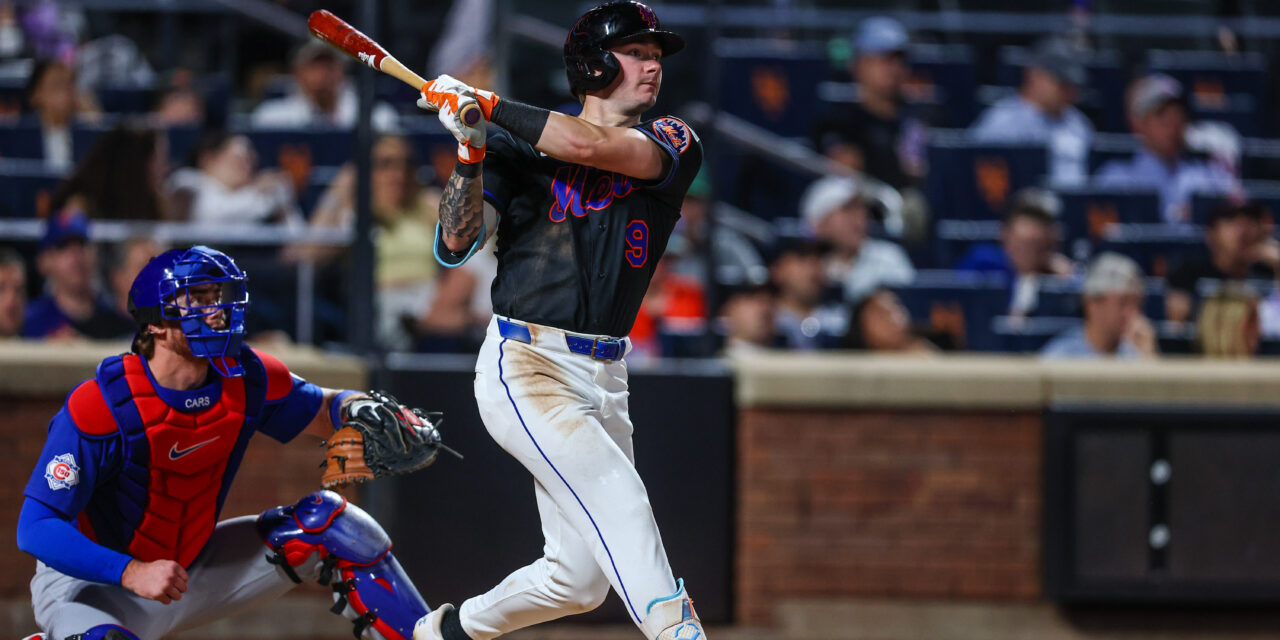
A.J. Ewing this year peaked at an .805 OPS on July 10. After that his lowest point was August 29 at .655.
In the nine games since then he has slashed .424/.474/.606/.1.080.
This has brought his full season up to a slash of .252/.322/.370/.692 with eight home runs, 23 stolen bases, 35 RBIs, and 48 runs in 104 games.
Across a full season he would have:
- 12 home runs
- 35 stolen bases
- 55 RBIs
- 75 runs
- 4.4 bWAR
- 3 fWAR
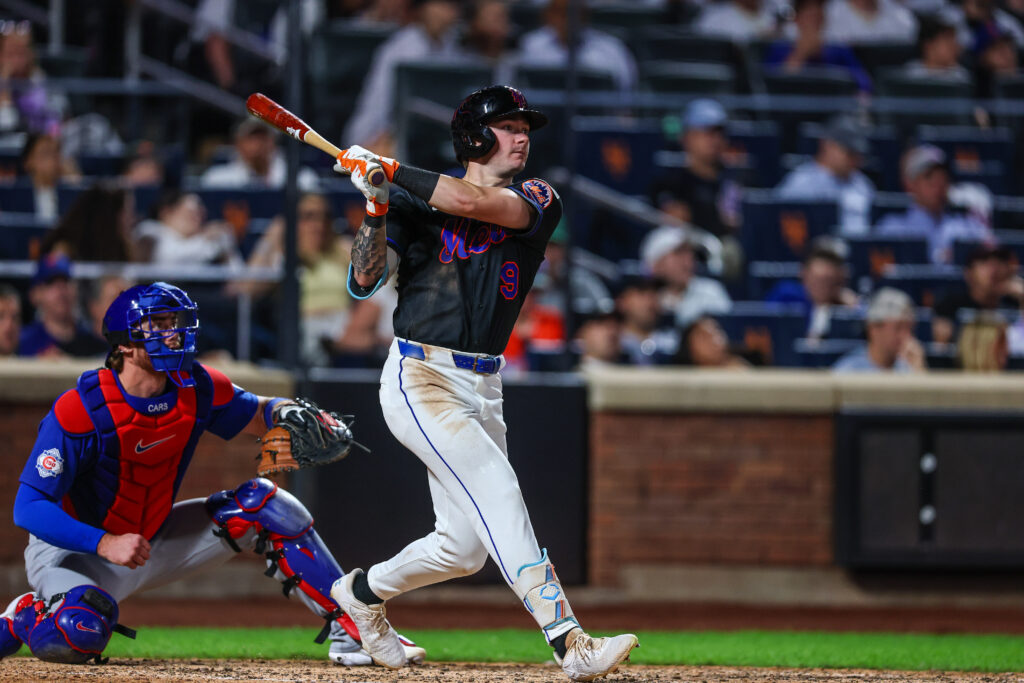
Mandatory Credit: Vincent Carchietta-Imagn Images
Ewing is not likely to maintain a 1.080 OPS the remainder of the season. He also is not the .462 OPS player he was in August long term. That is likely just the normal variance of a rookie season, especially a rookie that only played twelve games in Triple-A before getting the call.
Looking “under the hood” there is a lot to like about Ewing and a lot for him to build on in 2027.
Ewing has a plus hit tool. Potentially a plus plus hit tool. His above average 85.5% zone-contact rate puts him in line with players like Francisco Lindor, Bobby Witt Jr. and Roman Anthony. His 4.2 contact over expected lines up with JJ Wetherholt, Seiya Suzuki and Freddie Freeman. His 52.9% selectivity lines up with William Contreras, Ronald Acuna Jr. and Tyler Soderstrom. These are obviously the rosier comparisons chosen, but it shows how his contact traits line up compared to some of the game’s top performers.
In terms of power Ewing is not near the top of any leaderboards. His 103.9 miles per hour 90% exit velocity is slightly above average and lines up with players like Colt Keith and Masyn Winn. He is not far off in terms of 90% EV this year from Jazz Chisholm Jr., Daylen Lile, or Miguel Vargas, but all three of them have optimized their power output in other ways.
Ewing’s 11.3 damage per batted ball rate lines up with Colt Keith again, as well as Gabriel Moreno and Paul Goldschmidt. His 110.5 miles per hour max exit velocity lines up with Brandon Nimmo, Dansby Swanson and Austin Wells.
While Ewing is unlikely to develop into a true power threat, he could become more of a 15 home run player and maybe develop into even a 20 home run player if he can truly optimize his ‘A swing”. When Ewing pulls the ball in the air he is able to better access that power but his 11.1% pulled fly ball rate is only in the 32nd percentile. His fast swing rate is only 11.9% showing he could utilize that “A swing” more.
Ewing does not chase at a high rate with his 26.3% chase rate sitting in the 77th percentile. His 25.3% strikeout rate is a bit higher than you would expect with his underlying traits, but it has also been above average since mid June and was likely juiced a bit from his initial adjustment to the majors. His 18.4% whiff rate against velocity is well above average and he does not struggle heavily against secondaries either. He could still be considered a bit too passive with a 46.1% swing rate and 30.3% hittable pitches taken, but neither is egregious.
Defensively, Ewing looks like a gold glove level center fielder. His six outs above average sits in the 92nd percentile. His arm strength is also in the 92nd percentile. He is also one of the fastest runners in the sport coming in at the 95th percentile in sprint speed.
Overall, across his rookie season Ewing has shown a great foundation to build off of and is establishing himself as not only the center fielder for the 2026 Mets, but for many more years to come.