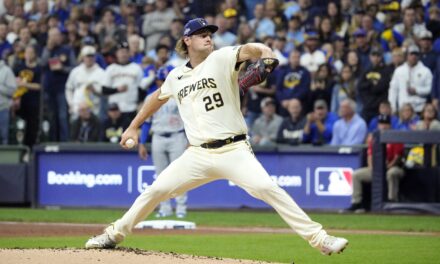
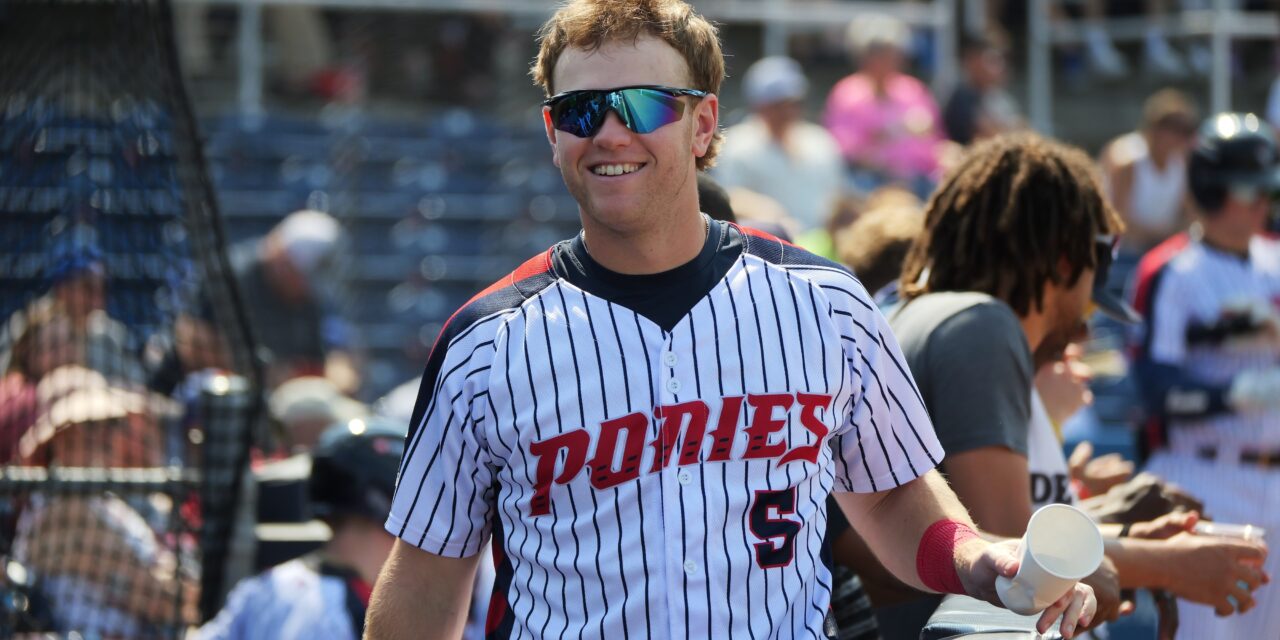
Freddy Peralta will make his first playoff start for the Rays in Game 2 of the American League Division Series against the Yankees on Monday, making it a good time to look at how the prospects the Mets received in the trade fared post-trade deadline.
The Mets received INF Émilien Pitre, RHP Gary Gill Hill, and OF Aidan Smith in exchange for Peralta, and, at the time, it was hard not to feel uninspired for a player of Peralta’s stature, regardless of his down year. This isn’t a knock on the players’ abilities, but rather the expectation of a return that simply wasn’t. At the time of the trade, Smith was the Rays’ 12th-best prospect, Pitre at 15th and Hill at 17th.
However, as all three players have entered the Mets’ pipeline, they now rank as the 10th-best prospect (Pitre), 15th-best (Smith) and 16th-best (Gill Hill) at the end of 2026.
This was very much a portfolio return for New York, finding players who best fit their desired profile when scouting players: ones who display discipline, flexibility and control.
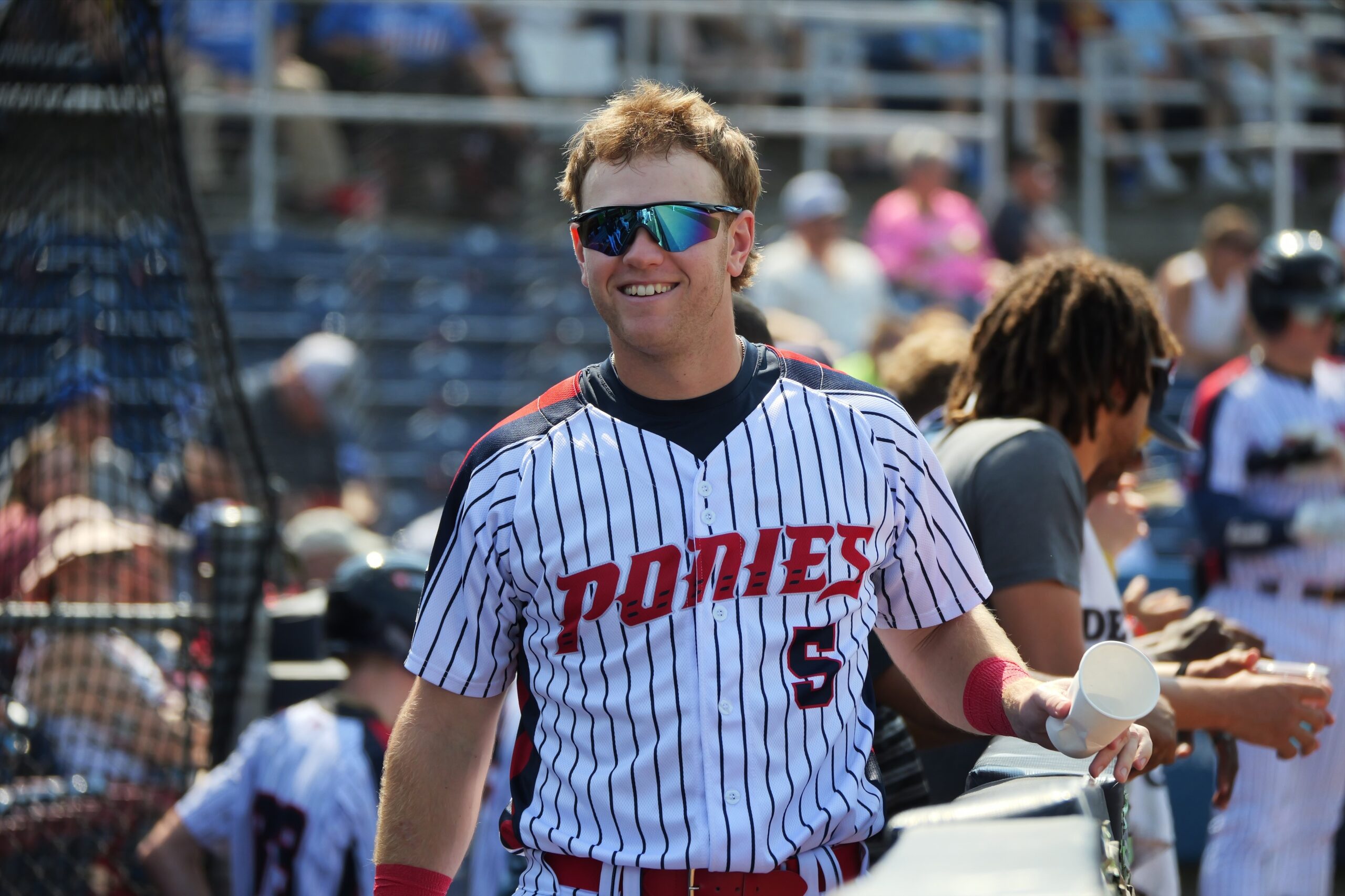
Émilien Pitre
At the time of the trade, Émilien Pitre had the most concrete minor league success of the Rays prospects the Mets received. A true helium guy, at the time of the trade was slashing .309/.370/.443/.814 in Double-A with a plus hit tool, good athleticism, and average to below-average power.
After the trade, he slashed .275/.286/.375/.761 across ten games, earning a quick promotion to Triple-A where he slashed .260/.357/.370/.727. Pitre will all but likely receive an invitation to spring training, and could find himself competing for an Opening Day roster spot a la Carson Benge in 2026.
Players who fit Pitre’s profile have found success in the majors; think of a Miguel Rojas, Geraldo Perdomo, Jeff McNeil, and recently Pedro Ramirez and Brett Bateman. Prospect outlets debate where his defense stands in the infield, and he has the athleticism that could profile well in a corner outfield spot if needed.
Gary Gill Hill
Gary Gill Hill is better than the 4.43 ERA he recorded in Double-A at the time of the trade, and his second half with the Mets put questions to bed. He pitched to a 3.76 ERA and 1.25 WHIP across five starts. This earned him a promotion to Triple-A, where he threw one start of five-inning ball with one earned run.
Gill Hill is a low slot pitcher who has plus spin rates on his breaking balls and a good mix of pitches that break to both sides of the plate. This is a profile the Mets have shown an ability to optimize. Gill Hill’s bread and butter is the groundball, and he ran over a 50% ground ball rate with the Mets post-trade deadline. His fastball comes in the mid-90s, and he utilizes his secondaries to keep hitters off balance.
He is rule five eligible, so the Mets will have to decide whether or not to add him to the 40-man roster to protect him in the Rule 5 Draft. He could benefit from a pitch to use against left-handed hitters, which could come from adding a splitter or reworking his changeup, which bleeds into his sinker more than preferred.
Aidan Smith
Drafted in the fourth round of the 2024 Draft, Smith was the centerpiece return in the trade that sent Randy Arozarena to Seattle.
At the time of the trade to New York, Smith was struggling in High-A with a .693 OPS. Under the hood, he looked like a project struggling in the Rays’ system.
That all changed with the Mets, where he slashed .321/.414/.524/.938 across 21 games with Brooklyn, compared to a .215/.283/.410/.693 line in 49 games with the Rays’ High-A affiliate.
Smith was a clear swing-change candidate, and he decided to trade contact for power, swinging harder and pulling the ball in the air at a much higher rate. His swing-and-miss rate spiked, but he was pacing 39 home runs with the Mets compared to 33 with the Rays. He also walked at a much higher rate (14.1% with NYM compared to 8.8% with TB) and continued to flash his plus glove.
If the Mets development team can get Smith to unlock and sustain his potential, New York could have a potential top-100 prospect on their hands.
Retrospective
Peralta started strong for the Mets, pitching to a 3.63 ERA in his first 13 starts but then posted a 7.34 ERA in his next nine starts. It would have been nice for him to carry his success through his full run and either get them back in a playoff race or bring back a larger prospect return, but the Mets did well at the deadline. They started to have Peralta make adjustments near the end of his Mets tenure, throwing the changeup more and improving his extension, but they could notright the ship.
He carried those changes to the Rays and continued to adjust. His first couple of starts in Tampa Bay were reminiscent of his time with New York, but he finished with a 3.25 ERA and 1.01 WHIP across 10 starts with the Rays.
On the Mets’ end, they received three strong prospects who could all make an impact in the majors over the next few years. Émilien Pitre and Gary Gill Hill could both see time in the majors in 2027, and Aidan Smith could be up by 2028 or 2029. All three had strong second halves, and both Pitre and Gill Hill ended their seasons in Syracuse.
The Mets did not get a consensus top 100 prospect back for Peralta like they did for Clay Holmes when they received Jefferson Rojas, but they got three strong prospects that fit needs within the system. Right now, it’s a win-win for both sides.