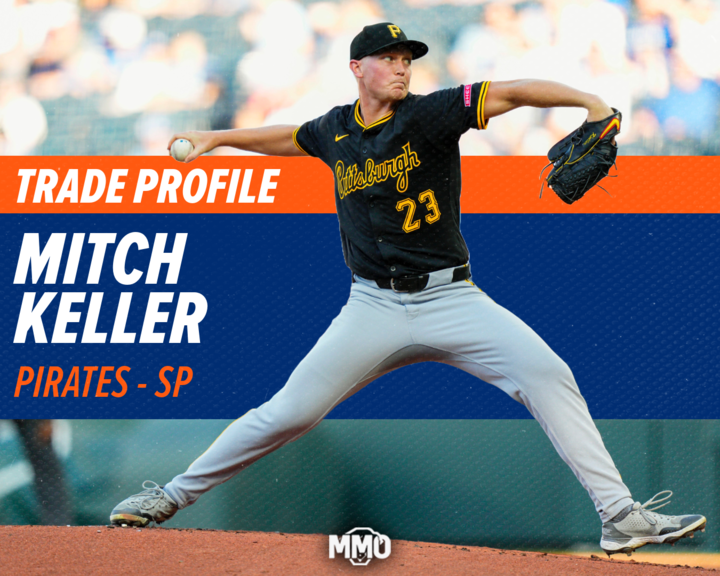
Mitch Keller, SP
Position: SP B/T: R/R
Age: 29 (04/04/1996)
2025 Traditional Stats: 18 G, 18 GS, 106 IP, 3-10, 3.64 ERA, 1.194 WHIP, 84 SO, 36 BB
2025 Advanced Stats: 117 ERA+, 18.9% SO%, 5.8% BB%, 3.93 xERA, 3.24 FIP, 4.21 xFIP, 2.4 fWAR, 1.7 bWAR
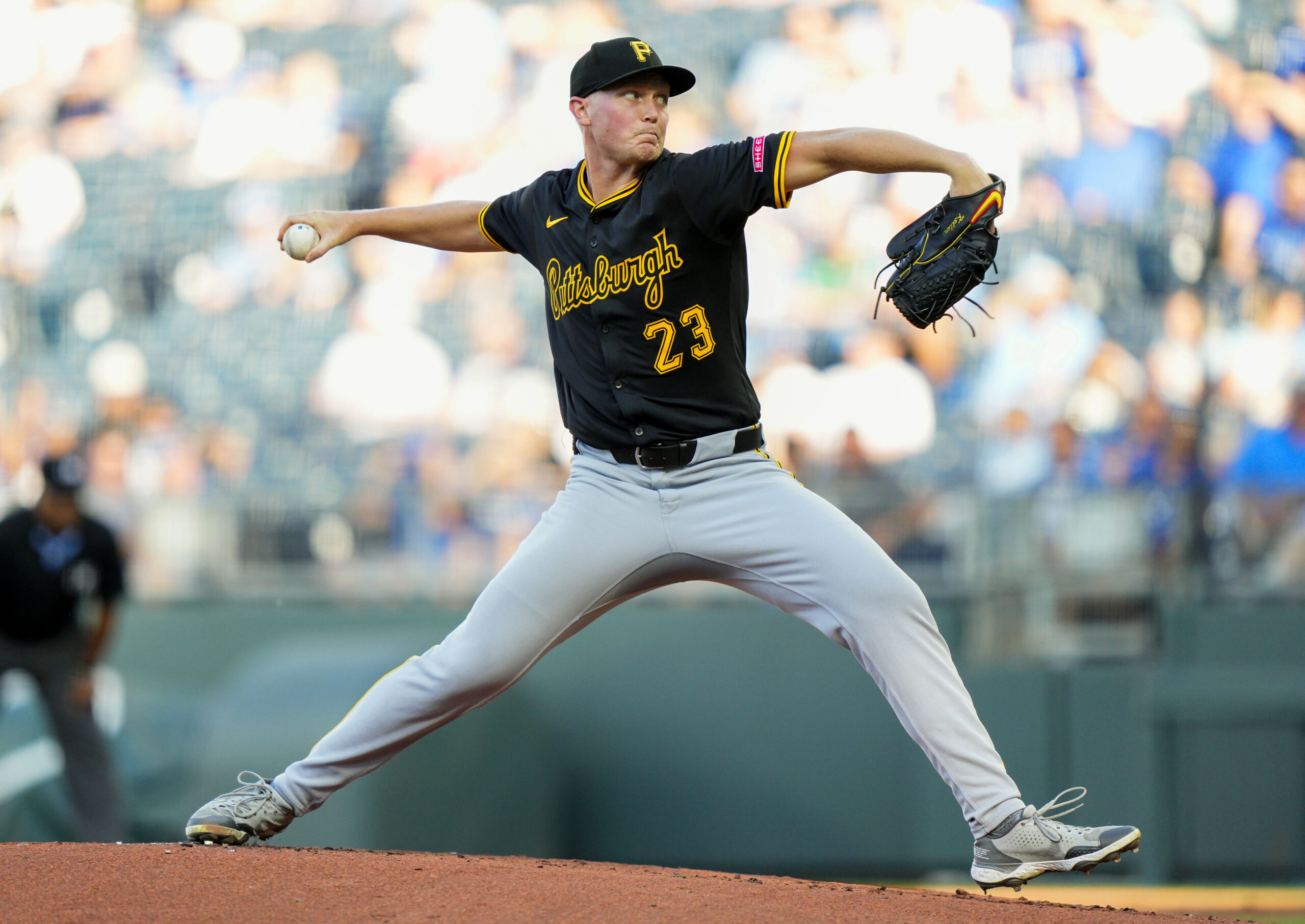
Jay Biggerstaff-Imagn Images
Rundown
Mitch Keller presents a compelling case as a pitcher who has steadily improved year after year. His gradual development is starting to draw attention from teams around the league, including the New York Mets, who recently got a first-hand look at what Keller might offer if they choose to pursue him.
That glimpse came on June 27, when Keller limited the Mets to just one run over 5 1/3 innings in a dominant 9-1 Pirates win. That outing was part of a strong stretch for the right-hander, who has posted a 2.40 ERA across his last five starts, totaling 30 innings. Overall, this season, Keller has been a steady presence in Pittsburgh’s rotation, compiling a 3.64 ERA over 106 1/3 innings while consistently delivering strong outings.
Although his record stands at just 3-10 through 18 starts in 2025, that figure is largely the result of poor run support—not performance. Along with the 3.64 ERA, Keller has recorded 84 strikeouts in 106.1 innings of work. He’s also only two seasons removed from his 2023 All-Star campaign, when he went 13-9 with a 4.21 ERA and a career-high 210 strikeouts across 194.1 innings in 32 starts.
Since debuting in the majors in 2019, Keller has logged 151 games (149 starts) with a 38-60 record, a 4.47 ERA, 771 strikeouts, and a 1.38 WHIP over 808 innings.
In 2025, Keller features a diverse and well-rounded pitch mix. His most frequent offering is the four-seam fastball, which he throws 35% of the time at an average velocity of 94.0 mph—right around average for big-league righties. He also relies heavily on his slider and sweeper, using them 16% and 18% of the time, respectively.
The sweeper comes in at 82.1 mph (just under the RHP average of 83.0 mph), while the slider averages 87.0 mph, a bit harder than most right-handers’ sliders (86.3 mph). The slider, in particular, features strong sweeping action across the zone with noticeable two-plane break and tends to generate more groundballs than average.
Keller’s sinker, used 16% of the time at 92.9 mph, closely mirrors league-average velocity and shows natural sinking action that helps induce weak contact. His changeup, which he throws 7% of the time, stands out due to its velocity, averaging 89.1 mph, significantly harder than the typical RHP changeup (86.5 mph). It dives out of the zone with a slight armside fade and generates a high rate of groundballs. The curveball, used 8% of the time at 77.5 mph, features sharp bite and slight glove-side movement but doesn’t miss many bats.
Package
Several factors could influence what a potential trade between the Mets and Pirates for Mitch Keller might look like. One key element is Keller’s contract. He signed a five-year, $77 million extension with Pittsburgh in February of last year, the richest pitching deal in franchise history. If the Mets were to take on most or all of the remaining money owed, they’d be assuming a significant financial burden.
Keller is still owed the rest of his $15 million salary for the 2025 season, followed by $54.5 million across the 2026 to 2028 campaigns. That would add another sizable commitment to a Mets payroll that’s already deep into the luxury tax, currently sitting well above the $301 million top-tier tax threshold.
Noah Hiles of the Pittsburgh Post-Gazette reports that the Mets have expressed interest in trading for Mitch Keller, and with the Pirates potentially looking to cut payroll, a Mets-friendly deal could come together involving mid-tier prospects who already have some big-league exposure. A package built around players like Ronny Mauricio and Blade Tidwell, along with a minor league pitcher not named Nolan McLean, Brandon Sproat, or Jonah Tong, might be enough to entice Pittsburgh to pull the trigger.
The Mets will likely exit the All-Star break with a rotation featuring Senga, Manaea, Clay Holmes, David Peterson, and Frankie Montas throughout July. That group might be enough to keep the team in the playoff hunt, but with several unknowns in terms of health and consistency, acquiring a steady presence like Keller could be a smart move to reinforce the staff for a second-half push toward the NL East crown and a potential postseason run.