It’s now day 39 since the MLB owners locked the players out. We are not aware of any planned negotiating sessions, though we have to hope that the two sides are at least making contact. Sometimes, when there is radio silence, it can be a good thing. It could mean each side realizes nothing good comes from the public airing of grievances, and an attempt at making silent progress is happening.
For perspective, 39 days from now is February 18. By then, pitchers and catchers would have reported to spring training, with games less than 10 days away. But with every passing day, an on-time start of camps becomes more questionable. We know the issues, they’ve been written about often here at MMO.
The players and the owners need to find common ground, something to at least jump-start the process toward a new agreement. In a recent article in the New York Post, Ken Davidoff offered his take on how a new agreement may look across 11 key topics. Some of Davidoff’s ideas are similar to those of other baseball insiders, but in this article, he posits a couple of new concepts that may have merit.
First, Davidoff suggests an aggressive increase in MLB’s minimum salary. While others have written about the same, Davidoff proposes an increase from$570,500 to $1.2 million in year one of a new agreement. This doubling of the minimum salary would be a bitter pill for the owners, but here’s why it may make sense. The players, in particular new Met and union leader Max Scherzer, have said compensation for younger players is a top priority in a new deal. So why not go all-in on that? Yes, the players will have to concede elsewhere, but maybe they’d be more willing to do so with a doubling of the minimum salary, addressing one of their main points.
The owners could say, “Okay, you have that one, and it’s one of your top asks. What will you give us back?” The answer could be expanded playoffs, which is key for the owners. As Jeff Passan of ESPN.com has previously postulated, Davidoff also talks about a move to a 14-team field for the postseason. The increased revenue could offset, maybe more than offset, the increased outlay in the minimum salary. In this way, two issues could be solved. Many fans would bristle at a 14-team playoff format (I would be among them). But that’s the way sports are trending, so why can’t baseball?
Another hot topic in the negotiations is arbitration eligibility, and compensation methodology for arbitration-eligible players. Davidoff offers a new idea.
Devise a mathematical formula for an arbitration fund to which each team contributes a designated amount based on the number of arbitration-eligible players they employ and the service time of those players. Then tell the PA, “You distribute it as you wish to your players.”
This is interesting. The union may like the idea of having control over some player compensation. The players would likely reject a “mathematical formula” predicated on game revenues, but if the sides could align how the formula would come together, the concept may be innovative enough to get them talking. This would eliminate arbitration hearings, which is a rare common desire of the two sides.
In his article, Davidoff brings in the concept of a pitch clock. That idea is not new, nor directly tied to the economics of the game. However, the two sides would have to agree on its implementation, so once they have an economic agreement, matters such as this can be debated. From the article:
The average nine-inning game in 2021 lasted 3 hours and 10 minutes, the worst ever (thanks, Baseball-Reference.com). In Low-A West, officials introduced, midseason, the new pitch timer: 15 seconds, with just two pickoff attempts or step-offs per at-bat. Per MLB, the average time of games dropped from 3:02 to 2:41. Strikeouts dropped and stolen bases increased, both great things.
The limited pickoffs may be less palatable than the clock itself. The pace of the game needs to be addressed at some point. Baseball’s popularity is tanking (to use a term from the negotiations) among younger people. From Front Office Sports, the average age of baseball fans is 57 years old, the oldest among the four major sports. This is not sustainable over the long term. While pace of play is not singularly responsible for the game’s standing with younger people, the slow pace does not help. Using a pitch clock can contribute to the pace of play in a fairly non-invasive manner.
Many baseball writers have offered their opinions on how the stalled labor negotiations can get on track. While no plan is perfect, the game’s status quo is highly self-destructive. Passan used the term “frighteningly irrelevant” to describe where baseball is headed with the lockout and no offseason buzz, let alone a possible impact on the 2022 season.
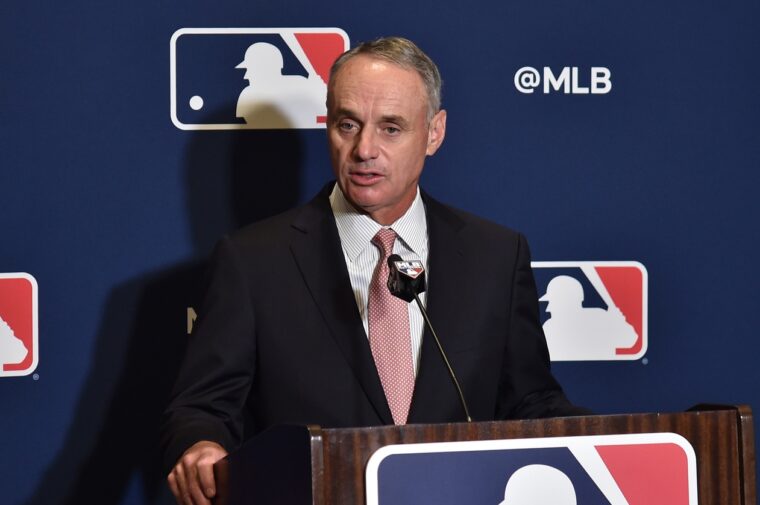
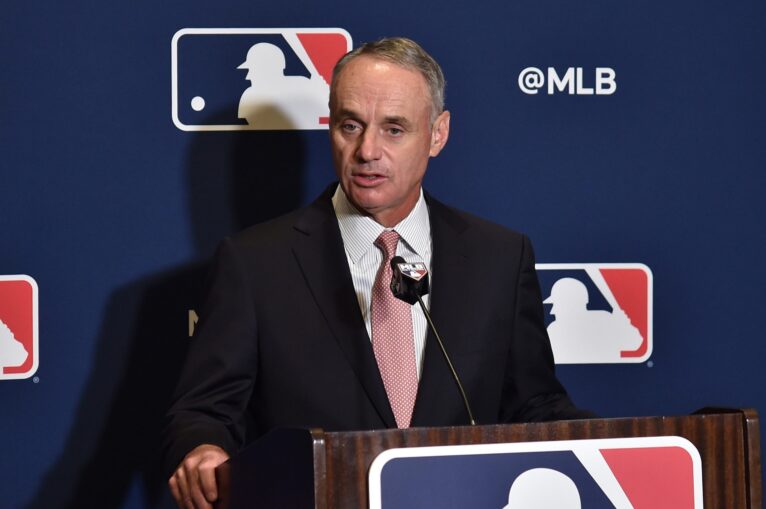
We’ve been more than generous with free advice for Rob Manfred, Tony Clark, and their bands of negotiators. Time will not be so generous. They need to get going toward a new labor deal now before spring training and the season are impacted and fans lose interest — possibly permanently.