
Mandatory Credit: Brad Penner-USA TODAY Sports
As many of us have, I recently watched the outstanding documentary by Nick Davis, Once Upon A Time In Queens. I lived through the wild ride of the 1986 season. At the time, most of us thought it was the beginning of a dynasty. As Mookie Wilson said, “1987, year of the Mets, 1988, year of the Mets…”
The dynasty never came. It was injuries in 1987, Orel Hershiser, Mike Scioscia and Kirk Gibson in 1988, and the unkind effects of aging in 1989. With the 2021 season coming to an end in bitterly disappointing fashion (at least for me), it’s natural to look at the Mets’ last championship ask the question, “What will it take to get there again?”
The 1986 team was supremely talented, definitely more so than this year’s squad. That part is obvious. But what else may be missing from the current version of the New York Mets? The documentary helped to point out a few things.
Culture
I’ve never been a big believer in team chemistry. I’ll take talent on the field, thank you. Who cares if these guys get along? The Oakland Athletics of the early 1970s are said to have disliked each other (the old adage about 25 different cabs to the ballpark every day). Those Athletics teams were a dynasty, winning three consecutive World Series titles (imagine if the Mets ever did that). But maybe chemistry and its downstream creation, team culture, do matter. The 1986 Mets had both chemistry and a winning culture.
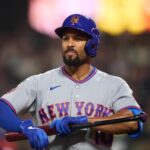
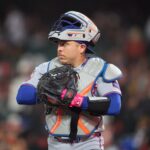
That team was “together” all the time. Whether it was an on-field brawl (they had many), or the copious amounts fun they had (hot foot pranks, videos, rap songs, etc.), they acted as a unit. There was no apparent divide. Contrast that to this year’s team. The season was not a month old, and the double-play combination was scuffling in the clubhouse. Players objected to booing by the fans, and two of them (Francisco Lindor and Javier Baez) were left to publicly apologize for their responses to the fans’ actions. They had to wear it for the team. This does not create unity, it creates a rift.
As seen in the documentary, the 1986 squad had a singular, unifying mission: they were there to win a World Series. That’s all they talked about. It had been brewing since the near misses of 1984 and 1985. They held each other accountable, and helped each other along the way. One example of this is Keith Hernandez, while on second base during an NLCS game, visibly advising Darryl Strawberry to keep his shoulder in against a left-handed pitcher.
Another example is how the players handled the multiple platoons Davey Johnson employed. Players did whatever was asked of them, as long as everything pointed to a championship. Whether it was Kevin Mitchell playing almost all positions, Mookie Wilson and Lenny Dykstra sharing outfield time, or Jesse Orosco and Roger McDowell playing the outfield in an emergency, it was all about the team getting to the promised land.
And then there is the 2021 team. Sure, there have been displays of emotion. We see it from Jeff McNeil all the time when he makes an out. However, it seems that he’s driving his personal performance, and expressing frustration when his performance does not match his expectations. When was the last time McNeil talked about frustration over losing? How about Pete Alonso (who is having a good season)? He’ll break a bat over his knee after a personal failure, but have we heard him talk about being uncomfortable with losing? Has he (or any current Met) expressed frustration at the team’s collective failure?
Leadership
The 1986 Mets had several leaders, from Hernandez, to Gary Carter, to Ray Knight. Those players were veterans, who set the tone for the rest of the team. Today’s Mets don’t have veterans who rise to the profile of the 1986 stars, but has any player on the team demonstrated the ability to get there? Perhaps Francisco Lindor, who seems to have some influence on the infield. Maybe it could be Javier Baez (if he remains a Met), who has won a championship. However, for now, there is no clear team leader, and arguably the Mets have not had one since David Wright.
And then there’s the difference in leadership that comes from the manager’s office. Yes, times are different, and the role of the manager has been reduced. However, think about the story of the damaged airplane on the flight to New York after the NLCS. According to Johnson, GM Frank Cashen said the team would be liable for the expenses. Johnson responded by saying the team was about to win a World Series (they almost did not), and they would not pay for any damage. The players saw that their skipper had their back. That could not have hurt is stature with the team as a leader.
There will be significant changes in Flushing before the 2022 season. Players will come and go, and as a fan base, we can hope that the talent is upgraded to a point where the postseason and a deep October run become real possibilities.
Maybe it’s more than talent. Perhaps culture and leadership are vital parts of a winning team. In these areas, the contrast between the 1986 Mets and the current iteration is stark. Let’s hope that the incoming brain trust spends time addressing these two areas as well.