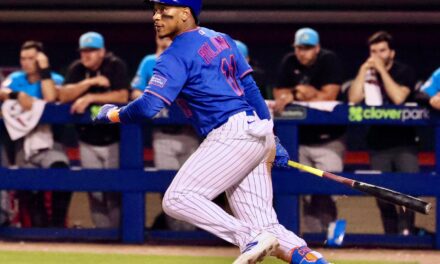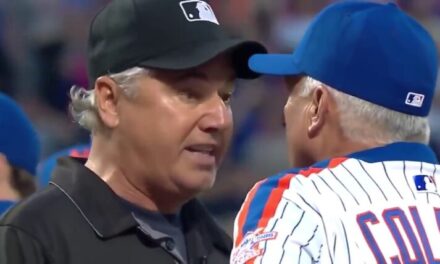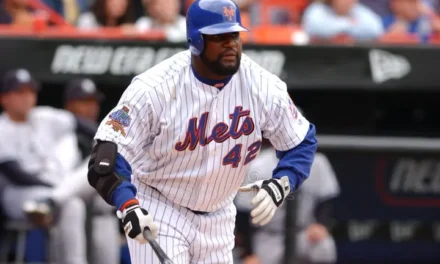
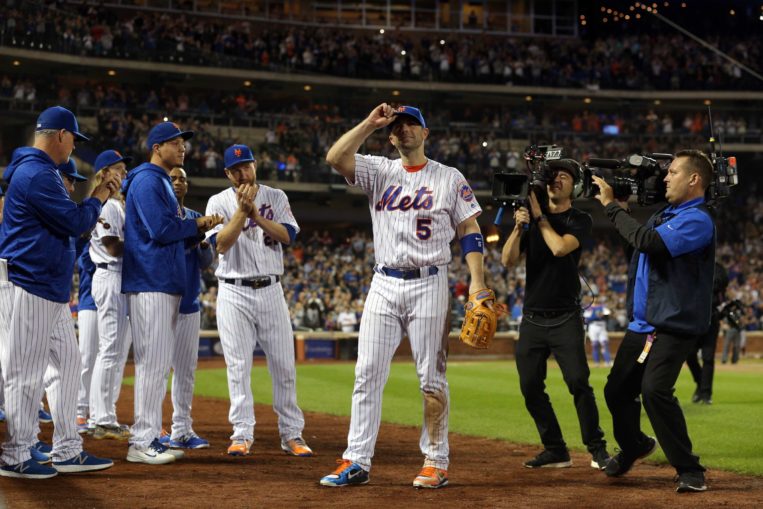
On March 21, 2013, third baseman David Wright was named the fourth captain in Mets’ history. He joined Keith Hernandez, Gary Carter, and John Franco as the only other Mets to carry the honor.
Wright had quite a month of March in 2013, being dubbed “Captain America” for his role on Team USA in the World Baseball Classic, and then being given a ceremonial role that demonstrated his leadership on the team.
In an article by Anthony DiComo of MLB.com, Wright was quoted as saying:
“This is probably one of the proudest days of my career so far,” Wright said. “I’m honored and very proud to be on that short list of guys that have been considered captain of this franchise. For me, it’s a dream come true, to say the least.”
Wright chose not to wear a “C” on his uniform, which did not surprise Sandy Alderson, who was in the role of Mets’ general manager at the time.
“David is not a guy who wears it on his sleeve, which probably relates to the ‘C’ on the uniform and the fact that it won’t be there. I don’t think David needs it. I don’t think that fits his personality. He’s not somebody who is a captain in title alone. It’s really about the substance underneath the title.”
Before the 2013 season, Wright signed an eight-year, $138 million contract to remain a Met through 2020 (though his playing career ended in 2018). Wright was also named a starter on the National League’s all-star team in 2013. That season, Wright slashed .307/.390/.514 with 18 home runs and 58 RBI in 112 games played. For his career spanning 14 years with the Mets (in 2018, he appeared in just two games), Wright belted 242 home runs, drove in 970 runs, slashed .296/.376/.491 with a 133 OPS+.
Hernandez was named captain for the 1987 season. Unlike Wright, he chose to wear the “C” on his uniform, and later regretted it. In an article by Adam Rubin of ESPN.com, Hernandez said the following:
“I wish I hadn’t (worn the “C”). It was like a hockey ‘C’ instead of the smaller ‘C’. But that’s what they did. But [Derek] Jeter doesn’t wear a ‘C’. It’s not necessary. Everybody knows.”
Carter was named captain in 1988, sharing the title as co-captains with Hernandez for the 1988 and 1989 seasons. When Carter received the honor, his best days were behind him, but manager Davey Johnson felt it was important to recognize Carter’s contributions and leadership.
Franco was named captain in 2001, a fairly rare role for a relief pitcher. However, Franco’s tenure with the team (he had been a Met since 1990), and professional credibility coming from his being the all-time saves leader among left-handers earned his the honor. Franco also gave up his uniform No. 31 when the Mets acquired Mike Piazza, showing a selflessness that is the mark of strong leadership.
While the role of captain in baseball is less formal than in the other sports and most teams do not have captains, there is some discussion on who may be the next captain of the Mets. Last spring training, Wright thought Pete Alonso would be a good choice. Wright said the following in an article by Mike Puma of The New York Post.
“He’s (Alonso) got an ability to make you smile or make you laugh a little bit without really trying to. We are alike in that he takes a great deal of pride in being drafted by the Mets, coming up through the system and making an impact on the major league level and it seems like that when he puts that uniform on he has some of the similar feelings that I had putting that uniform on.”
Another potential captain would be Michael Conforto, who was also drafted by the Mets and has had a solid tenure in Queens. The issue with Conforto is his expiring contract, and the Mets’ need to work out a long-term deal with him before this season starts on April 1. The sand is rapidly running into the bottom of the hourglass on the window of opportunity.
Captains in baseball don’t go to the 50-yard line before the game (and overtime) for the coin toss, but they are in an elevated status among their teammates. The Mets have had some worthy captains, and have a couple of current candidates waiting in the wings.