Mandatory Credit: Brad Rempel-USA TODAY Sports
The Mets have improved their bullpen this offseason. The Mets also need to add more depth to their bullpen so one injury to one of their top relievers (see: Seth Lugo) doesn’t crumble the infrastructure. Both of these statements are true.
While there’s been disappointment circulating among Mets fans after missing out on the likes of Brad Hand (to the Nationals), Justin Wilson (Yankees), Trevor Rosenthal (Athletics), and other end-of-the-market relievers, the Mets bullpen as presently constructed is still a good one–in theory–with Edwin Diaz, Trevor May, and Aaron Loup and others holding down fort until Lugo returns (hopefully) by late May.
The problem is, we want to move as far away from terms like “in theory” or “on paper” as possible when talking about anything on the Mets roster. Look no further to the makeup of the 2020 bullpen as evidence of what can happen when a bullpen looks great on paper but not so much on the field.
Van Wagenen, "This signing was intended to blow the cover off of our ceiling. We believe that a healthy & dominate Dellin – combined with Diaz, Lugo, Wilson, Familia, Brach, Gsellman – this collective group has the potential to be one of the best bullpens in baseball."
— Mike Mayer (@mikemayer22) January 2, 2020
While there are droves of internal options for the Mets to help shore up their bullpen (Stephen Tarpley, Drew Smith, Sam McWilliams, Daniel Zamora, Jerry Blevins, Jacob Barnes), many of these pieces need to prove they can consistently get guys out in the year 2021.
Let’s take a look at some remaining free agents the Mets could sign to help give their bullpen the best shot heading into the 2021 season.
Jim Owens-USA TODAY Sports
The Probably-Should-Be-On-A-Team-By-Now Guys
Let’s start with a name actually linked to the Mets this offseason.
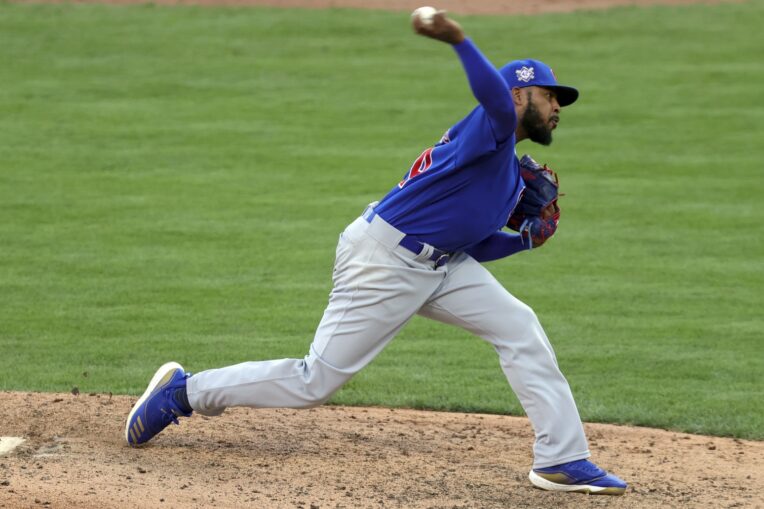
Jeffress had nice results in 2020 with the Chicago Cubs posting a 1.98 ERA (4.09 FIP) and 0.943 WHIP. On its surface, that’s a solid year that would leave you wondering why he’s still on the market with spring training already started. Contract desires aside, Jeffress gave up a ton of contact–often hard–last year that happened to turn into outs. Jeffress also had the worst difference between expected ERA and his actual ERA (4.71 vs. 1.54, a difference of -3.17) in the league in 2020. It’d be hard to imagine that same luck replicating itself in 2021. You also don’t want to bet on luck.
He was also bottom 10 percent in the league in hard hit percentage, and he turned in one of the highest walk rates of his career in 2020 along one of his lowest strikeout rates. All of this is compounded by drop in velocity on his two main pitches–a splitter and sinker, though he threw his sinker for a still-respectable 93.1 MPH on average last year.
Similar to Jeffress, former Brave Shane Greene struck people out at a lower rate than he had for most of his career in 2020 and has also been linked recently to the Mets. But aside from that, Greene’s 2020 was similar to previous years: a FIP between 3.50 and 4.00, a modest 1.10 WHIP, and, most important, he had a healthy arm. Greene has only been on the disabled list three times for a total of a couple months since his debut in 2014.
Take a general look at his Statcast numbers and there’s nothing glaring off the page indicating why teams may be avoiding him. His velocity is about the same as previous years, as are his ground ball percentage, fly ball percentage, and exit velocity average. Surely Greene–a first-time free agent–could be putting his foot in the ground and not budging from how much money he wants, but, sadly, you get paid nowadays for what you could do in the future–not what you’ve done.
A Tyler Clippard reunion, anyone?
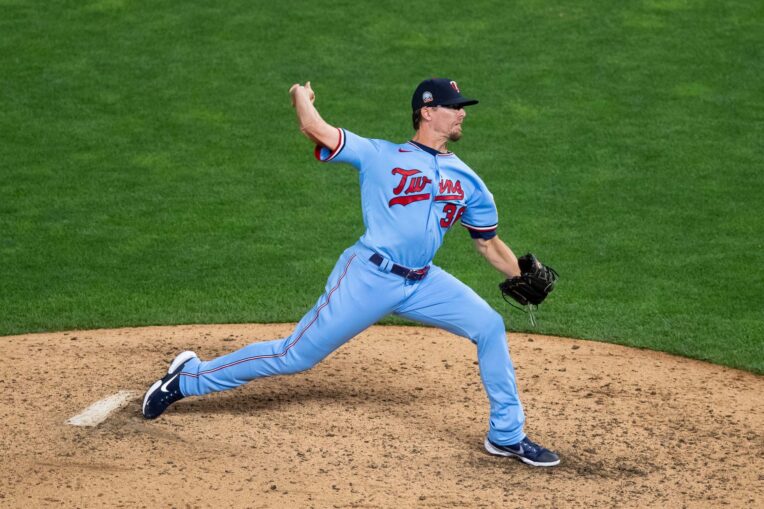
The 36-year-old is still chugging along in the bullpen, posting a career-best 2.65 FIP and 4.1 walk percentage in 2020 with the Twins. Clippard’s velocity has slowly dropped over the last decade, but he may be one of the rare relievers whose results stay consistent as they age as they master the art of pitching out of the bullpen. Between 2010 and 2018, Clippard made at least 67 appearances in every season, which is kind of unreal from a reliever, and on top of that, he was pretty consistent over that stretch. In 2019, he made 59 appearances for Cleveland after tearing a pectoral muscle, and he stayed healthy all of 2020. Everything’s just been…the same. He’s about as sure of a bet as anyone left on the reliever market.
Wherever Clippard lands, I’d suggest he not invest in any real estate, as I’m already predicting he’ll be in trade rumors come July if he doesn’t sign with a contender.
Mandatory Credit: Mary Holt-USA TODAY Sports
The Injury Guys
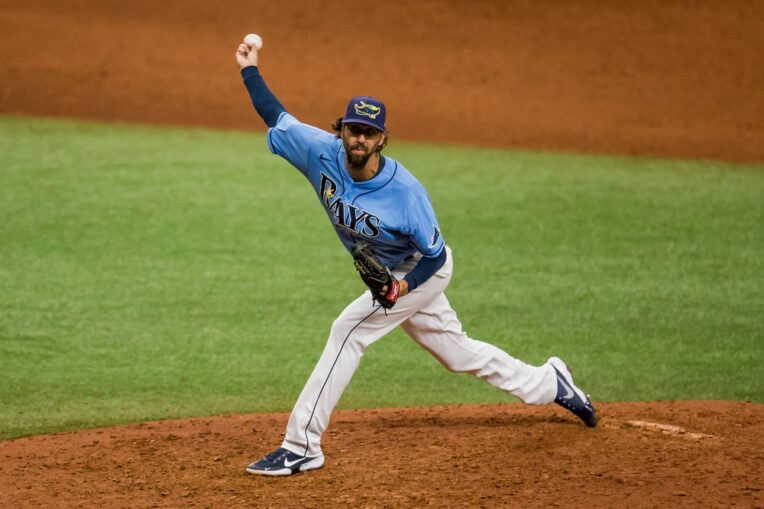
Roe–another first-time free agent (post big-league success) on the list–missed most of the 2020 season with right elbow soreness. Not a good sign. When healthy, he throws a slider, and he throws it a lot (nearly 60 percent of the time in 2020). It maintained its effectiveness (.299 xSLG, 31.8 whiff percentage) from previous years, but his other two pitches–a sinker and cutter–were extremely not good in 2020, and they weren’t all that great in 2019, either.
Thornburg had surgery for thoracic outlet syndrome in 2017 and flat out wasn’t good in 2018 and 2019 (as one can expect following TOS). In 2020, however, he showed improved results with a 2.48 FIP and 31.3 K%. His changeup was particularly effective with no hits allowed when throwing the pitch along with a 42.9 whiff percentage. This was probably aided by the improvement in his fastball output, which featured a higher spin rate and his highest whiff percentage post-TOS surgery.
Thornburg actually had the best vertical movement on a fastball in the majors, too, though he didn’t throw enough pitches to qualify among league leaders. The reason he didn’t throw enough pitches? He only appeared in seven games and ended the season on the injured list with a right elbow sprain.
Seven appearances into his Phillies career, David Robertson went on the injured list with right elbow soreness. Over the next two years, he’d never come off. He was one of the best relievers in baseball over the previous decade, but Robertson ultimately needed Tommy John surgery, which he didn’t get until August 2019–four months after landing on the IL. He passed 18 months since the surgery on Thursday, and he threw for “a majority of teams” late last week, according to Jon Heyman. Peter Gammons tweeted a scout told him Robertson looked good and that he was touching “89-91, but give him a spring training, he should be back up to 94” miles per hour.
Robertson will be 36 years old when the season starts, so I don’t know about getting all the way back to 94 miles per hour on his fastball. But he could be an interesting signing with incentive-driven bonuses.
The question here is: is Brad Peacock‘s shoulder shot?
The former Astro–another first-time free agent–spent most of 2020 on the injured list with “right shoulder discomfort.” He also spent the last month and change of the 2019 season dealing with the same issues in the same shoulder. Peacock has been remarkably consistent as both a start and reliever (4.04 ERA in 83 starts vs. 3.89 ERA in 35 relief appearances), but now at age 33 with shoulder issues (note: his fastball/sinker velocity dropped a full two miles per hour from 2019 to 2020), he will have to prove he can stay healthy for a full major league season.