

Do you understand the GameStop stuff? I think I do, sort of. Basically, what’s happened is that lots of people on Reddit have decided to pump money into GameStop stock, and the stock has skyrocketed. There doesn’t seem to be any real reason for this other than disruption. It’s sort of like if every MLB team got together and decided to start a ferocious bidding war for Adeiny Hechavarria just to see what would happen.
Some people have responded to the GameStop saga with caution. “The stock isn’t actually worth this much,” they say. “Eventually Redditors will run out of money to prop it up. Or it’ll get high enough that they’ll sell it, and it’ll fall back down.” To my limited financial knowledge, this sounds sensible. Reddit can’t pour money into GameStop forever. While the stock market isn’t perfectly efficient, it will probably figure this out eventually. So at some point, the price of the stock will slide back to whatever it’s really worth, which probably isn’t all that much.
I mention GameStop because I’ve been hearing a lot about “true value” and things “not being worth that much” lately. Specifically, I’ve been hearing it about Trevor Bauer. Now that the Mets have traded Steven Matz, their interest in Bauer seems genuine. But those who don’t like Bauer say that he’s not worth an enormous contract.
The argument goes a few different ways. Bauer might make more than Jacob deGrom this season — deGrom is way better, so there’s no way Bauer is worth that. He won’t repeat his 2020 numbers in future years, so by definition, he’ll be overpaid. Besides a few fluky years, he’s a 4.00 ERA pitcher. Why pay millions and millions of dollars for that?
The problem with this argument, though, is that Trevor Bauer isn’t like a share of GameStop. Well, in a few ways — unpredictability, strangeness, weird following on the internet — he is, but there’s an essential difference between them. Bauer operates in a market that’s far less efficient than the stock market. The MLB free agent market is so volatile, and such a small sample size, that it’s barely efficient at all.
Baseball players don’t really have one true “worth.” They might, theoretically; I suppose you could project that Bauer’s mean outcome is a 143 ERA+, and calculate exactly what contract that’s worth. But that’s just not how the free agent market works. Players aren’t paid strictly based on projected statistics. Bauer might make more than Jacob deGrom next year, while not pitching as well. Why? Bauer is a free agent, while deGrom signed a contract extension; Bauer is hitting the market later, so there’s been inflation; Bauer has no allegiance to the Mets, while deGrom took a hometown discount.
Whatever team ends up signing Bauer will probably have to pay more than he’ll be “worth” over the course of a contract. That’s just the nature of sports contracts. The same thing is true of George Springer. When Springer is making over $20 million at age 36, will his numbers be enough to deserve that salary? Probably not. But he’s a good enough player right now that the Blue Jays opted to overpay for his older years in exchange for the years before them. If they hadn’t, another team would have. So while Springer’s numbers in six years might not be worth $20 million, it’s what the Blue Jays were willing to pay.
Before the 1999 season, the Mets signed Mike Piazza to a seven-year, $91 million contract, the largest in baseball history at the time. From 2003 to 2005, he was nowhere near the most valuable player in baseball. But he was paid like it, because in order to have access to the first four years of the deal, the Mets had to pay handsomely for all seven. If they hadn’t, another team would have — and then Piazza would have gone somewhere else after 1998. Monetarily, from 2003 to 2005, Piazza wasn’t “worth it.” But overpaying for Piazza was worth it, because it meant the Mets got Mike Piazza.
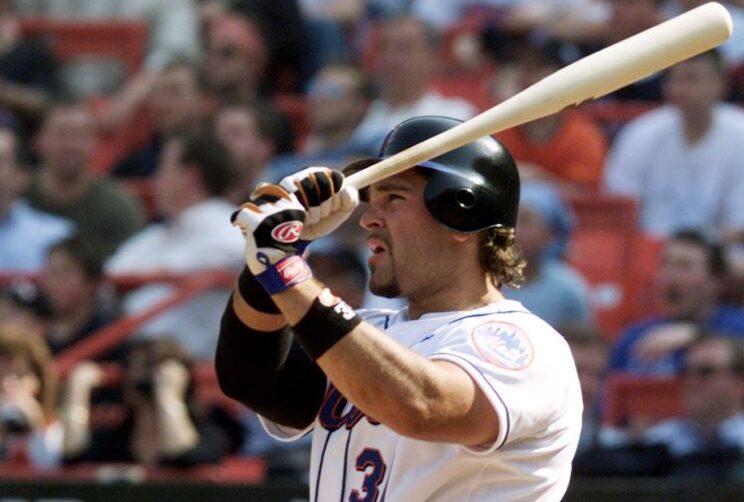
Does Trevor Bauer deserve to be the highest-paid pitcher of all time? Probably not. But circumstances have aligned such that Bauer may cost more per-year than any pitcher ever has. Free-agent pitching supply is low; Bauer had a great year before hitting the market; inflation, of course, plays a role.
Being paid more than Jacob deGrom doesn’t mean Bauer is better; it just means his circumstances were different. Trevor Bauer isn’t like GameStop. The market won’t find his true value eventually. In this case, as with all sports contracts, Bauer won’t be paid by what he “deserves.” He’ll earn whatever a team is willing to pay him, and the question is whether the Mets are willing to pay him more than anyone else.