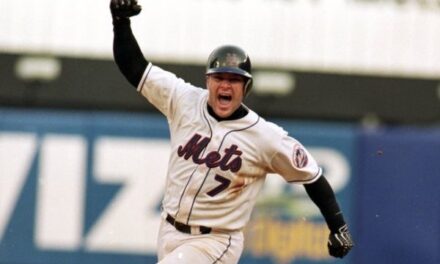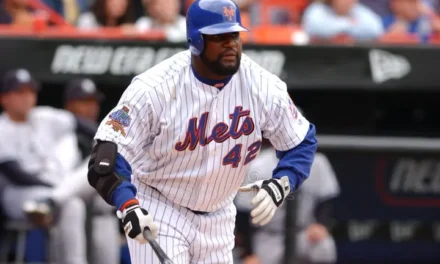

(left to right) Roger Craig, Jay Hook, Bob Miller, Craig Anderson, and Al Jackson Photo Credit: UPI
In the first season for the New York Mets in 1962, there was a shortage of lot of things, like wins, runs scored and competent play to name just a few. But the Lovable Losers, as they were known, did not have a shortage of individual stories that amaze baseball purists and fans even to this day. Many of these stories, like Frank Thomas‘ power or the Mets attendance in 1962 (the sixth best in the NL) are fairly well known. As is manager Casey Stengel uttering one of his most famous missives wondering, “Can’t anybody here play this game?”
Another story that flies under the radar is that of right-handed pitcher Craig Anderson. On May 12, 1962, Anderson won both ends of a doubleheader against the Milwaukee Braves at the Polo Grounds. Both games were won in dramatic fashion on walk-offs and certainly provided for one of the few highlights in an otherwise desultory year. So bad, that the two wins by Anderson he had in one day, were the last two wins not only in 1962, but in his career.
Norman Craig Anderson was drafted by the St. Louis Cardinal organization before the 1960 season. He made his major league debut on June 23, 1961 for the Redbirds and had a steady first year. He finished the 1961 season with four wins, three losses and one save. He had a 3.26 ERA. Though Anderson showed promise at times in 1961, he didn’t perform well enough to be put on the protected list for the upcoming expansion draft to welcome (and stock) the New York Mets and the Houston Colt 45s.

The Mets selected Anderson with their eighth pick (right after they selected Gil Hodges at 7). He made the team’s 25 man roster and started the season effectively. The high point came on May 12 as the Mets hosted the Braves in a twin bill.
The first game matched Roger Craig of the Mets against the legendary left-hander Warren Spahn of the Braves. Craig left after seven innings losing 2-1 as Anderson came in to relieve. He kept the Braves scoreless in the eighth and ninth innings. In the bottom of the ninth with a man on base and two out, Casey Stengel sent Hobie Landrith to the plate as a pinch-hitter. He hit a game-winning two-out home run off Spahn. It was Landrith’s only home run as a Met.
In the second game, the Mets and Braves entered the ninth inning tied 7-7. Anderson, the sixth Met pitcher of game two, set the Braves down in the ninth. In the bottom of the ninth, Gil Hodges hit another game-winning home run. Craig Anderson had won his second game in one afternoon.
The following week, the Mets faced the Braves again, this time in a four-game set. The Mets won three out of four, sweeping another doubleheader on May 20. Anderson recorded two saves on the weekend. By the end of play on the 20th, Anderson had three wins, one loss and two saves with a 2.38 ERA. Things were looking up for the young franchise after two successful weekends The rest of the year, sadly, would provide one disappointment after another for the Mets and their young right hander.
The Mets lost 17 straight games after the Braves series. Worse, Anderson, for his part, lost his final 16 decisions on the year.
A game in June against the Chicago Cubs was perhaps the most disheartening and typified the plight of the Mets and Anderson. It was the second game of a doubleheader on June 10 at Wrigley Field.
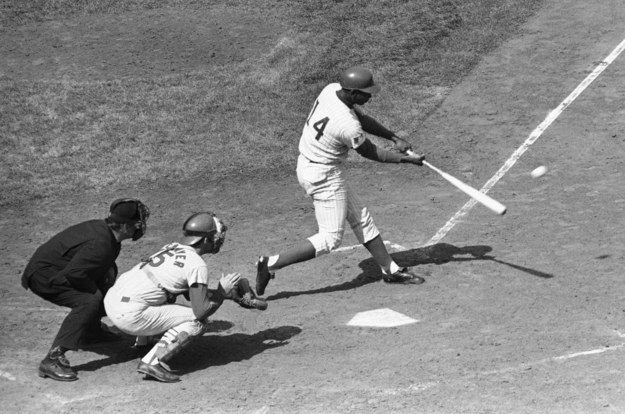
Ernie Banks, SI.com
Anderson entered the game in the sixth inning with the Mets leading 2-1. While he kept the Cubs scoreless in the seventh and eighth innings the Mets extended the lead to 4-1. Anderson retired the first two batters in the bottom of the ninth and the next batter reached first base on a Mets error. Anderson then walked the next batter and Ernie Banks came to the plate as a pinch-hitter. He hit a change-up for a three-run homer tying the score. Anderson was removed and the Cubs won in the 10th inning. Anderson did not figure in the decision but it was one example of the type of losses the Mets often endured in 1962.
Anderson’s final record for 1962 was three wins, 17 losses, and four saves with a 5.35 ERA. He appeared in 50 games and started 14. The overall record for the hapless Mets was 40 wins and 120 losses.
But the record book was not closed on Anderson. In 1963, he started in the Mets minor league system, and was a late call-up. He lost two decisions in 1963 to extend his personal losing streak to 18-games. The 18th occurred in the last professional game ever to be played at the Polo Grounds, a 5-1 loss to the Philadelphia Phillies.
Anderson lost his 19th consecutive start in 1964, during a short stint with the Mets. He retired from professional baseball in May of that year. The 19 consecutive losses is not a major league record. That ‘distinction’ belongs to another Mets pitcher, Anthony Young ,who lost 27 straight starts for the Amazins’ from May 6, 1992 to July 24, 1993.
Craig Anderson came along at the wrong time for the wrong team. He pitched in bad luck and in untenable circumstances for the young Mets. His shining moment came on May 12, 58 years ago today, as he won two games in one day. Only two other Mets pitchers have accomplished this: Willard Hunter and Jesse Orosco.
Anderson is not the first Met that comes to mind when reflecting on the 1962 Mets. In a year filled with losses in the ledger and filled with fans arriving to see this fiasco in droves, New York had its National League team back. There were few brights spots and two walk-offs on the same day against a good team was one of them. Anderson was the pitching architect of both games. Yes, the floors crashed after that for both team and player. It’s just part of the enduring allure of the 1962 New York Mets.