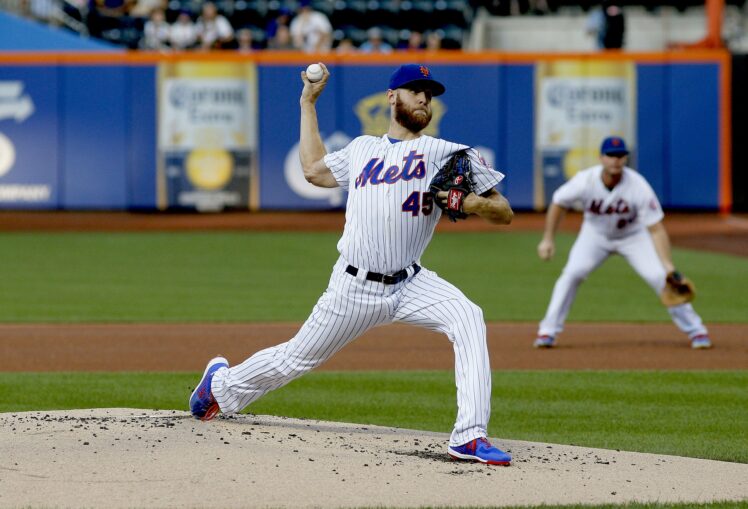
As the New York Mets navigated their way to a 17-11 record in August, manager Mickey Callaway‘s starting rotation played a key role. Their cumulative 3.2 fWAR and 3.64 ERA for the month both ranked among the 10 best units in baseball. One guy who finally enjoyed a good month — at least when looking at his ERA — was Zack Wheeler.
The impending free agent has been an important piece of the Mets’ puzzle all year, but it’s mostly included him outperforming a higher than expected ERA when looking at his SIERA. Until the calendar flipped to August, of course. Here’s a quick look at how Wheeler’s ERA has progressed from month to month since the start of 2019:
| 2019 | IP | ERA |
|---|---|---|
| March/April | 35.2 | 5.05 |
| May | 41.1 | 4.35 |
| June | 30.2 | 4.11 |
| July | 16.2 | 5.94 |
| August | 37.0 | 3.41 |
The 3.41 mark he just produced is much more in line with the 3.31 season-long ERA he ended up with at the end of 2018. Despite producing a 4.41 ERA so far in 2019, Wheeler’s 3.5 fWAR is still close to matching the number he produced in last year’s breakout performance (4.2). What was head-scratching about what he did in August, though, was a significant drop in strikeout rate.
Starting in March/April, Wheeler’s monthly strikeout rate reads like this: 24.0%, 29.1%, 21.2%, 31.0%, and 14.4%. One of these doesn’t like the other, now does it? If we split his season into two sections (through July 31st and since August 1st), the drop becomes even easier to see. Up until the trade deadline, Wheeler had put together a 25.9% strikeout rate before that 14.4% mark from the past month.
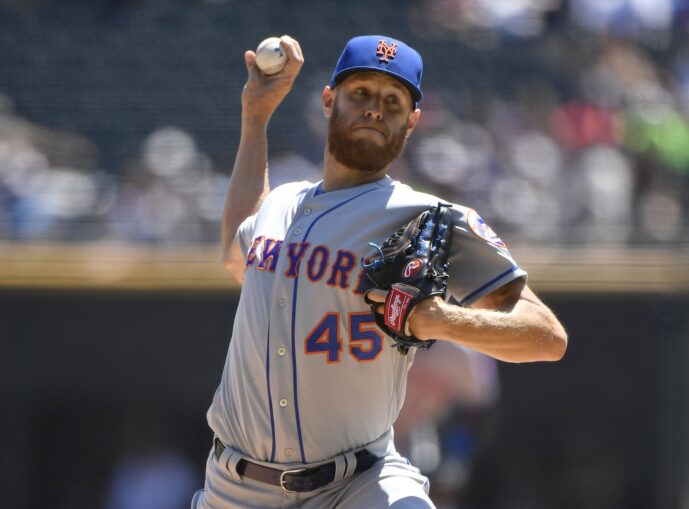
For a guy who pumps his fastball in the mid- to upper-90s on average and has consistently seen his season-long strikeout rate settle in the 20-25% range, this was puzzling. And if someone knew nothing else and saw how his monthly strikeout rate changed throughout 2019, they probably would’ve assumed August was one of his worst months, not his best (when using ERA as the barometer).
While strikeouts are a bigger part of today’s game than at any other time in history, there are other ways to get hitters out, which is what Wheeler was able to accomplish. It’s just hard to see it happen without an inflated strikeout rate because we’ve gotten so used to an abundance of both them and dingers these days. Without making hitters whiff like he normally has, it was imperative for the right-hander to control the zone and quality of contact as much as possible.
That’s pretty much what he did. Here’s a look at how his batted-ball profile compares when splitting his 2019 season into two parts:
| 2019 | LD% | GB% | FB% | IFFB% | Soft% | Hard% |
|---|---|---|---|---|---|---|
| Through 7/31 | 20.6% | 43.7% | 35.7% | 12.0% | 18.8% | 33.9% |
| Since 8/1 | 22.1% | 47.5% | 30.3% | 5.4% | 20.8% | 28.0% |
The comparison in his soft-hit rate and hard-hit rate are notable because those August numbers more closely resemble what he did in 2018 (23.4% soft-hit rate, 24.8% hard-hit rate), when he was among the league leaders in those categories. And even though his walk rate was slightly elevated in August compared to the rest of this season, he got ahead of hitters with more frequency (65.6% first-pitch strike rate through July 31st, 66.9% since August 1st). That’s not a huge difference, but it also let him toss pitches in the zone at a slightly lower rate (46.4% through July 31st, 44.0% since August 1st).
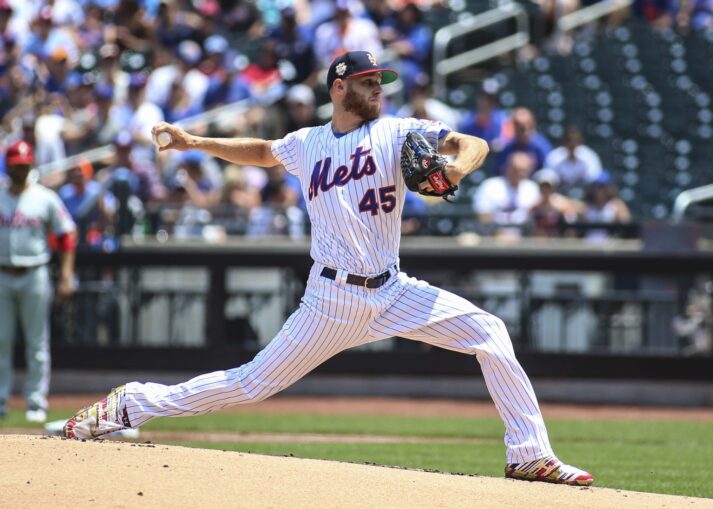
Like virtually every other Mets starting pitcher, Wheeler has been using his slider with much more frequency in the second half. After tossing it at an 18.5% clip prior to the All-Star break, he’s come out of the midsummer respite by leaning on this pitch 23.2% of the time. The value of this offering on a per-100-pitch basis (via FanGraphs) has jumped significantly between these two time periods (0.52 to 2.06).
The only thing left for Wheeler to do is combine his recent ability to manipulate contact with his ability for making those same opposing hitters swing and miss more often. New York’s recent six-game losing streak has given them a tougher road over the regular season’s final month, making every single game even more important than it already was in the first place.
If the Mets plan on making one final run to grab a postseason spot for the first time since 2016, they’ll need the starting rotation to be on its game on a nightly basis. For Wheeler, the strikeouts will eventually come back, so watching him control the quality of contact from opposing hitters again was a much more encouraging development when looking forward to the final four weeks of play.