
Mandatory Credit: Orlando Ramirez-USA TODAY Sports
The Mets were lucky to split a four-game series with the Phillies this weekend after the latest lackluster offensive performance.
The pitching kept them close, as always, though, which allowed for timely hits and patient at-bats against the Phillies’ bullpen (“Hector Neris can blow a save with the best of them,” the wise Keith Hernandez once said) during two game-winning innings — one to win 2-1 in “extra” innings in Game 1 of Friday’s doubleheader, and one off Neris to win 4-3 in the ninth on Saturday.
The Mets could’ve easily won three games this series or lost all four, so a split — for the second series in a row–feels fine. Now let’s get into what trending in the right direction and what isn’t for the team.
3 Up
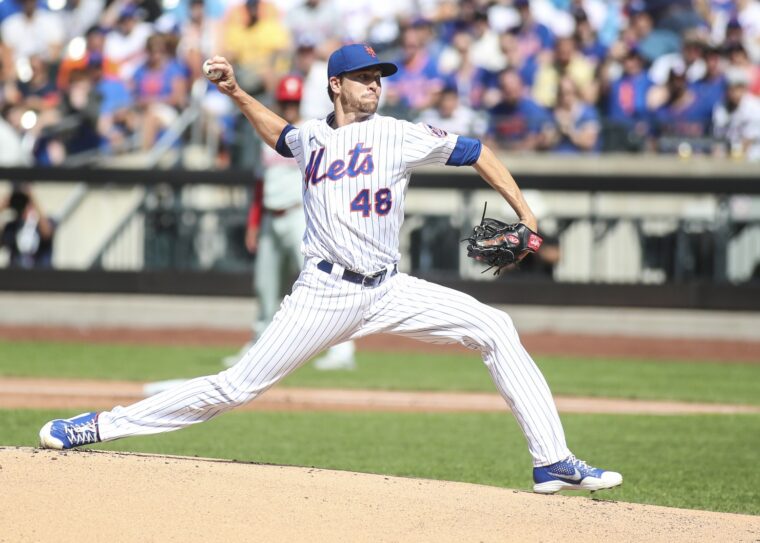
Jacob deGrom is Mortal, But…
He’s still the best pitcher in baseball. By a lot.
After his six-inning, two-run start Saturday, Jacob deGrom‘s ERA+ — a measure of how much better or worse than league average a pitcher is once ballpark factors and league ERA are adjusted, with 100 being league average — dropped from 777 to 550, meaning now he’s performed just 5.5 times better than a league-average pitcher. That’s a number about two times the next pitcher, Kevin Gausman.
More importantly, the Mets are now 10-3 in deGrom’s starts this season, including the last eight straight — a welcome change from the last three seasons. Granted, deGrom has given up just six runs in 13 starts, so literally, just one run of support will do, but nevertheless, 10-3 in deGrom’s starts sounds right and good.
The team announced deGrom will pitch three more times before the All-Star break — Thursday at the Braves, July 6 against the Brewers, and July 11 against the Pirates, the last game before the All-Star break. If deGrom decides to not pitch in the All-Star game due to pitching three days previous, he could also open the second half against the Pirates.
So that’s three starts against bottom-four offenses in the league and a start Thursday against a team he threw five scoreless innings against last week. That smells like food to me.
Kevin Pillar‘s Oppo Dingers
The fact Kevin Pillar came back so quickly from his broken nose was inspiring. Pillar hitting dingers to the opposite field is a little mind-blowing.
Coming into 2021, Pillar hit just two of his 82 home runs to the opposite field. His first five homers in 2021 were pulled, too. But his next two, including a huge game-tying homer on Saturday, went to the opposite field.
To say Kevin Pillar has been a spark plug for this team would be an understatement. Massive HR for him and the Mets. pic.twitter.com/Mzv0JbIkmq
— Metsmerized Online (@Metsmerized) June 26, 2021
The outfielder said he’s been working on his power to the opposite field recently (so shout out to Hugh Quattlebaum), and it’s paid dividends at crucial times the last couple of games. If a Met right-hander is going to hit it to the opposite field, that corner in right field is the place to do it.
It’s the second-opposite field homer a Met hitter has hit that way this season. The team’s righties had three opposite-field homers in 30 games in 2020. (The Mets’ right-handers as a whole have just four homers at Citi this season through 35 games, but we’ll have to get into that after another series or two at Citi.)
Team Defense
The Mets made a couple of errors during the Phillies series, but that doesn’t distract from the fact their defense has become one of the best in the league.
Almost halfway through the year, the team is fifth in the National League in Defensive Runs Saved (27) and third in Outs Above Average (10). The best defenders on the team by these metrics are:
- Francisco Lindor: 4 DRS, 10 OAA
- José Peraza: 0 DRS, 7 OAA
- Pete Alonso (!): 2 DRS, 1 OAA
- Taijuan Walker: 5 DRS, no OAA data
- Tomás Nido: 3 DRS, no OAA data, 14th out of 84 catchers in Runs Extra Strikes, a pitch-framing stat
Though a solid chunk of their premium defense comes from the infield, the outfield saved a couple of runs with catches to open the game Sunday.
Back-to-back diving catches! 😱
The @Mets start the game by flashing some leather. pic.twitter.com/F1s5PFeMaq
— MLB (@MLB) June 27, 2021
Mandatory Credit: Brad Penner-USA TODAY Sports
3 Down
The Offense Is Still Stinky
We’re 73 games into the season — about halfway through — and the Mets have one of the worst offenses in the league.
That was exasperated this series with nine runs in four games — including just one run scored against all four Phillies starters. Sadly, the Mets aren’t going to get to play the Phillies’ bullpen every night come the playoffs.
The team’s primary starters this year — Lindor, Alonso, Pillar, Conforto, McCann, McNeil, Smith, and Villar — have about 1,600 plate appearances between them. Only one has double-digit home runs and a wRC+ over 110 (both Pete Alonso), and none have an fWAR above 1.0. The Mets are the worst run-scoring team in the majors, and they have their league-best 3.04 team ERA to thank for their current record.
Pete Alonso and Luis Rojas both said Sunday they expect the offense to flip a switch once everyone’s healthy, but that doesn’t feel like a totally great excuse for how poor they’ve been in the extended period of time when everyone’s been healthy.
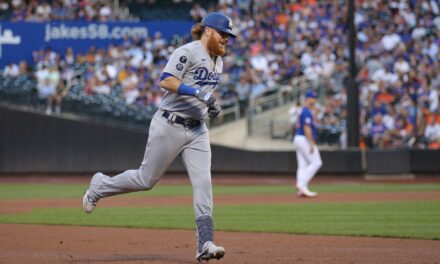
Brandon Nimmo and J.D. Davis are due to return before the All-Star break (Nimmo on Tuesday in all likelihood), though, and they were the Mets’ two best offensive players the first month of the season. Perhaps they can give the lineup a boost, but another 10-15 games of this, and the Mets will need to make major changes with the bats coming out of the break.
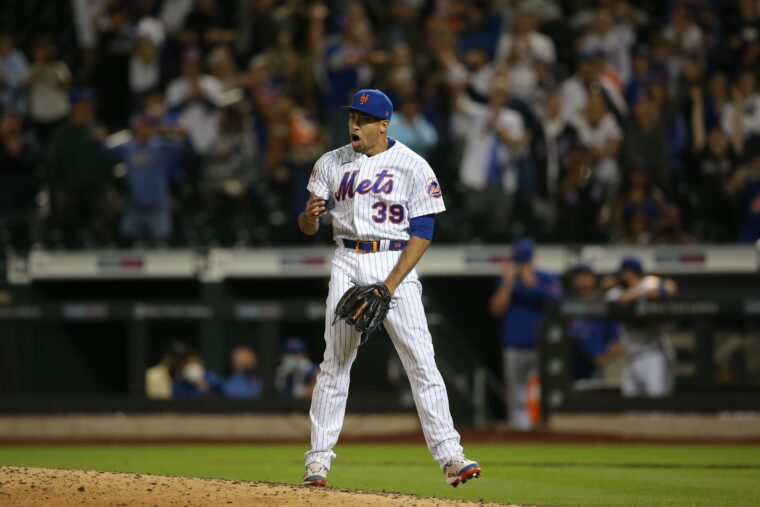
Edwin Diaz in Save Situations
So Edwin Diaz has been one of the best closers in baseball. I note “closers” rather than “relievers,” because while Diaz has allowed just one run in save chances, he’s really struggled in non-save situations. Here are the two scenarios compared:
Save Situations: 18 IP, 1 ER (0.50 ERA), 3 BB, 8 H, 25 K, .133 BAA
Non-Save Situations: 11 2/3 IP, 8 ER (6.17 ERA), 6 BB, 14 H, 15 K, .311 BAA
Non-save situations include tie games like Saturday, where he gave up a run in the top of the ninth when the game was sitting at two runs apiece. The Mets (and Hector Neris) let Diaz off the hook in the bottom of the inning when they came back to win 4-3.
While not as drastic of a gap over the course of his career, Diaz’s ERA is a full run better in save situations (2.70 ERA, 193 1/3 IP) than in non-save situations (3.89 ERA, 111 IP). What’s the exact reason for that? It’s not something we can explain, really, but 300 innings feels like a decent sample size to tell he performs way better in one situation than the other.
There will be times when reliever availability will dictate if Diaz is the only person available in non-save situations (especially tie games). But with the abundance of solid pitchers in the bullpen (Seth Lugo, Trevor May, Aaron Loup, Miguel Castro), the Mets may want to avoid Diaz in those non-save situations, leaving tie games and leads great than three or four runs to other relievers.
Scoring at Home
The Mets are averaging 3.37 runs per game at home this season. They’re already dead last in the league at runs per game with 3.59, but that number gets worse when they play at Citi. This number could be even worse were it not for a 13-run outburst on May 29. In the other 34 home games, that runs per game number dips to 3.08.
They also have the worst home slugging percentage (.349) in the majors, aided by the fact they only have 71 extra-base hits across 71 games. (No other team has less than 82 XBH in their home games.)
Their home record is still one of the best in the majors at 24-11, but that is in total thanks to the team’s insane 2.08 home ERA — 0.73 better any other team’s home ERA. The bats need to turn on at Citi for the next homestand and in the second half.
—
The Mets are 40-33 now and still four games ahead of second place in the NL East.
They’ll play a make-up game against the Nationals on Monday and three more in Atlanta the next three days as they finish a 16-game stretch against NL East opponents, during which they’re 5-7 so far. They started this stretch up 4.5 games on the Phillies, so if they end the stretch in that same ballpark with how poorly they’ve played offensively, we can take that as a positive.