Mandatory Credit: Vincent Carchietta-USA TODAY Sports
The Mets dropped three games of a five-game set with the Atlanta Braves, who now sit just four games behind them for the NL East lead.
The team came into the series with the opportunity to bury the Braves by winning four-of-five or, less likely, a five-game sweep. But instead, they started (and continued the series) with two question marks at starting pitcher, then the bats completely cooled off from their first 10-ish games coming out of the break, mustering just 11 runs in five games.
The Mets are still in first place in the NL East, but that lead is now just 3.5 games over the Phillies. They’re 22-23 in their last 45 games. The trade deadline is in a couple hours. Their National League competitors traded for the likes of Max Scherzer, Trea Turner, Adam Frazier and Eduardo Escobar over the last week.
It’s going to be a make-or-break next couple of days for the Mets off the field, but they desperately need to right the ship on the field. Before their three-game series against the Reds starts this weekend, let’s get into the ups and downs of the Braves series.
3 Up
Drew Smith‘s Consistency
Write down a list of the Mets’ best relievers this year, and Drew Smith should be in the top five.
With two more scoreless innings in the Braves series, Smith has a 2.70 ERA over 33.1 innings. He’s thrown more than an inning in 11 of his 24 appearances, and he has a 1.80 ERA in those 11 games.
Smith had Tommy John surgery in 2019, came back in 2020 and threw a couple of crap games while being optioned to the Alternate Training site nearly half a dozen times in a month. He then started 2021 on the injured list with a shoulder injury, and there was legit concern about whether Smith, who the Mets acquired for Lucas Duda back in 2017, would ever stay healthy.
He’s been up with the team since the beginning of May, though, and he’s become one of Luis Rojas‘ best arms out of the bullpen. His monthly ERAs been consistent (between 2.58 and 2.80) since returning, and his versatility has helped Rojas and the Mets get out of jams and also eat a couple innings when starters have had to leave games early.
Tylor Megill Keeps It Rolling
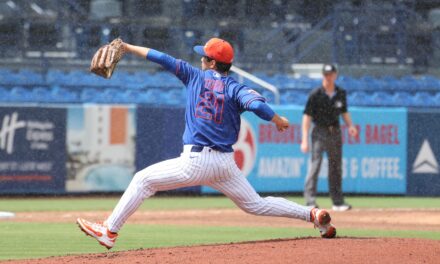
It’s July 30 and the Mets’ healthiest and most consistent starter is Tylor Megill. Somehow they’re still in first place.
The now-26-year-old (his birthday was Wednesday when he pitched) lowered his ERA ever-so-slightly to 2.04 after another great outing against the Braves–his third against the team in his first seven career starts.
I wrote last series about Megill’s comparisons to Jacob deGrom with regards to pitch selection and location. Megill held the Braves’ offense to just a single run (off the bat of Austin Riley, who absolutely terrorized the Mets this year) after facing them for a third time in 30-ish days. His pitch selection was different each game, a veteran move major leaguers need to utilize when facing division opponents so often.
Here’s hit pitch selections over the three Braves starts:
- Start 1 (June 23): fastball (63 percent), slider (12 percent), changeup (20.7 percent), curveball (4.3 percent)
- Start 2 (June 29): fastball (55.3 percent), slider (16.5 percent), changeup (28.2 percent)
- Start 3 (July 28): fastball (52.1 percent), slider (31.9 percent), changeup (13.8 percent), curveball (2.1 percent)
He noted in a press conference after Wednesday’s game that he kept a mixed pitch selection in mind after facing them a third time in such a short span. Megill has shown longterm qualities in each start that will keep him in the rotation for years beyond this one.
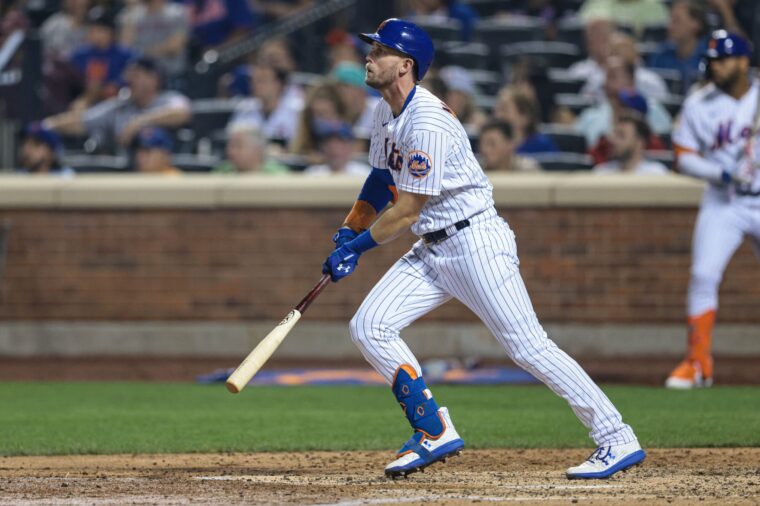
Pete Alonso, Jeff McNeil and the Brandons…
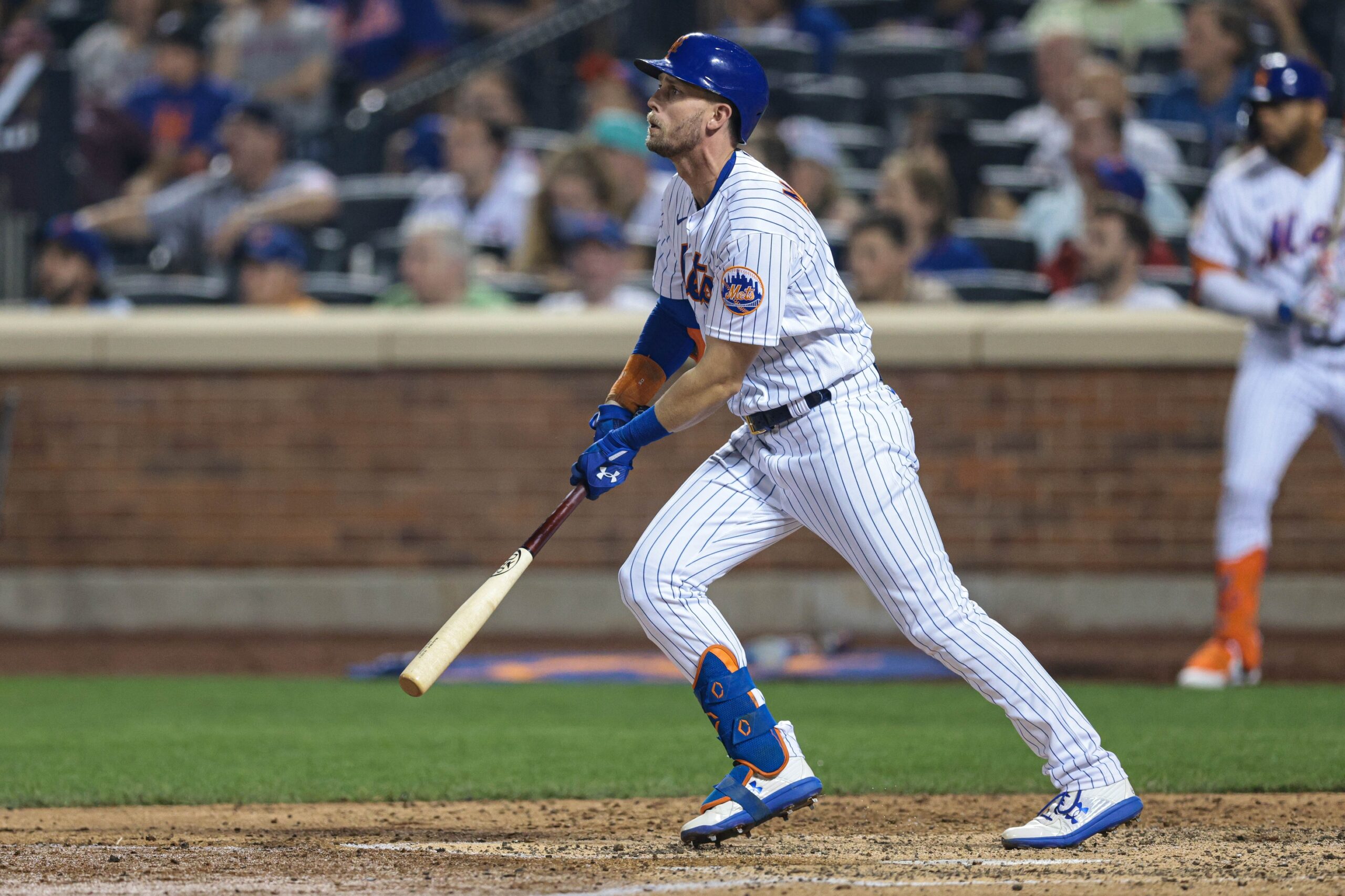
The Mets have had some real consistency from guys like Pete Alonso, Jeff McNeil and Brandon Nimmo over the last week. Over the last 15 days, the trio’s slash lines are:
- Alonso: .321/.387/.679/1.066, 6 HR, 13 RBI
- McNeil: .350/.395/.575/.970, 2 HR, 9 RBI
- Nimmo: .250/.459/.364/.823, 1 HR, 2 RBI, 16 (!!) BB
Alonso and McNeil have 15 of the team’s 22 RBI over the last eight games. Nimmo has another one, and Brandon Drury, who was called up last weekend, has amazingly gone 8-for-10 with four of the team’s RBI in that same span in a mix of pinch hitting appearances and starts.
These four guys have been good. As for the rest?
3 Down
…And No One Else On The Offense
Not so great
So Alonso and McNeil have 15 of the team’s 22 RBI over the last eight games, which is fine for them individually, but that also means THE METS HAVE SCORED 22 RUNS IN EIGHT GAMES. They scored just 11 runs in five games against the Braves, their two highest run totals–five and three–coming in losses.
This comes after averaging just under seven runs per game in six games against the Pirates and Reds to open the second half.
And it’s not like the offense isn’t getting on base. The Mets lead the league in hits and are third in the majors in walks in the second half. Narrow it down to the last seven days, when they’ve scored those 22 runs, they’re third in hits. They’re just not knocking guys in once they get on base–an issue they faced for the first three months of the season before it briefly subsided for the first half of July.
Taijuan Walker‘s Home Run Rate
We’ve talked about Taijuan Walker‘s struggles recently, but him giving up the home run ball has been the most noteworthy part of his last two starts.
Walker gave up just one home run in his first eight starts (49 innings), a reasonable five over the next eight starts (41.1 innings), but now he’s allowed five over his last nine innings. His home-runs-per-nine-innings rate on the year jumped from 0.66 to 1.1 over the last two games.
He’s really struggled to miss bats recently (his swing-and-miss percentage is a season low 18.9 percent in July), and when hitters are making contact, which they’re doing more of now, they’re hammering it, with a season-high 90.4 average exit velocity this month. His barrel percentage in July is 9.4 percent, too–a high for any month this season.
The Mets needed to address their starting pitching before Walker’s recent regression, but there should be a little more urgency with how Walker has performed lately.
Urgency
Hours before the trade deadline, there hasn’t felt any sense of urgency from the team–from the front office down–to improve the roster.
The starting rotation has been depleted to the point Jerad Eickhoff needed to come back from his second designation for assignment to throw a couple innings in a start. There didn’t feel like there was much urgency to fill that rotation spot (or the one Monday night in Game 2) with a viable starter. There hasn’t been much urgency all year to address the team’s poor performances against lefty starters and, more broadly, the offense’s overall poor performance. We heard in May that it was just a rocky schedule and the hitters couldn’t get their timing back. Then there were the injuries, and then there was the “wait until everyone’s back from injury!” But everyone’s back now, and the offense is still performing poorly.
Luis Rojas said he felt the team had everyone they needed for a playoff run (which, of course he’s going to say that, he has to say that), then he doubled down saying Carlos Carrasco coming back from injury is like adding an arm at the deadline. Except that arm can’t pitch more than four innings right now and you’re not sure the type of stamina he has in the long run after throwing just 68 innings since the end of 2019.
This can all be a moot point with a deadline deal. We’ll see if they make one.