Mandatory Credit: Kamil Krzaczynski-USA TODAY Sports
The Mets were swept by the Cubs in what was their ugliest series of the year so far.
A blowout paired with bottom-of-the-barrel offense (they’re comfortably in the doldrums in runs per game and slugging) resulted in three straight losses for the Mets, who are 7-7 and somehow remain tied for first place in the NL East.
3 Up
Pete Alonso‘s Exit Velocity
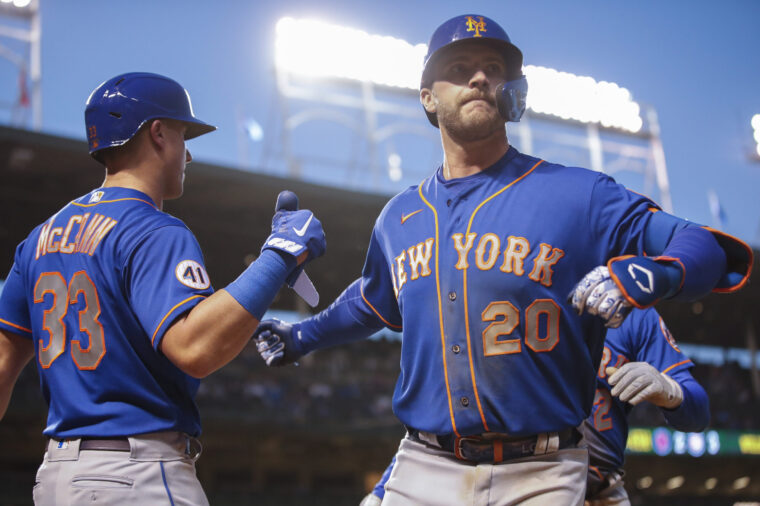
An update on Pete Alonso‘s average exit velocity: he’s first in the majors in average exit velocity at 103.3 miles per hour, including an insane 104.1 average m.p.h. on ground balls.
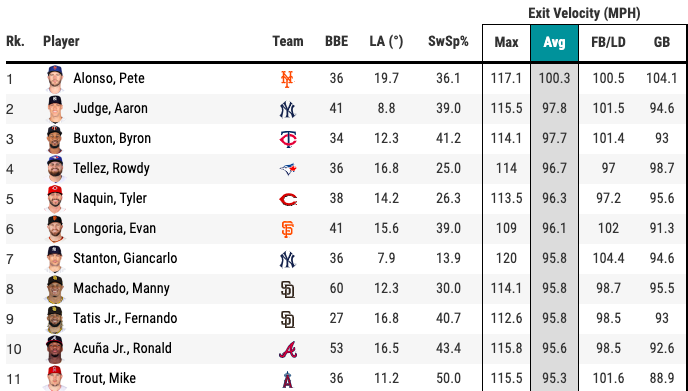
This was aided by five batted balls that were hit over 99 m.p.h. during the Cubs series. Two of those went for home runs and three for outs. His chase rate is sitting around the 50th percentile, too, which is an improvement on previous years.
If Pete keeps this up (and can connect with the right launch angle rather than smoke balls on the ground), he’s going to clear 50 home runs again.
Sean Reid-Foley As The Long Man
Sean Reid-Foley was brought up Thursday in place of Trevor Hildenberger, who took a double-gut punch with getting beat up in game two (four runs, 1 1/3 IP) and getting sent down the next day.
Reid-Foley, who was acquired in the Steven Matz deal, entered Thursday’s game in the fourth inning after starter Joey Lucchesi was pulled for a pinch hitter in a scoring opportunity. The 25-year-old promptly set down all nine batters he faced, notching four strikeouts in the process.
Robert Gsellman was the most likely candidate for the Mets’ long-man situation, no matter his prior successes or failures, but Reid-Foley grabbed those reigns Thursday night. It’ll be nice to see if Reid-Foley given the chance to duplicate success with future outings.
The Core Bullpen Pieces
As we’ll dive into more in a moment, the Mets’ starters weren’t great this series. That required the bullpen to do the heavy lifting. They (largely) answered the call with a total 12 shutout innings over the course of the series before Diaz gave up the game-winning hit in game three.
(Two things: we’re not counting Guillorme as a reliever, and Diaz’s value or stock is not affected whatsoever by the second inning in relief Thursday where an unearned run scored because they started the inning on second.)
This is piggybacking off a solid three games in Colorado, as well, where the bullpen pitched four out of five innings without allowing a run. (Barnes was the lone culprit here with his four-run inning in Colorado.)
Edwin Diaz, Trevor May, Miguel Castro, Aaron Loup and Jeurys Familia have now combined for a 2.49 ERA over 25.1 innings pitched. They’ve racked up 31 strikeouts to start the season, too. These five guys are the core the Mets bullpen, along with Seth Lugo when he returns from injury some time in May, and this is exactly what they’ve needed from their primary relievers.
The rest of the bullpen (i.e. Barnes, Gsellman, Hildenberger, etc.) have given up 14 runs in 14.2 innings. That’s where they need to clean things up.
Mandatory Credit: Kamil Krzaczynski-USA TODAY Sports
3 Down
Okay, before we start this section, I know: the offense is super bad. They’re not hitting for power. They’re not hitting with runners in scoring position. They’re not really hitting at all. We’ve been over this in the first couple 3 Downs, so let’s talk about some new stuff.
J.D. Davis‘ Defense
Let’s get this out of the way: J.D. Davis was atrocious at third base this series. There were real worries heading into the season about putting Davis at third base for most of the team’s games in 2021, and the soon-to-be-28-year-old hasn’t done anything to qualm those worries.
We know the plays from this series: the double-clutches and double-shuffles on routine ground balls in game one, the mishandling of a crucial double play ball in game two’s fourth inning.
There was also a potential double play in game two’s fifth inning that Davis took a long time to carefully relay to Jeff McNeil at second base, where McNeil was visibly frustrated that the throw took a long time to get there.
He was benched for game three in place of Luis Guillorme, who promptly made an incredible diving stop on the first play of the game.
Davis has been one of the worst defensive third basemen in baseball since he came to the Mets in 2019. His league-high -19 DRS, according to FanGraphs, in that time span is worst among third basemen. In fact, he’s hit that number in nearly half as many innings (529.1) as the next closest guy (Colin Moran, -17 DRS, 917.1). The next-closest player to Davis’ DRS number in as many innings is the Braves’ Austin Riley, who has -7 DRS in 561.2 innings.
Statcast‘s Outs Above Average also ranks Davis as one of the worst defensive third basemen since 2019, as well, with poor defense on balls ranging both ways as well as coming in.
Davis is worse in left field, too.
Many of us talked about how the designated hitter would benefit the Mets so it could get Pete Alonso and Dom Smith in the lineup without compromising defense. At this point, with Davis hitting well to start the year, the designated hitter in the National League would benefit a guy like J.D., who supremely struggles wherever he’s at in the field.
The Other Starters
Last 3 Up, 3 Down, we boasted about Jacob deGrom and Marcus Stroman and their dominant starts.
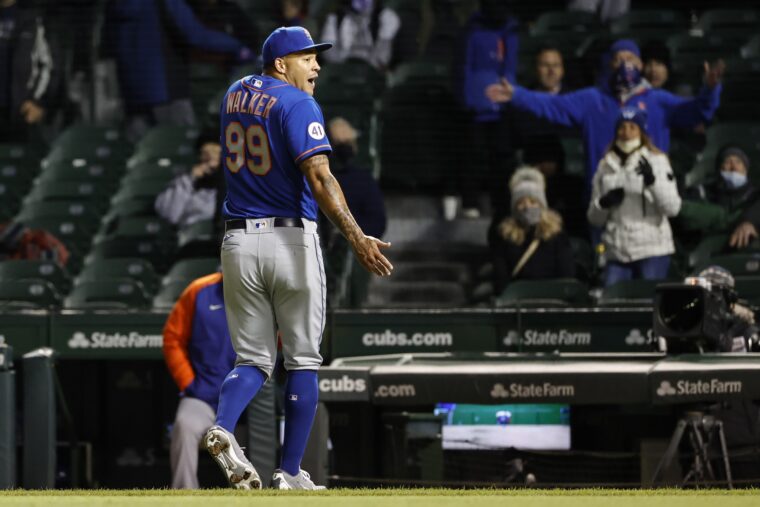
The other three starters–Taijuan Walker, David Peterson, and Joey Lucchesi–had a rough series in Chicago. Neither of them made it beyond three and two-thirds innings.
The three combined for a stat line of: 10 IP, 8 H, 12 R (8 ER), 10 BB, 15 K. That’s not ideal.
The Mets entered the series with the second-best starter ERA in the league, and the rotation has kept them in games as their offense has struggled to get going. When they faulted this series, the offense wasn’t there to pick them up, which made ugly lines look even worse.
With two off days next week, it wouldn’t surprise me to see Lucchesi skipped again, but Walker and Peterson will both have to show up as Carlos Carrasco makes his way back from injury in the coming weeks to help shore up the back end of rotation.
Outfield Depth
Heading into the year, the Mets had one of the best starting outfields in Dominic Smith, Brandon Nimmo and Michael Conforto. The start of the season has shown there’s not a ton of depth behind that.
Kevin Pillar is 2-for-22 to start the year and Albert Almora Jr. has been used almost exclusively in pinch running situations. (He only has four at-bats on the season.) Pillar isn’t even playing particularly great defensively in center field, and his at-bats have mostly come in the last two games of the series when Nimmo has been out with a stiff hip.
The team’s infield depth to start the year has proven viable with Jonathan Villar and Luis Guillorme each making impacts of their own. The outfield depth, on the other hand, has left plenty to be desired.