The 2025 season will go down as one of the biggest disappointments in the history of the New York Mets.
It will also go down as one of the most embarrassing collapses in franchise history, too. Forget 2007—the Mets didn’t have a great team chasing them down this time around. They just flat-out blew it.
Consider this: New York owned the best record in all of baseball on the morning of June 13. The team nosedived and went 38-55 the rest of the way to miss the playoffs. They led the NL East by 5 1/2 games as late as June 12, and led the division in August, too. And yet, the Mets will now be getting ready for the beach instead of the playoffs.
Furthermore, needing just a win in order to get in on Sunday after the Brewers beat the Reds, the Mets couldn’t even score a single run against the Marlins. As a result, the Mets finished the year 0-70 when trailing after eight innings. That is not the hallmark of a good baseball team.
With the season now officially over, all there is left to do is trawl through the wreckage of a lost season that began with so much hope and excitement.
Before we do that, though, let’s review all the good and all the bad from an infuriating 2025 season. It is time for the final 3 Up, 3 Down of the year.

Juan Soto (22) & Pete Alonso (20) Credit: Vincent Carchietta-Imagn Images
3 UP
THE BIG THREE
As heartbreaking as the finish was, this season did still have some high points. Most notably, the “Big Three” came exactly as advertised. Juan Soto, Pete Alonso, and Francisco Lindor all produced monster seasons. That’s why the failure to make the playoffs is even more perplexing. Soto, despite getting off to a slow start in Queens, delivered quite the special first year in a Mets uniform. He hit .263/.396/.525/.921 while hitting a career-high 43 home runs and stealing a career-high 38 bases. Soto also led all of baseball in walks with 127, setting a Mets’ single-season franchise record along the way. The highlights were a red-hot June, followed by a strong finish where Soto carried this team on his shoulders at times. His first season in Queens did not finish the way he would have wanted it to, granted. However, we saw enough to know that Soto continues to be the real deal.
Meanwhile, Lindor also made some history by becoming just the first shortstop in MLB history to compile four seasons of 25+ home runs and 25+ stolen bases. Lindor and Soto also became just the third pair of teammates in all of baseball to go 30/30 in the same season. Yes, Lindor did have cold spells throughout the season. However, the shortstop still hit .267/.346/.466/.811 with 86 RBIs.
As for Alonso, the slugger officially took over as the Mets’ new home run king, surpassing Darryl Strawberry‘s mark of 252. Alonso finished the year with 264 career home runs after hitting 38 in 2025, while amassing 126 RBIs and 41 doubles—the latter of which is tied for the most in the National League and a personal best. Alonso was also consistently clutch for the Mets, finishing with a .309 batting average with RISP. Having confirmed that he will opt out of his contract this winter, it remains to be seen if the slugger has played his last game in a Mets uniform. Making Alonso a forever Met should be a priority for the front office.
David Banks-Imagn Images
SHUTDOWN MAGICIAN
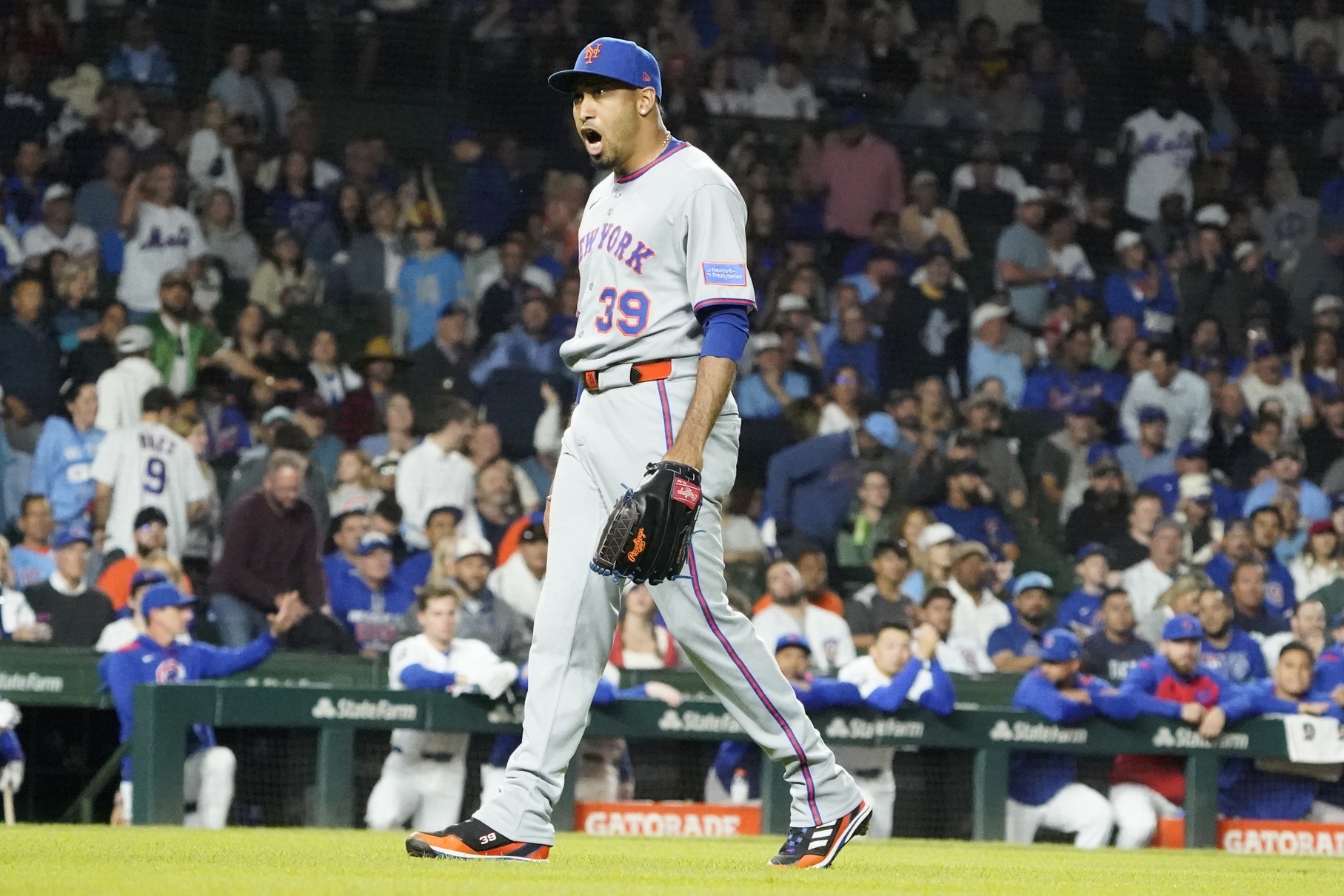
Edwin Díaz is one of the best closers in all of baseball. Period. He proved that once again, thanks to a dominant 2025 season on the mound. The three-time All-Star finished with a 1.63 ERA and 28 saves over 66 1/3 innings. Furthermore, Díaz compiled a 0.87 WHIP with 98 strikeouts. Beyond the stats, the righty stepped up and consistently delivered clutch moments in big spots. If the inaugural Relief Pitcher of the Year award started this season, Diaz would likely win the NL’s version. That’s even more remarkable when you consider how bad the rest of the bullpen was for the majority of the year.
With no real concrete setup man behind him for the large chunk of the season, Díaz still pitched at an elite level. It remains to be seen if Díaz will opt out of his contract this winter. (He likely will.) Given that he pitched at an elite level in 2025, it will be important that the Mets try to keep their electric closer in Queens.
ROOKIE PHENOM
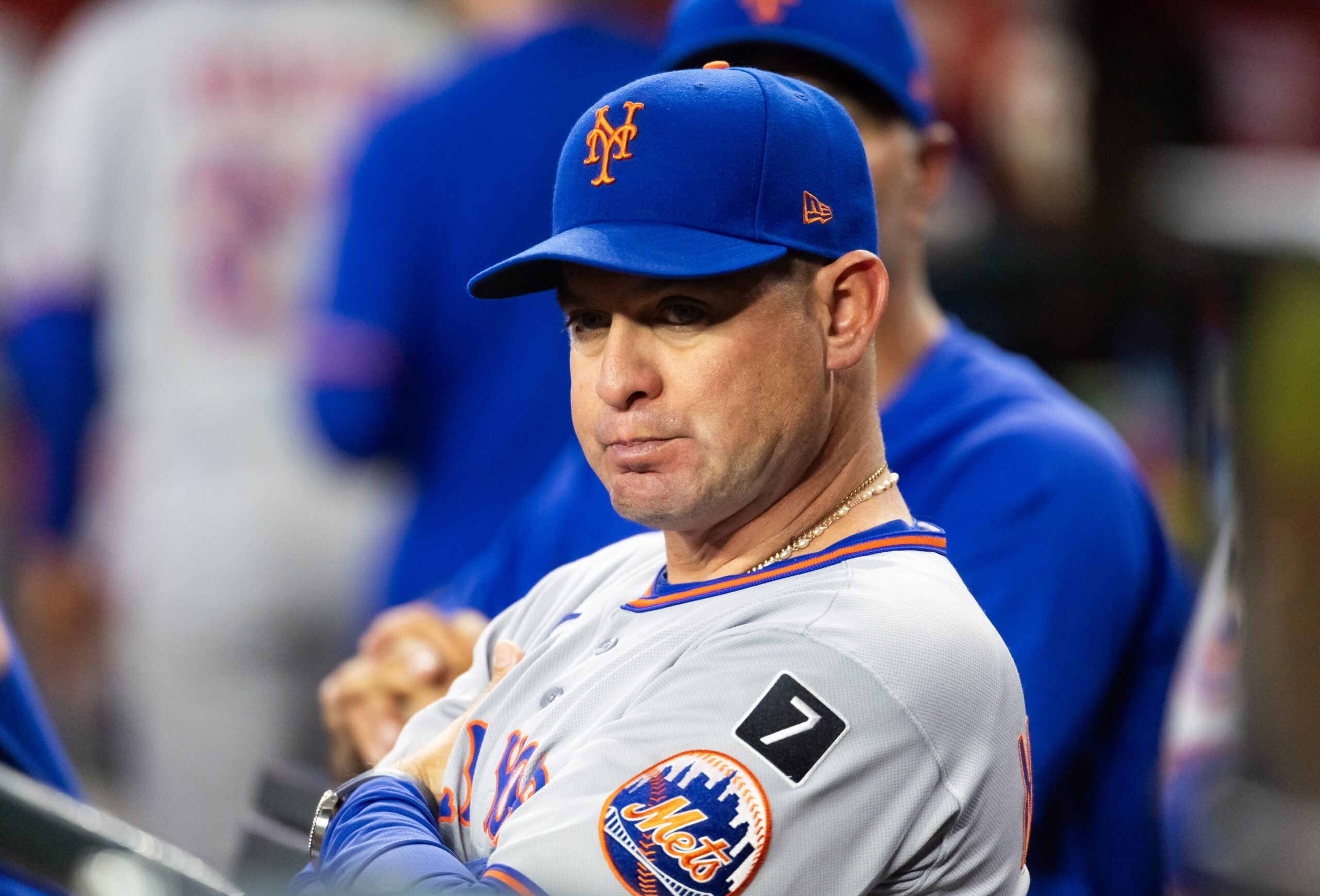
The only real saving grace for Mets fans during an awful stretch run was Nolan McLean. The rookie was called up in August after lighting up Triple-A and didn’t disappoint. He didn’t seem fazed by the big lights of New York, instead stepping right up and putting on a show in his MLB debut. After striking out eight in his first start against Seattle, McLean only went from strength to strength. He looked like a seasoned veteran out on the mound, consistently giving his team length while looking like an ace every time he pitched. Therefore, the final stats shouldn’t shock you too much.
McLean finished with a stellar 2.06 ERA, while striking out 57 with a 1.042 WHIP over 48 innings pitched. He likely would have been the Game 1 starter if the Mets had made it to the postseason. In any case, with the starting rotation in flux heading into the offseason, McLean figures to be a huge part of the Mets’ plans in 2026 and beyond. Maybe the one silver lining of 2025 will be that we saw the emergence of a future stud ace.
Mark J. Rebilas-Imagn Images
3 DOWN
NON-STARTER
The 2025 Mets had many flaws. However, arguably the biggest and most significant flaw was the starting pitching. Kodai Senga couldn’t stay healthy and was no good when he did return. Sean Manaea was not the pitcher he was in 2024, never really ramping up after starting the year injured. Frankie Montas was a bust. Griffin Canning was a positive until he got hurt. David Peterson was the ace of the staff until he fell off a cliff after the All-Star break. As a result, a once-dominant pitching staff quickly turned into a pumpkin. The Mets once boasted the best team ERA in baseball, but they finished the year with a 5.31 ERA. The starters had a 5.27 ERA from June 13 on.
While the front office had success with the current pitching philosophy and pitching lab in 2024, it clearly didn’t work this year. Hope is not a strategy—nor is expecting three rookie pitchers to save the season. Reclamation projects may work out every now and then, but expecting to have a 100% hit rate with that strategy is unrealistic. If the Mets want to bounce back in 2026, they will need to invest in more sure things in the starting rotation.
Mark Vientos (27) Credit: Aaron Doster-Imagn Images
BACK TO THE DRAWING BOARD
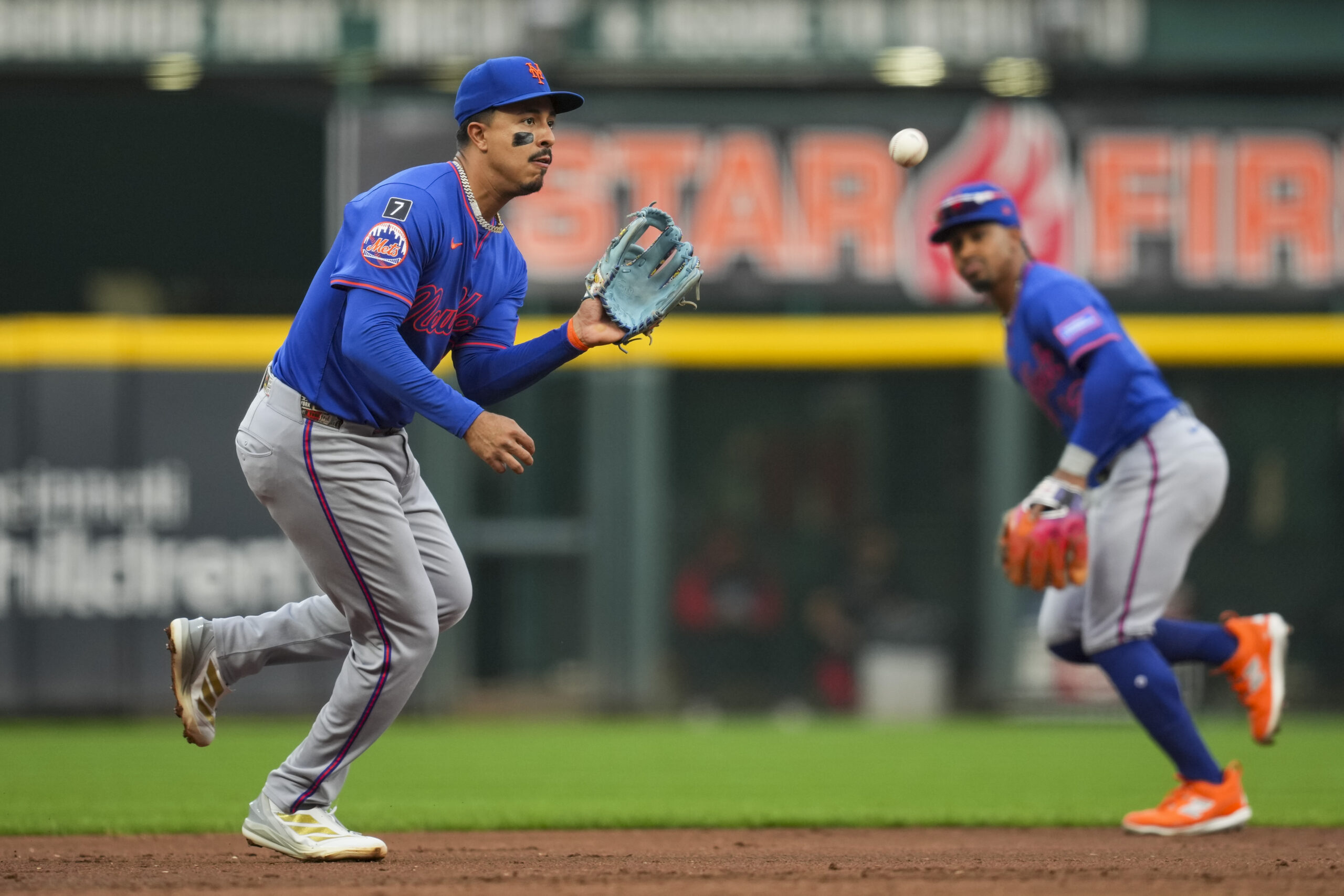
Nearly everything David Stearns touched in 2024 turned to gold. Nearly everything he touched in 2025 turned to dust. The president of baseball operations did not have a good year, and he does deserve a large slice of the blame here. As we trawl through the wreckage of a lost season, Stearns’ fingerprints can be found all over the damage. Outside of signing Juan Soto and bringing back Pete Alonso, Stearns got little right in 2025. His pitching philosophy blew up in his face. He never really addressed the lack of offense from center field. He misplayed the battle for third base. Maybe moving Mark Vientos in the offseason would have been the smart move. And none of the moves made at the Trade Deadline worked. In fact, they only served to make the Mets worse.
Additionally, Stearns’ failure to acquire another starter at the deadline ultimately came back to bite this team. He’s also got a lot to prove this offseason, and he owned up to the roster construction on Monday. A failure to rethink the overall approach and address all this team’s flaws could lead to further regression in 2026. Now is the time to pivot and go back to the drawing board.
DUGOUT SHORTCOMINGS
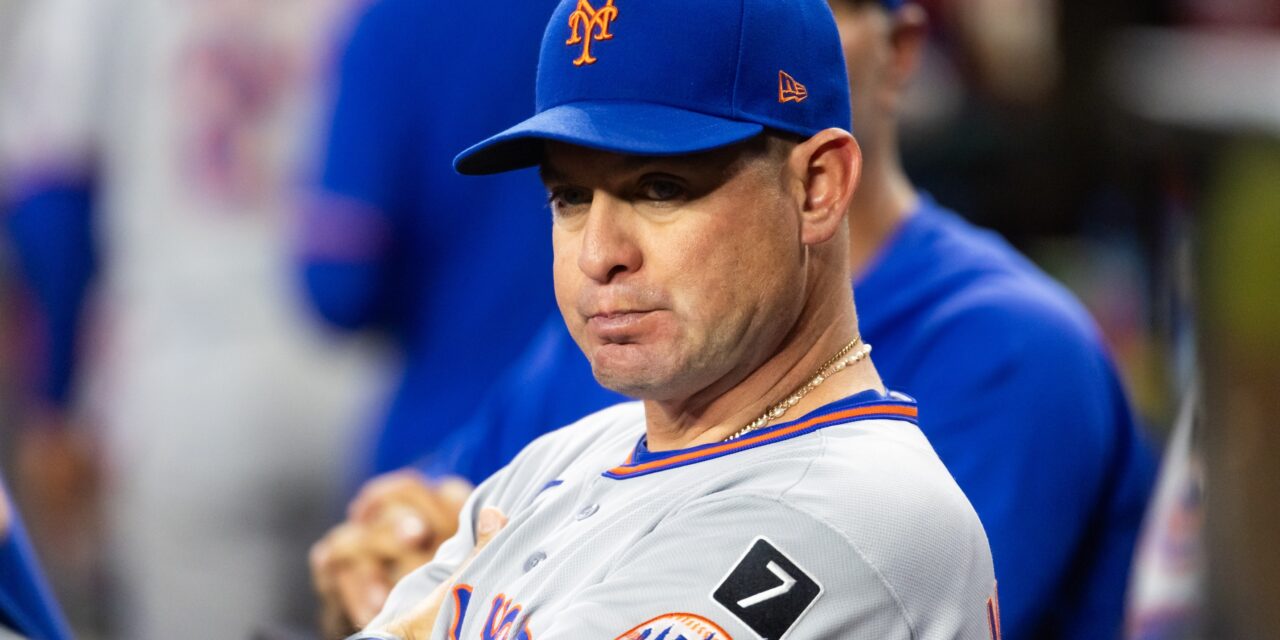
Like Stearns, Carlos Mendoza could do little wrong in 2024. However, like Stearns, 2025 proved to be a very different story for Mendoza. In his second year as a manager, Mendoza seemed out of his depth as the wheels began to fall off. He struggled to manage the pitching staff. His bullpen management was horrible and perplexing at times. He never figured out a way to balance the lineup and get more out of the bottom hitters. The fact that the Mets didn’t know who they were going to put on the mound for Sunday’s do-or-die game is an indictment on Mendoza.
Additionally, his in-game management left a lot to be desired. He got it wrong on multiple occasions when it came to pinch-hitting or -running situations, including in Sunday’s finale. Starling Marte was available on the bench—why wasn’t he used? This was just a fundamentally unsound baseball team, and the manager has to take some of the blame for that. Furthermore, as much as it is on the players to execute, a manager is there to prepare and motivate his players. The fact this team looked so lifeless for the best part of four months is a red flag, as were the litany of sloppy mistakes and mental errors. They just didn’t look ready at times, and, again, that’s on Mendoza, too.