15
2012
Engineering A Miracle

First Mets GM George Weiss And First Mets Manager Casey Stengel
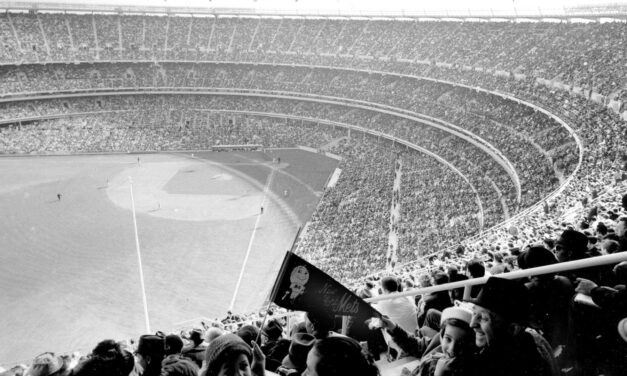
On October 16th, 1969 at Shea Stadium, in front of 57,367 hysterical fans the New York Mets wrote the final chapter of what is still today one of the most compelling “rags-to-riches” stories in Major League Baseball history. A team that for the first seven seasons of their existence had been a laughingstock and the brunt of countless jokes, was suddenly and inexplicably sitting on top of the baseball world. And no one except the Mets and their fans were laughing anymore.
Was it a fluke though? A happy accident? The fact that the Mets made it back to the World Series four years later in 1973, with the same basic core of players proved that ’69 was no accident. No, the 1969 Mets were the beginning of a new kind of Mets team. A playoff challenger. A team that barring extensive injuries could compete for a playoff spot every year. A team that was built with experience and know-how, and great pitching.
Eventually, a power struggle in the inner circles of the Mets hierarchy following the death of GM Johnny Murphy, would result in the ousting of Whitey Herzog, and the emergence of M. Donald Grant as the “top dog” in the baseball structure of the organization. This was the end of the Mets as a contending team.
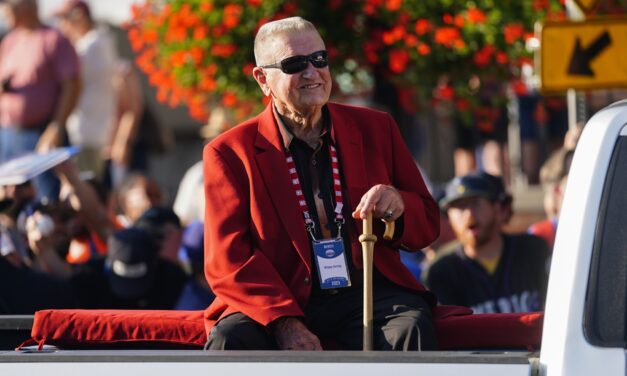
As M. Donald Grant, who in Whitey Herzog’s own words: “knew nothing about baseball,” went on to destroy the Mets franchise for the next decade, Herzog went to St. Louis to lick his wounds. Of course Herzog, who knew “plenty about baseball,” went on to build a perennial contender and championship team while the Mets were entering their darkest period as a franchise. Those “White Rat” led Cardinals teams ate the Mets lunch practically every season for the next twelve years.
But this piece is intended to illustrate where that first core of championship players emerged from, and who was actually responsible for what? Perhaps by reviewing the history of our own beloved Amazins, we can ourselves relearn what it takes to build a winner. There were three Mets GM’s from the team’s inception in 1961 until the end of that miracle ’69 season. They were each in their own right, very important in building that world champion team.
The first Mets GM was George Weiss, who was tabbed by Mrs. Payson in 1961 as the perfect man for the job of getting this fledgling franchise off the ground. Weiss, who along with Casey Stengel had been forced by the Yankees to retire the previous year, had built the Yankee teams that won all those championships in the 40′s and 50′s. He is also credited for developing the modern-day farm system after he began working for the Yankees in 1932. Weiss built the foundation, the talent, and farm system for the Mets that would produce about two-thirds of that ’69 team.
Weiss was directly responsible for acquiring four out of the six starting pitchers the Mets used in 1969, including Tom Seaver who was drafted in a special lottery in 1966, and Jerry Koosman who was signed as an amateur free-agent in 1964. Weiss also made use of the first year of the MLB Amateur Draft in 1965, to take a couple of young hurlers in the 11th and 12th rounds by the names of: Jim McAndrew, and Nolan Ryan. Weiss’ sole contribution to the 1969 bullpen was a young left-hander by the name of Tug McGraw.
As for position players, Weiss had an even more noticeable imprint. Starting of course with the oldest Met, in terms of tender, even in 1969 and still to this day, “Steady” Eddy Kranepool. Krane was signed as an amateur free-agent in 1962, a 17-year-old from the Bronx, and made his big league debut at the end of the ’62 season. He would play the next 18 seasons as a Met.
Kranepool and Koosman were joined by other huge free-agent acquisitions in the years before the Draft was implemented in 1965. Bud Harrelson, Cleon Jones, and Ron Swoboda were all netted as free-agents by Weiss in 1963. Koosman, McGraw and Kevin Collins would follow in ’64. In 1965, not only did Weiss land Ryan, McAndrew, Ken Boswell, and Steve Renko in the draft, he also made a very shrewd trade with Houston to pry a young catcher away from them by the name of Jerry Grote.
The second MLB Draft in 1966 enabled Weiss to land the Mets a promising catcher named Duffy Dyer in the 1st round. In all, twelve players from the World Championship 1969 team were acquired directly by George Weiss, and five more were acquired indirectly, through moves previously made by him. Weiss would eventually be voted into the Baseball Hall of Fame in 1971.
Bing Devine, was scooped up by Peyson after he was fired by the Cardinals, and brought in to replace Weiss as GM. He was only in the position for one year, 1967, but during that time he made some very important moves that would end up helping the Mets win a world championship two years later. Devine was caught up in the tug-of-war between Herzog and Grant and decided after just one year he had to get the hell out of there. St. Louis realized they had made a mistake in firing him, so off he went back to St. Louie to await the arrival of Herzog a short time later.
But during the one short year he served as Met GM Devine left an indelible mark on the franchise. In his one draft with the Mets, Devine made a huge selection in the 3rd round when he tabbed a young, fire-balling right-hander, by the name of Gary Gentry. Gentry would break into the bigs in 1969 and pitch so well for the Mets, that he nailed down the number three spot in the rotation. The other notable player from Devine’s ’67 draft was reserve outfielder Rod Gaspar, in the 2nd round.
Devine understood that this team was close to being very, very good, and he was able to add important complimentary pieces without disrupting the team’s nucleus. He either purchased the contracts or traded for, several older but useful role players to fill out the rotation, bullpen, and bench. Players like catcher J.C. Martin, who he traded an aging Ken Boyer to acquire, and would later play a key role in the ’69 Series. Devine picked up 3B Ed Charles, “The Glider,” from K.C., and important relievers Cal Koonce and Ron Taylor.
He also made two very significant trades. The lesser of the two, which was still crucial to the Mets fortunes in the 1969 season, was the December 1966 trade of RHP Dennis Ribant to the Pittsburgh Pirates for veteran left-hander Don Cardwell. Cardwell came over to the Mets and did an excellent job of rounding out the rotation. Furthermore he provided a veteran influence on a very young rotation whose senior member up to that point was 26-year-old Jerry Koosman, and he clearly took pressure off the youngsters Ryan and Gentry.
The biggest contribution that Devine made was not the player he acquired in the trade where he sent Jim Hickman and Ron Hunt to the L.A. Dodgers. That was outfielder/third-baseman Tommy Davis, and Davis, like Devine, would only work as a Met for the 1967 season. The biggest move Devine made was getting Davis which would eventually allow the Mets to trade for two other players who would be huge for them in 1969.
With Devine’s departing, enter Johnny Murphy as the franchise’s third GM. Murphy, a former relief ace for the Yankees in the 30′s and 40′s, had been a Red Sox executive for 13 seasons mostly involved in scouting, and started working in the Mets front office in 1961. He was a solid, knowledgeable baseball man who could stand up to the meddling Grant. Murphy guided the team through 1968 and 1969, and like Devine, knew enough to see that he had the makings of a winning team that only required a little leadership, and a little fine-tuning to really make some noise. It was to this end that Murphy acquired outfielder Art Shamsky from Cinncinnati, 3B Bobby Pfeil from St. Louis, and lefty reliever Jack DiLauro from Detroit.
It was Murphy who pulled off a blockbuster for the Mets when he traded Tommy Davis and unloaded RHP Jack Fisher, and two prospects in 1968, to the White Sox for Tommie Agee and Al Weis. He also selected infielder Wayne Garrett from the Braves in the 1968 Rule 5 Draft. Garrett went on to have a very solid Mets career including playing a big part in the 1969 season. Murphy identified a major power shortage at the infield corners, and brought in slugger 1B Donn Clendenon during the season in ’69. Big Donn put the finishing touches on the line-up and provided the everyday on-the-field leadership the team so sorely needed.
Although the biggest contribution Johnny Murphy made to the Mets ultimately winning the World Series was a trade he made, it was not a trade for a player. On November 27th, 1967, Murphy traded right-hander Bill Denehy and $100,000 to the Washington Senators for their manager, Gil Hodges. Hodges’ leadership and guidance was perhaps the single most important factor in stabilizing that very young 1969 Mets team and enabling them to bring home the World Championship. Unfortunately that sweet success would be short-lived for Murphy who passed away the following January, just three months after his team had won it all.

This article was originally published in our 2012 MMO Mets Annual.
About the Author: Peter Shapiro
The first time I went to Shea was not for a Mets game, it was for the Beatles concert there in August of '66. My first Met game was '67, a guy named Salty Parker was the interim-manager then. My first pennant race was 1969. As a 12 year-old that summer and fall, I managed to get to the park for 3 games. The first was the beginning of the Miracle which actually started on Tuesday July 8, 1969 with a day game against the Cubs. I was there a lot in '73. I saw games 3 & 5 of the 1973 NL Playoffs against the "Big Red Machine", from the upper deck behind home plate. It was from there that I witnessed the fight between Bud Harrelson and Pete Rose, and the mayhem that ensued. And that sweet victory in game 5! I saw a couple of WS games at Shea that year against that legendary Oakland A's club. I was there in 1985 for every single game Dr. K pitched including his two 16 strikeout performances, and the day he one-hit the Cubs on an infield single and the Mets won 1-0. I loved being a Met fan in those days. Hopefully we are once again preparing to emerge from the darkness.
7 Comments + Add Comment

NL East Standings
| Team | W | L | Pct. | GB |
|---|---|---|---|---|
| Braves | 23 | 18 | .561 | - |
| Nationals | 23 | 19 | .548 | 0.5 |
| Phillies | 20 | 22 | .476 | 3.5 |
| Mets | 16 | 23 | .410 | 6.0 |
| Marlins | 11 | 31 | .262 | 12.5 |
Last updated: 05/18/2013
Recent Comments
- METS62FAN: on Valdespin Would Have Fit Right In With The 1986 Mets: JAY DON'T U KNOW BASEBALL MATH? SPIN...
- gary s: on Prima Donnas and Clubhouse Chemistry: A Met Perspective: I just read in today's NY Post...
- B-Met Fan: on What Do We Have In Lucas Duda And Is He The Solution At Left Field?: I watched Lucas play in parts of...
- METS62FAN: on Valdespin Would Have Fit Right In With The 1986 Mets: DO U MEAN A "SET OF PORCELIN...
- METS62FAN: on Matt Harvey Does It All In Mets 3-2 Win Over Cubs: IF THAT'S YOUR POSUITIION WHY NOT WELCOME...

An article by


You are giving Weiss too much credit. You make it sound like Weiss personally scouted amateur players like Koosman, Harrelson, Swoboda, etc. Weiss did not want the Mets to go into the lottery for Seaver, it was Devine who encouraged it. Give Mets scout Red Murff credit for signing Ryan and suggesting the trade for Grote.
A good manager is one who goes with the correct answer or advice even if he doesn’t agree with it!
A Good manager TRUSTS the guys he hired to do a job and lets them do it to the best of thier ability!
Weiss TRUSTED Devine and what you BELIEVE does not matter as much as what you DO and DECIDE!
he decided to let Bing do what he thought best!
THATS what a good manager does!
Unlike now where a decision gets made and then a week later the GM second guesses that decision and changes course.
Hi Barry. I’m sorry you feel that way. And I apologize if you feel I left out important facts. However I was not trying to write an onion, where you keep peeling back layers and finding something new there. For me I was trying to illustrate in a much broader (and admittedly simplified) sense, where that ’69 team actually came from. Although it was buried in the fifth paragraph of the article, the message I was trying to impart with this piece was:
“Perhaps by reviewing the history of our own beloved Amazins, we can ourselves relearn what it takes to build a winner.”
I never paid homage to the wonderful scouts and assistants who helped these G.M.’s, that is true, but that is for another piece as I didn’t want make this one too convoluted where the point was lost. I think Metsie summed it up pretty well with his analysis of the structure of a successful front office. As a baseball mind balanced with a business mind, and of course scouting is equally important. It’s actually a front office as a team, and in that respect you have a point, that maybe I didn’t make the importance of that structure important enough in the article. But again, it was getting pretty complicated just with bringing all those players and their Met origins together, and I was trying to streamline the thing. One more point Barry. At the time this was written, I was writing it for the 2012 Mets Annual, and we were on a STRICT word limit from the editor.
Bottomline WHO hired those scouts?
Credit flows from the bottom up. But it was the guy that was UP who determined who got hired at the bottom!
You can hire the best guys in baseball to work under you but if you don’t listen to them and do what they suggest it doesn’t matter!
By the same token you can hire the worst guys in baseball and if your good and know enough to not listen to the bad advice you can succeed as well but it is much harder!
Great piece Pete!
I know you were focused in 1969 but your piece did bring up something that should be noted regarding then and 1986.
It has to do with the Corporate construct of the organization.
Look at the structure Devine and Weiss had and you see it parralells quite well with the structure in 86!
A STRONG baseball mind at the top with two lieutenants one baseball guy and one Bean counter business type.
The Bean counter in this case is Grant who much like our Current GM really wasn’t a baseball guy more a business guy!
In 1986 Cashen had a very similar structure.
He was the strong baseball mind at the top and had two lieutenants, one good at baseball and the other good at business.
Those two FOs are the only ones who had such a structure and by the same token the only ones who won a WS!
We look at the Omar years and most agree he was good at the baseball but bad at the business side of the operations. If he had a good Business minded lieutenant he might have won a WS in one of those years because he might have not made those deals most people lament as crippling and unwise.
And the Paralells don’t stop there….
When Devine left and grant was the greater presence in the room and named his boy McDonald to run the team for him We essentally put the Business guy at the top instead of a Baseball guy!
Business ruled the day and that led to the Seaver trades and gutting of a team that would make it as bad as it was for a decade until Cashen took over!
We have a Business guy in charge again…
Three All Stars are gone and one is close to being out the door.
As they say History is Cyclical and those who don’t remember the history are doomed to repeat it!
I find it quite notable also that the majority of those who seem to think things are fine right now are all those who weren’t alive at the time this history was first tried.
Well everyone has to grow up and learn sometime don’t they!
Living through repeated mistakes is the way you get OLD and EXPERIENCED!
Nice, this was epic, even for MMO. Enjoyed reading this.
Hi Barry,
A wonderful trip down memory lane for us original new breeders and thank you for allowing us to hop on board.
No, the 1969 Mets were not a fluke – they earned everything that year. But it was a story of everything coming together at the same time and everyone doing things that one sees but once in a lifetime. That’s why it was the miracle – whenever a miracle catch, clutch hit, goof by the opposing team in the field, improbable occurance (like Swoboda with Carlton, the double header 1-0 wins against Pittsburgh where Koozman and Cardwell drove in the only runs) was needed, it came. The team played on an emotional level and poise never seen before or after from a bunch of kids.
But that also meant the team didn’t play over it’s head but that it would come down to earth and could no longer rely on miracles. Perfect example is the 1970 home opener that I was at (wouldn’t have missed the raising of the world championship flag for nothing!) Tie game top of the ninth with a runner in scoring position for Pittsburgh and a short fly is hit to a running hard Ron Swoboda. 1) He obviously short-hopped it whereas he would have caught it the year before, and 2) He then raised his arm up with the ball hoping to fool the umpire – an amateur trick no Met would have done the year before behaving so professional.
What really stuck out in my mind of your great article was this:
“…..the emergence of M. Donald Grant as the “top dog” in the baseball structure of the organization. This was the end of the Mets as a contending team.
“As M. Donald Grant, who in Whitey Herzog’s own words: “knew nothing about baseball,” went on to destroy the Mets franchise for the next decade, Herzog went to St. Louis to lick his wounds. Of course Herzog, who knew “plenty about baseball,” went on to build a perennial contender and championship team while the Mets were entering their darkest period as a franchise.”
Why does that remind me of the past two years?